Finding a tiny bug-like object crawling or even just sitting - inside someone's hair can be surprisingly alarming.
Your first thought might immediately be:
“Is that a head louse?”
For many people, the discovery is enough to trigger panic. They may immediately start checking their scalp, washing their hair repeatedly, or worrying that an infestation has already spread throughout the household.
But there's an important point to remember:
Not every tiny object found in hair is head lice.
Hair can collect all kinds of small particles and organisms throughout the day. Tiny insects, plant material, dust, lint, dried hair products, and other debris can become trapped between strands and look surprisingly similar to lice when viewed with the naked eye.
In fact, identifying a tiny object from a quick glance can be surprisingly difficult.
Without a close, well-lit, and preferably magnified examination, it may be impossible to confidently determine exactly what you're looking at.
So before assuming the worst, take a breath and look at the evidence.
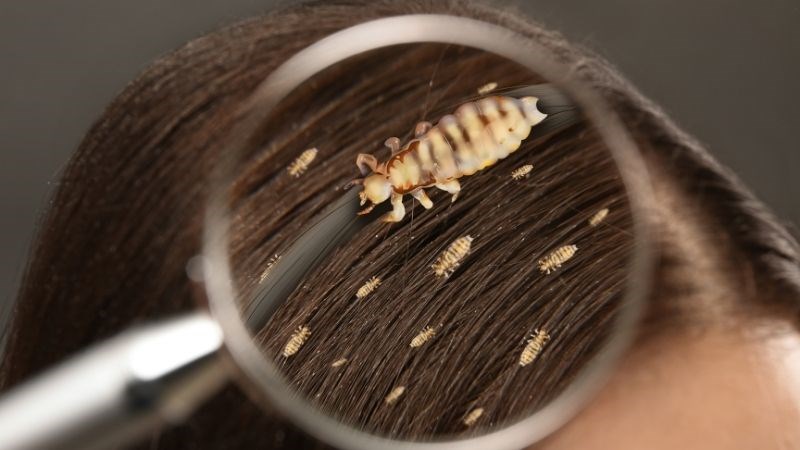
Why Can Tiny Objects in Hair Be So Difficult to Identify?
Hair creates an ideal place for small objects to become hidden.
Individual strands can trap dust, fibers, seeds, flakes of skin, and residues from shampoos, conditioners, gels, sprays, and other hair products.
Small insects can also become temporarily trapped while someone is outdoors, playing with pets, gardening, hiking, or simply walking through an environment where insects are present.
When something is tiny and partially hidden between strands of hair, its shape can be difficult to see.
Under normal lighting, you may only notice a dark or pale speck.
From that limited view, it can be tempting to immediately label it as a louse.
But appearance alone isn't always enough.
Location, movement, size, shape, and how firmly the object is attached to the hair can all provide useful clues.
First Question: Is It Actually Moving?
One of the easiest things to check is whether the object is alive.
If you can safely observe it, watch closely for several seconds.
Does it crawl?
Does it remain completely still?
Does it suddenly jump?
Does it move only when the hair is disturbed?
These details can help narrow down the possibilities.
Head lice are small insects that crawl. They do not fly or jump.
So if the object suddenly launches itself away from the hair, that behavior would make head lice less likely.
A flea, for example, is capable of jumping and may be associated with pets or areas where animals spend time.
On the other hand, if the object slowly moves along individual strands of hair, further inspection may be warranted.
Still, movement alone isn't enough to identify the creature with certainty.
Could It Be an Ant?
Yes, it's possible.
Small ants can occasionally become trapped in hair, particularly after spending time outdoors.
An ant may look somewhat similar to a louse at first glance because both are small, dark-colored insects.
However, their body shapes and behavior are different.
Ants typically have a more distinctly segmented body and visible antennae.
If you can see the object clearly under magnification, those characteristics may help distinguish an ant from a louse.
Finding a single ant in someone's hair doesn't automatically indicate a problem with the scalp.
It may simply be an insect that happened to get caught there.
What About a Small Spider?
A tiny spider can also be mistaken for a bug or louse.
Spiders have eight legs, while insects such as lice have six.
The problem is that when something is extremely small and tangled among hair strands, counting legs with the naked eye can be difficult.
If you suspect that the object might be a spider, use a magnifying glass or take a high-resolution photograph.
A close-up image can reveal details that are impossible to see from several inches away.
Again, discovering one small spider in someone's hair does not mean the person has a scalp infestation.
It may simply be an accidental visitor.
Could It Be a Flea?
Fleas are another possibility, especially if the person lives with dogs or cats.
Fleas are tiny, dark-colored insects known for their ability to jump.
That jumping behavior is one of the most useful clues.
If the object was seen moving through the hair and then suddenly jumped away, a flea may be more plausible than a head louse.
However, fleas typically live in the environment and on animals rather than permanently residing in human hair.
If fleas are suspected, it may be more useful to investigate pets, bedding, carpets, and areas where animals spend time rather than focusing only on the person's hair.
Could It Be a Bed Bug?
Bed bugs can also be mistaken for small insects found elsewhere on the body or in clothing.
However, bed bugs generally do not live permanently in human hair.
They are more commonly associated with mattresses, bed frames, furniture, luggage, clothing, and other places where they can hide between feeding.
Young bed bugs, called nymphs, are especially small and can be difficult to identify without a close examination.
If someone discovers an unfamiliar insect in their hair and suspects it might be a bed bug, the surrounding environment should also be inspected.
Look at:
-
Mattress seams
-
Box springs
-
Bed frames
-
Upholstered furniture
-
Luggage
-
Clothing
-
Cracks and crevices around sleeping areas
Finding a single unidentified insect doesn't prove that there is a bed bug infestation.
Proper identification matters.
Sometimes the “Bug” Isn't a Bug at All
This is one of the most overlooked possibilities.
The strange object may not be alive.
Hair can trap an incredible variety of debris.
A tiny seed can become caught between strands.
A piece of lint can resemble an insect.
A dried piece of hair product can look like a small egg.
A flake of skin can appear suspicious when viewed from a distance.
Even a tiny piece of plant material can look remarkably insect-like.
This is why picking at the object with your fingers and immediately assuming it is a parasite isn't necessarily helpful.
Instead, try to examine it carefully.
How to Tell the Difference Between Lice and Ordinary Debris
One of the most important clues involves how firmly the object is attached to the hair.
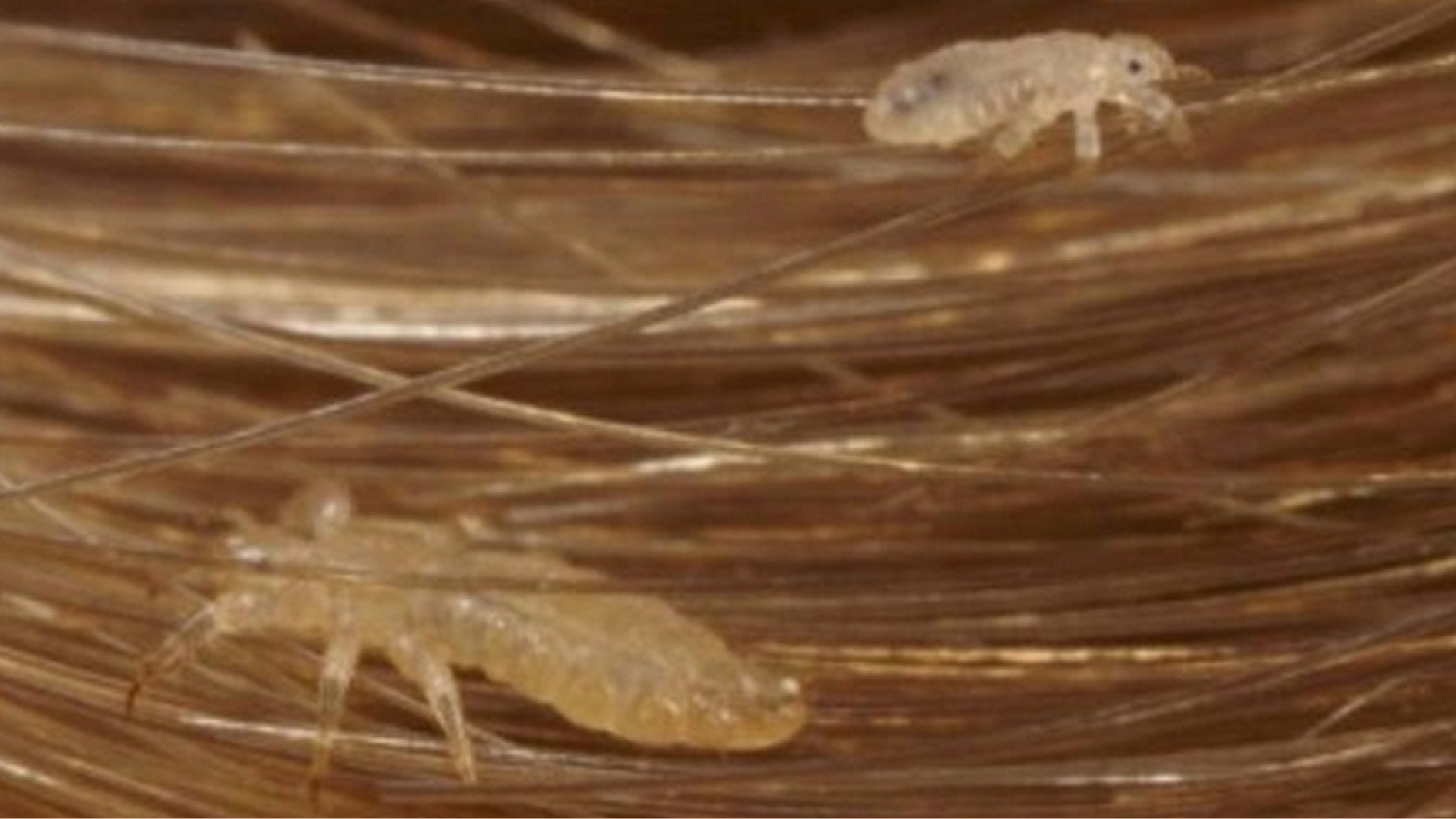
Adult head lice are small, flat insects, generally around the size of a sesame seed.
They have six legs and can move through the hair.
But the eggs, known as nits, behave differently.
Nits are attached firmly to individual hairs, usually close to the scalp.
This is an important distinction.
Ordinary dandruff, lint, or loose debris can often be brushed, flicked, or blown away relatively easily.
A true nit is much more firmly attached.
If you find something that appears to be an egg but it slides easily down the hair shaft or falls away with minimal effort, it may not be a nit.
Where Are the Objects Located?
Location can also provide useful information.
Head lice and their eggs are typically associated with the scalp and hair, particularly around areas such as:
-
Behind the ears
-
Near the neckline
-
Around the temples
-
Close to the scalp
If an object is sitting on the outer surface of the hair or appears randomly caught near the ends of the strands, it may simply be debris.
That doesn't prove that it isn't lice, but location is another piece of the puzzle.
If you are checking for lice, focus your inspection close to the scalp rather than only examining the ends of the hair.
Is There Persistent Itching?
Another clue is the person's symptoms.
Head lice can cause itching of the scalp.
The itching is related to a reaction to bites and may become more noticeable over time.
However, itching alone does not prove that someone has lice.
Dry skin, dandruff, eczema, allergies, irritation from hair products, and other scalp conditions can also cause itching.
Likewise, someone can have lice without immediately experiencing intense itching.
So don't use itching as the only test.
Think about the entire picture:
What does the object look like?
Does it move?
Where is it located?
Is it attached to the hair?
Are there multiple similar objects?
Are there symptoms such as persistent itching?
The more clues you have, the easier identification becomes.
Finding One Bug Doesn't Automatically Mean an Infestation
This is another important point.
Discovering a single insect doesn't necessarily mean there is an infestation.
It could be an accidental visitor.
It could have been picked up outdoors.
It could have come from a pet.
Or it could have simply become trapped in the hair for a short period.
With head lice, however, finding additional lice or firmly attached nits would make the situation more concerning.
That's why a careful inspection is more useful than immediately assuming the worst.
If you find one suspicious object, check the surrounding hair and scalp under good lighting.
Look for additional evidence.
Take a Clear Photograph
If you aren't sure what you've found, one of the simplest things you can do is take a photograph.
Use a smartphone camera with good lighting.
Move the hair away from the object if possible.
Try to get the camera close enough to capture the details without making the image blurry.
If your phone has a macro mode, use it.
Take several photographs from different angles.
A clear image can reveal details such as:
-
Number of legs
-
Body shape
-
Color
-
Segmentation
-
Wings
-
Antennae
-
Whether the object is attached to the hair
-
Whether it resembles an egg or debris
A photograph is not always enough for a definitive diagnosis, but it can make identification much easier.
Don't Immediately Start Treating for Lice
This is an important practical point.
If you're not sure whether the object is actually lice, don't immediately cover the scalp with multiple insecticide products.
Overusing treatments can irritate the scalp and may not solve the actual problem if the object wasn't lice in the first place.
First, try to establish what you're dealing with.
If lice are genuinely suspected, follow an appropriate treatment approach or consult a healthcare professional or pharmacist.
If you're dealing with a child, it's particularly important to make sure the product is appropriate for their age and to follow the directions carefully.
What If You Actually Find Head Lice?
If the object is confirmed to be a head louse, don't panic.
Head lice are unpleasant, but they are a common parasitic infestation and can be treated.
The next step is to inspect the scalp and hair carefully for additional lice and nits.
Treatment options can include specific over-the-counter or prescription medications, depending on local recommendations and the person's age and circumstances.
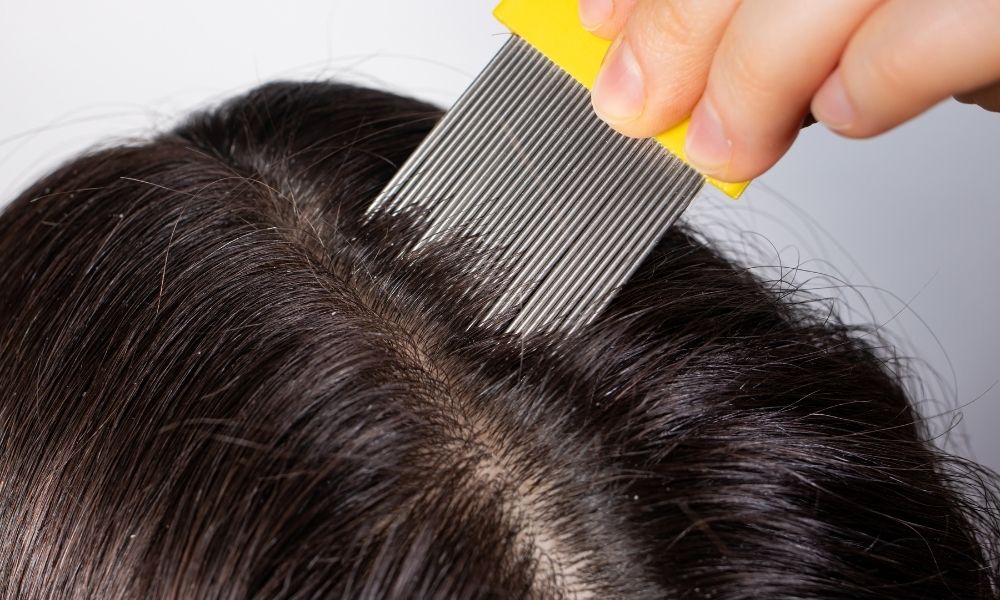
A fine-toothed lice comb can also be useful for physically removing lice and nits.
It's important to follow the instructions for whatever treatment you use because some products require a second treatment after a specified interval.
Also, avoid repeatedly treating the hair with different products without guidance.
What About the Rest of the Family?
If head lice are confirmed, close household contacts may need to be checked.
However, there's no need to panic-clean the entire house.
Head lice primarily spread through direct hair-to-hair contact.
They do not live indefinitely on carpets, furniture, or household surfaces.
Focus on appropriate scalp and hair inspection, treatment when necessary, and practical cleaning measures rather than turning the entire home upside down.
If you're unsure how to manage a confirmed infestation, a healthcare professional or pharmacist can provide specific guidance.
Why Magnification Can Make Such a Big Difference
At normal viewing distance, a tiny object can look like a simple dark dot.
Under magnification, completely different details may become visible.
You might suddenly see six legs.
Or eight.
You might notice wings.
You might discover that the object has no legs at all.
You may see that it is firmly attached to a hair.
Or you may realize that it is simply a tiny piece of debris.
This is why visual identification is so important when dealing with extremely small organisms.
A blurry photograph can create more questions than answers. A clear, magnified image can provide valuable clues.
When Should You Seek Professional Help?
If you cannot identify the object and you're concerned that it could be a parasite, getting professional advice is reasonable.
Consider speaking with a healthcare professional if:
-
Persistent scalp itching develops
-
Multiple suspicious insects are found
-
You find objects firmly attached to several hairs
-
The scalp becomes irritated or develops sores
-
Symptoms continue despite treatment
-
You're unsure which treatment is appropriate
-
A young child is affected
A healthcare professional can examine the scalp and help distinguish head lice from other causes of itching or unusual scalp findings.
The Most Important Thing: Don't Panic
Finding something strange in someone's hair can trigger an immediate reaction.
You may think:
“We have lice!”
But take a moment before jumping to that conclusion.
A tiny object in the hair could be an ant.
It could be a flea.
It could be another small insect.
It could be a piece of plant material.
It could be lint.
It could be dried hair product.
Or it could genuinely be a louse or nit.
The only way to know is to examine the evidence carefully.
Final Thoughts
A mysterious bug-like object in someone's hair can certainly be unsettling, but not every tiny object is head lice.
The best approach is to remain calm and look carefully at the object's characteristics.
Does it crawl, jump, or remain still?
Is it attached firmly to the hair?
Is it close to the scalp?
Does it have visible legs, wings, or antennae?
Are there multiple similar objects?
Is the person experiencing persistent itching?
These clues can help narrow down the possibilities.
Remember that head lice crawl rather than jump or fly, while nits are firmly attached to individual hairs and don't easily flick or slide away like dandruff or lint.
If you're still unsure, take a clear, well-lit close-up photograph or seek professional identification.
Most importantly, don't let one mysterious speck in someone's hair send you into panic mode.
Sometimes what looks like a parasite is nothing more than a tiny piece of debris caught in the wrong place. And when it really is a bug, careful identification is the first step toward knowing what to do next.