That realization was uncomfortable.
We often think we know the people closest to us because we know their daily habits. We know how they take their tea, what food they dislike, where they keep their keys and which stories they repeat at family gatherings.
But knowing someone's routines is not the same as knowing their history.
Older relatives may carry memories from periods of their lives that younger family members never witnessed. They may have experienced journeys, friendships, sacrifices and losses that they rarely discuss.
Sometimes they do not share those memories because nobody asks.
Sometimes the memories are too personal.
And sometimes a small object is enough to preserve a story without requiring the person to explain it.
The silver wings had been in front of me for years. I had seen them repeatedly, yet I had never asked the right question.
Now a pilot had noticed them immediately.
I felt a strange mixture of curiosity and regret. I wanted to know everything, but I also understood that Grandma should be allowed to tell the story in her own time.
I did not want to turn a private memory into an interrogation.
I wanted to understand why the seat mattered.
And I wanted to know what Grandpa had said that made her return to it after so many years.
Chapter 17: The Journey Was Never Really About First Class
The contrast between the first-class seat and seat 34A gives the story its initial surprise.
A family member spends extra money to provide a special experience. The grandmother quietly gives it up. The narrator feels confused and slightly irritated. Then an unexpected visitor reveals that the decision may have been connected to a much older memory.
At first, the story seems to be about a passenger rejecting an expensive upgrade.
But the deeper theme is the difference between what one person believes is valuable and what another person actually needs.
The narrator thinks comfort is the most thoughtful gift. Grandma appears to value a particular place associated with Grandpa.
Neither perspective is necessarily wrong.
The narrator's intention is loving. Buying a first-class ticket is an effort to make an elderly family member's journey easier. Grandma's choice is also meaningful because she has a reason for wanting that specific seat.
The conflict comes from the fact that they have not shared the same understanding of the journey.
That is a familiar experience in families.
Children and grandchildren often try to care for older relatives by making decisions on their behalf. They may choose expensive gifts, arrange comfortable travel or organize activities they believe will bring happiness.
But older family members still have their own preferences, memories and reasons.
Sometimes the most loving thing is not to insist on the gift we have chosen. It is to listen when the person we care about tells us what they actually want.
Grandma's decision reminds us that comfort cannot always be measured by money.
A first-class seat may offer more space, but it cannot replace a meaningful memory. A luxury experience may be generous, but it may not be what someone has been hoping for.
For Grandma, the journey seems to have been about something that could not be purchased.
And the pilot's reaction suggests that the reason was not merely personal. It may have been connected to a history involving the airline or the people who had once traveled on that aircraft.
The final explanation remains outside the supplied passage, but the clues are enough to show why the narrator's original assumption was incomplete.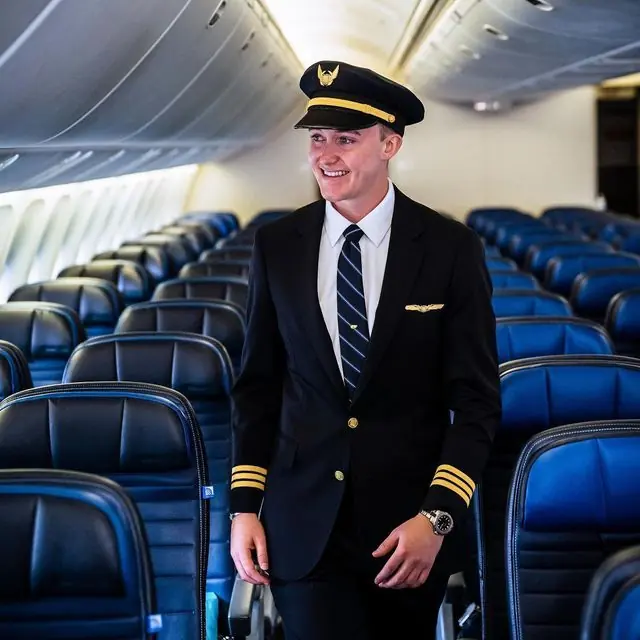
Chapter 18: The Moment Before the Answer
The captain had been called.
The pilot stood beside Grandma, holding the old boarding pass. The passengers nearby were watching, and the cabin no longer felt like a place where everyone was simply waiting to arrive.
I imagined the narrator trying to make sense of the scene.
A few hours earlier, the biggest concern had been whether Grandma would enjoy her birthday trip. The first-class ticket had been purchased, the bags had been packed, and the flight had begun normally.
Now an old piece of paper had changed everything.
The captain's arrival was the next event the story had promised, but the supplied text stops before it happens.
That pause is important because it leaves the reader in the same position as the narrator: aware that something meaningful has been uncovered, but still waiting to learn what it means.
The mystery is not simply why Grandma chose an economy seat.
It is why the pilot recognized the silver wings, why the old boarding pass mattered, and why seat 34A was the place Grandpa had told her to choose.
Those questions are connected.
The pilot's reaction suggests that the answer may involve a person, a flight or an event that he believes the captain should know about. But the available narrative does not provide enough information to identify that connection.
For now, the most honest ending is the moment when the captain is called.
Grandma has finally revealed that her choice was connected to Grandpa. She has produced the old boarding pass she kept for years. The pilot has recognized something in it and has asked for the captain.
The next part of the story is where the mystery would need to be explained.
Until then, the old purse, the silver wings and seat 34A remain the three clues that hold the entire account together.
Chapter 19: What I Would Understand About Grandma After That Flight
Even without the final explanation, the encounter would have changed how I understood my grandmother.
I had thought I was taking her on a birthday trip.
I had not realized that she was carrying a memory into the aircraft, one that had remained close to her for nearly three decades.
I had thought the old purse was simply an object she refused to replace.
I had not realized that it contained a piece of her past.
I had thought the silver wings were a decoration.
I had not realized that a pilot might recognize them.
And I had thought seat 34A was an ordinary economy seat.
I had not realized that it was the exact place she had chosen because of something Grandpa once told her.
The experience would remind me that the people we love are not defined only by the roles they play in our lives. Grandma was not only my grandmother. She had been a young woman, a wife, a traveler and a person with memories that began long before I was born.
Her life contained chapters I had never seen.
The old boarding pass was a reminder that her story did not begin with the birthday trip. It stretched back through years of experiences, including a journey connected to the man she had lost.
Perhaps that is why she had been so quiet at the gate.
Perhaps she did not want to explain something that could only be understood once the right moment arrived.
Or perhaps she simply needed to see the seat again before she could speak about it.
Whatever the full reason, the flight had revealed how little I knew about a memory she had carried for years.
And it had taught me something about listening.
Sometimes the people we love do not need us to solve their decisions. They need us to respect them long enough to understand.
Chapter 20: The Real Mystery Behind Grandma's Choice
The story begins with a question that seems simple: why would an 80-year-old woman give up a first-class ticket and choose an economy seat?
The answer, according to her own words, was that someone had told her to sit in 34A.
That person was Grandpa, who had been gone for twenty-seven years.
The old brown purse contained two important clues: the silver pilot wings attached beside the zipper and a faded boarding pass that the pilot examined during the flight.
Those objects prompted the pilot to search for Grandma, ask about the seat and call for the captain.
The headline's central promise is therefore fulfilled: Grandma's decision to fly economy leads to a pilot coming out of the cockpit to find her. The reason is not that she needs assistance with her luggage or has caused a problem on the aircraft. It is because of the unusual connection between her, the wings, the old boarding pass and seat 34A.
But the exact story behind that connection is not included in the supplied text.
That is where the narrative currently ends.
The most compelling detail is not the price difference between first class and economy. It is the fact that Grandma knew exactly where she wanted to sit and had preserved the clues that connected that place to her past.
The narrator had planned a birthday surprise.
Grandma had planned a return.
And when the pilot finally recognized what she was carrying, the journey became something neither of them had expected.
Sometimes the most important seat on an airplane is not the one with the most space, the best service or the highest price. It is the one that holds a memory no one else can see.