Dean planted the apple tree in our backyard in the spring of 2013.
At the time, neither of us knew how important that little tree would eventually become.
It was just a young sapling with a thin trunk and a handful of delicate branches. It looked almost too small to imagine the mature tree it might one day become.
But Dean had a way of looking at things that made the future seem possible.
He had been seriously ill for some time, and by then, we both understood that our lives might not unfold the way we had once imagined. Still, neither of us wanted to spend every remaining day talking about illness, hospitals, or what might happen next.
We preferred to talk about ordinary things.
The weather.
The garden.
Dinner.
The little projects around the house.
And, occasionally, what we might plant next.
One afternoon, Dean looked toward a sunny corner of our backyard.
He pointed toward the ground and said:
"Right there. That's where it should go. The light is perfect."
I looked at the empty patch of soil.
"You really think an apple tree will grow there?"
He smiled.
"Give it time."
Planting the Tree
I did most of the digging that afternoon.
Dean wasn't strong enough to do much himself, so he sat nearby in a chair, watching me work and offering advice.
"Not too deep."
"Give the roots room."
"Make sure it can drain."
Every few minutes, he would make another suggestion.
I teased him that he was acting like an expert gardener.
He laughed.
When the hole was finally ready, we lowered the little tree into the soil.
I filled the hole and pressed the earth around the roots.
Dean leaned forward, reached out, and placed his hand gently against the tiny trunk.
He looked at it for a moment.
Then he said something I would remember for the rest of my life.
"Give it time. It'll surprise you."
At the time, I thought he was simply talking about the tree.
Years later, those words would mean something entirely different to me.
Four Months Later, He Was Gone
Dean died four months after we planted that tree.
There are some losses that are so large that everything around you seems to become strangely quiet.
The house was the same.
The backyard was the same.
The chair where he used to sit was still there.
And the little apple tree was still standing in the corner of the yard.
But Dean wasn't.
For a long time, I couldn't bring myself to do much with the garden.
I watered the plants.
I cut the grass.
I pulled weeds when they became impossible to ignore.
But the apple tree was different.
I couldn't decide whether looking at it comforted me or hurt me.
It was something we had planted together.
It was one of the last things we had worked on as a couple.
Every time I looked at it, I remembered him.
The Tree Didn't Produce Anything
The first year passed.
No apples.
The second year came.
Still nothing.
I started wondering whether Dean had been wrong.
Maybe the location wasn't right.
Maybe the soil wasn't suitable.
Maybe the tree wasn't healthy.
Maybe I simply wasn't a very good gardener.
By the second year, I seriously considered removing it.
It was still small.
It wasn't producing fruit.
And every time I looked at it, I was reminded of how much I had lost.
Part of me wondered whether letting it go would somehow make things easier.
I even contacted someone about having it removed.
But I couldn't quite bring myself to do it.
Somewhere in the back of my mind, I could still hear Dean saying:
"Give it time."
So I left it alone.
Then Something Changed
The following spring, something unexpected happened.
The tree bloomed.
At first, I noticed only a few tiny flowers.
I thought I was imagining things.
Then more appeared.
By the end of the week, the branches were covered in delicate blossoms.
I stood beneath the tree for a long time.
For the first time since Dean had died, I felt something other than sadness when I looked at it.
I felt hope.
It was still only a tree.
But somehow, it felt like a message.
The tree hadn't given up.
It had simply needed time.
The First Apples
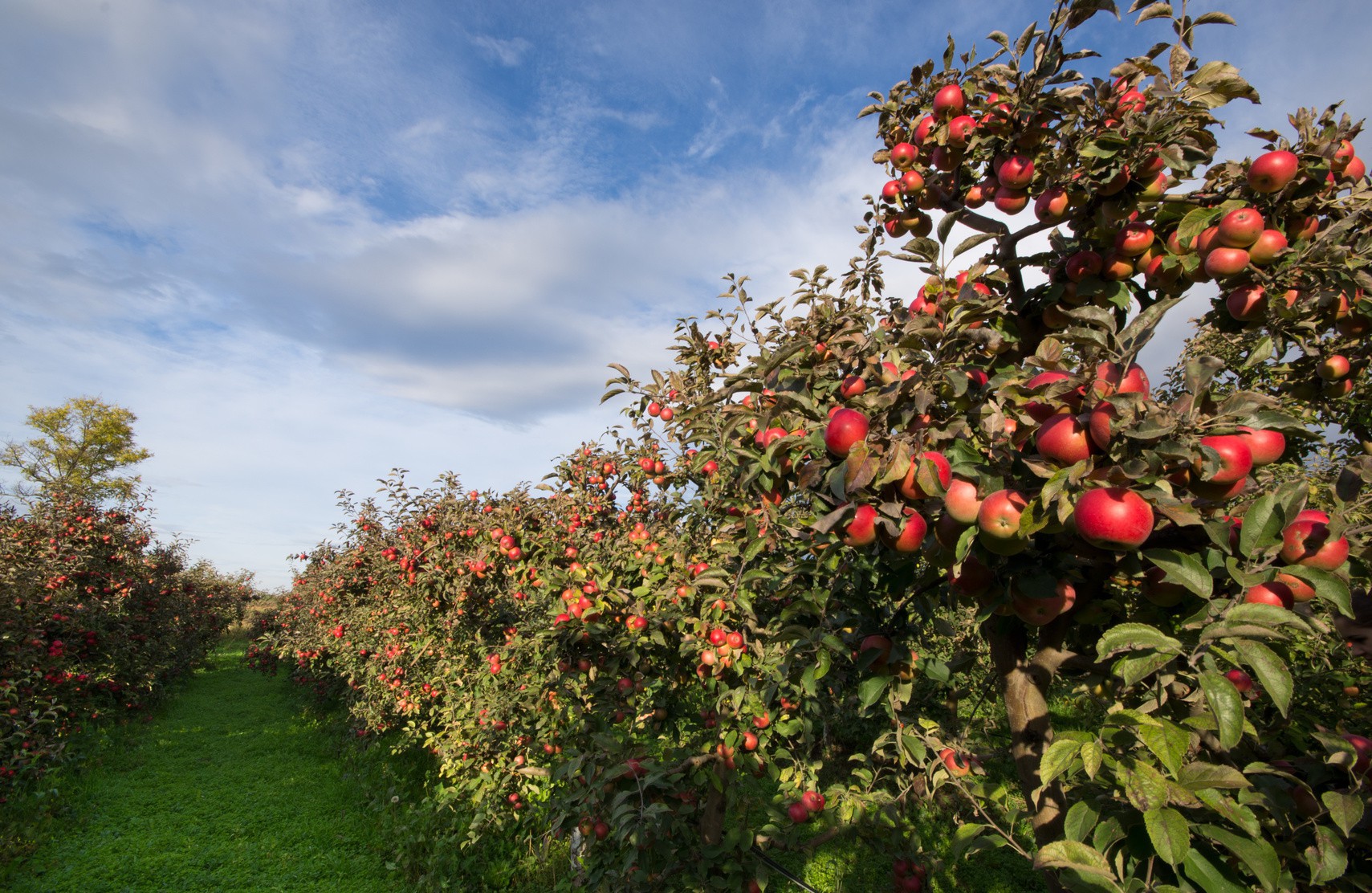
That autumn, the tree produced twelve apples.
Only twelve.
To someone else, that might not have seemed like much.
To me, they were extraordinary.
I remember standing in the backyard counting them.
One.
Two.
Three.
All the way to twelve.
I smiled.
Then I laughed.
Dean had been right.
The tree had surprised me.
I picked the apples carefully.
I kept a few.
I baked a small pie.
And I gave some to neighbors.
It felt strange handing them out.
I found myself telling everyone:
"These came from Dean's tree."
Most people didn't know who Dean was.
But somehow, saying his name made me feel as though I was keeping a small part of him alive.
The Tree Became Part of the Neighborhood
Over the next several years, the apple tree grew.
The trunk became thicker.
The branches spread outward.
Every spring, it produced more flowers.
Every autumn, it produced more apples.
Eventually, I had far more fruit than I could possibly use.
I made pies.
I made apple sauce.
I experimented with cider.
I gave apples to friends.
I left baskets outside for neighbors.
And eventually, children from nearby houses began asking if they could pick some.
I always said yes.
The tree became something more than a plant in my backyard.
It became a small part of the neighborhood.
People knew it.
They would ask how the tree was doing.
Someone would stop by with a pie.
Another neighbor would bring me a jar of homemade jam.
Children would come over in autumn with baskets.
Without realizing it, the tree had connected me to people I might otherwise never have known.
Then a New Neighbor Moved In
Everything changed when Ryan moved into the house next door.
At first, there was no problem.
We introduced ourselves.
We exchanged polite greetings.
I assumed we would become ordinary neighbors.
Then, one afternoon, Ryan mentioned the apple tree.
He said some of its branches crossed over the fence.
He also complained that apples were falling into his yard.
I understood the concern.
I told him I would take care of it.
"I'll have the branches trimmed," I said.
"And I'll make sure the apples are cleaned up."
I thought that would solve the problem.
It didn't.
A few days later, he brought it up again.
Then again.
Eventually, he stopped talking about trimming it.
He wanted the entire tree gone.
"I Want It Gone."
One afternoon, Ryan stood near the fence and pointed toward the tree.
"I want it gone."
I tried to explain why the tree mattered to me.
I told him I was willing to maintain it properly.
I offered to have the branches professionally trimmed so that nothing crossed into his property.
I offered to clean up fallen apples.
I thought we could find a reasonable compromise.
But he wasn't interested.
"I don't want the tree there," he said.
I walked away frustrated.
I understood that he had a right to enjoy his property.
But I also felt that I had a responsibility to protect something that had become deeply meaningful to me.
So I did what I thought was the reasonable thing.
I hired a professional arborist.
The tree was carefully trimmed.
Branches near the property line were cut back.
Dead growth was removed.
The tree was healthier and more contained than before.
I thought the problem was finally over.
It wasn't.
The Complaints Continued
Ryan continued complaining.
Sometimes it was about leaves.
Sometimes it was about apples.
Sometimes it was simply that branches were too close to the fence.
I tried not to argue.
I didn't want a neighborhood dispute.
I had already learned that life was too short to spend every day fighting over something that could be handled calmly.
So I kept maintaining the tree.
I cleaned up the yard.
I trimmed what needed trimming.
And I tried to ignore the tension.
Then one morning, I walked outside and stopped in my tracks.
Hundreds of apples were scattered across my lawn.
Several branches had been damaged.
Some were broken.
Others had clearly been pulled or bent.
It wasn't normal.
It wasn't the result of a few apples falling overnight.
Someone had deliberately damaged the tree.
"Must Have Been a Strong Wind."
When I spoke to Ryan, he shrugged.
"Must have been a strong wind."
But there hadn't been a storm.
There hadn't been unusually strong weather.
And something about the damage didn't look accidental.
Fortunately, I had installed a security camera overlooking the yard.
I checked the footage.
And there it was.
Someone had entered my yard.
The person walked directly toward the apple tree.
They picked apples.
Then they began damaging branches.
The footage showed enough detail to make it clear that this wasn't an accident caused by weather.
I saved the recording.
I contacted the appropriate authorities.
And for the first time, I stopped trying to solve the problem through informal conversations.
The Tree Was Hurt—But Not Destroyed
I was worried about the tree.
The broken branches looked terrible.
For a moment, I thought we might lose it.
I called an arborist.
He examined the damage carefully.
After a few minutes, he gave me the news I desperately wanted to hear.
"The tree should survive."
It would take time.
Some branches needed to be removed properly.
Others could be treated and supported.
The tree would need care.
But it wasn't finished.
I remember standing there listening to him and thinking about how familiar those words sounded.
It'll take time.
Again.
Ryan Was Held Responsible
The security footage provided evidence of what had happened.
The situation was eventually addressed, and Ryan was held responsible for the damage and associated expenses.
It wasn't a dramatic victory.
There was no shouting match.
No satisfying movie-style confrontation.
Just accountability.
And honestly, that was enough.
I didn't want revenge.
I wanted the tree left alone.
I wanted to live peacefully in my own home.
And I wanted the boundary between our properties to be respected.
Something Unexpected Happened Afterward
What happened next surprised me more than the conflict itself.
The neighborhood became closer.
People had heard about what happened.
Some neighbors came by to check on the tree.
One offered to help clean up the damaged branches.
Another brought over gardening supplies.
Someone else suggested that we use the apples for a community gathering.
And eventually, an idea emerged.
We would have an Apple Day.
The First Community Apple Day
That autumn, we set up tables in the neighborhood.
There were baskets of apples.
Homemade pies.
Fresh cider.
Children running around.
Adults talking.
People brought recipes and shared food.
The tree that had once been the source of a disagreement had become the centerpiece of a community gathering.
I stood beneath its branches and watched everyone enjoying the fruit.
For a moment, I thought about how strange life can be.
Years earlier, Dean and I had planted a tiny tree in an empty corner of our backyard.
Now, years later, that tree was bringing an entire neighborhood together.
I wished more than anything that Dean could have seen it.
The Tree Kept Growing
The years continued.
The tree became larger.
Its branches grew wider.
Its trunk became strong.
Every spring, it bloomed.
Every autumn, it produced apples.
Some years were better than others.
There were dry summers.
Heavy rains.
Cold winters.
Pest problems.
Branches that needed pruning.
But the tree kept coming back.
And somehow, that became important to me.
Because life had done the same thing.
It had knocked me down.
It had changed everything I thought my future would look like.
It had taken someone I loved.
But somehow, I was still here.
Still growing.
Still making plans.
Still sharing things with other people.
I Started Seeing the Tree Differently
For years, I thought the apple tree represented the person I had lost.
Now I think it represents something more.
It represents what came afterward.
It reminds me that grief doesn't mean life stops.
It means life changes.
The tree didn't replace Dean.
Nothing could.
But it gave me something to care for.
Something that connected me to the season.
Something that gave me a reason to walk into the backyard.
And eventually, something that connected me to other people.
The Children Still Come for Apples
Even now, children from the neighborhood sometimes come by during apple season.
They'll stand near the fence and ask:
"Can we have one?"
I always smile.
"Of course."
Sometimes they pick one.
Sometimes they ask for two.
Sometimes they take a basket home for their family.
I don't mind.
There are far more apples than I could ever eat.
And every time a child reaches up to pick one, I remember Dean's words.
"Give it time. It'll surprise you."
He was talking about a tree.
But he could have been talking about life.
What the Tree Taught Me About Loss
When someone dies, people often tell you that time will make things better.
I never liked hearing that.
In the beginning, it felt like time was simply making me miss Dean longer.
But eventually, I realized they weren't entirely wrong.
Time didn't erase the loss.
It changed my relationship with it.
The sharp pain became something softer.
The memories stopped being only painful.
Some became comforting.
And eventually, I could think about Dean without feeling like the memory was pulling me backward.
The apple tree helped me understand that.
Growth Doesn't Always Look Dramatic
The tree didn't suddenly become enormous overnight.
It grew slowly.
One season at a time.
A few flowers.
A few apples.
A few more branches.
A little more strength.
That's how healing worked for me too.
There was no single morning when I woke up and suddenly felt completely fine.
Instead, there were small improvements.
A good day.
Then another.
A laugh that didn't feel guilty.
A memory that brought a smile instead of tears.
A new friendship.
A new tradition.
Little by little, life grew around the loss.
The Neighbor Dispute Became Part of the Story
For a while, I hated that the conflict with Ryan had happened.
It felt like something ugly had been brought into a place that had become peaceful.
But eventually, even that became part of the story.
It reminded me that not everyone will understand why something matters to you.
To Ryan, it was an inconvenient tree.
To me, it was a memory.
To the children, it was a source of apples.
To the neighborhood, it eventually became a gathering place.
The meaning of an object isn't always determined by what it looks like.
Sometimes its meaning comes from the stories attached to it.
What Dean Could Never Have Known
When Dean planted that tree, he couldn't have known what would happen.
He didn't know that he would die four months later.
He didn't know that I would almost remove the tree.
He didn't know that it would eventually produce hundreds of apples.
He didn't know that a neighbor would complain about it.
He didn't know that someone would damage it.
And he certainly couldn't have known that the tree would eventually bring our neighborhood together.
He simply saw an empty corner of the yard.
He saw sunlight.
And he planted something.
That's all.
But sometimes, that's how meaningful things begin.
The Apple Tree Is Larger Than Ever
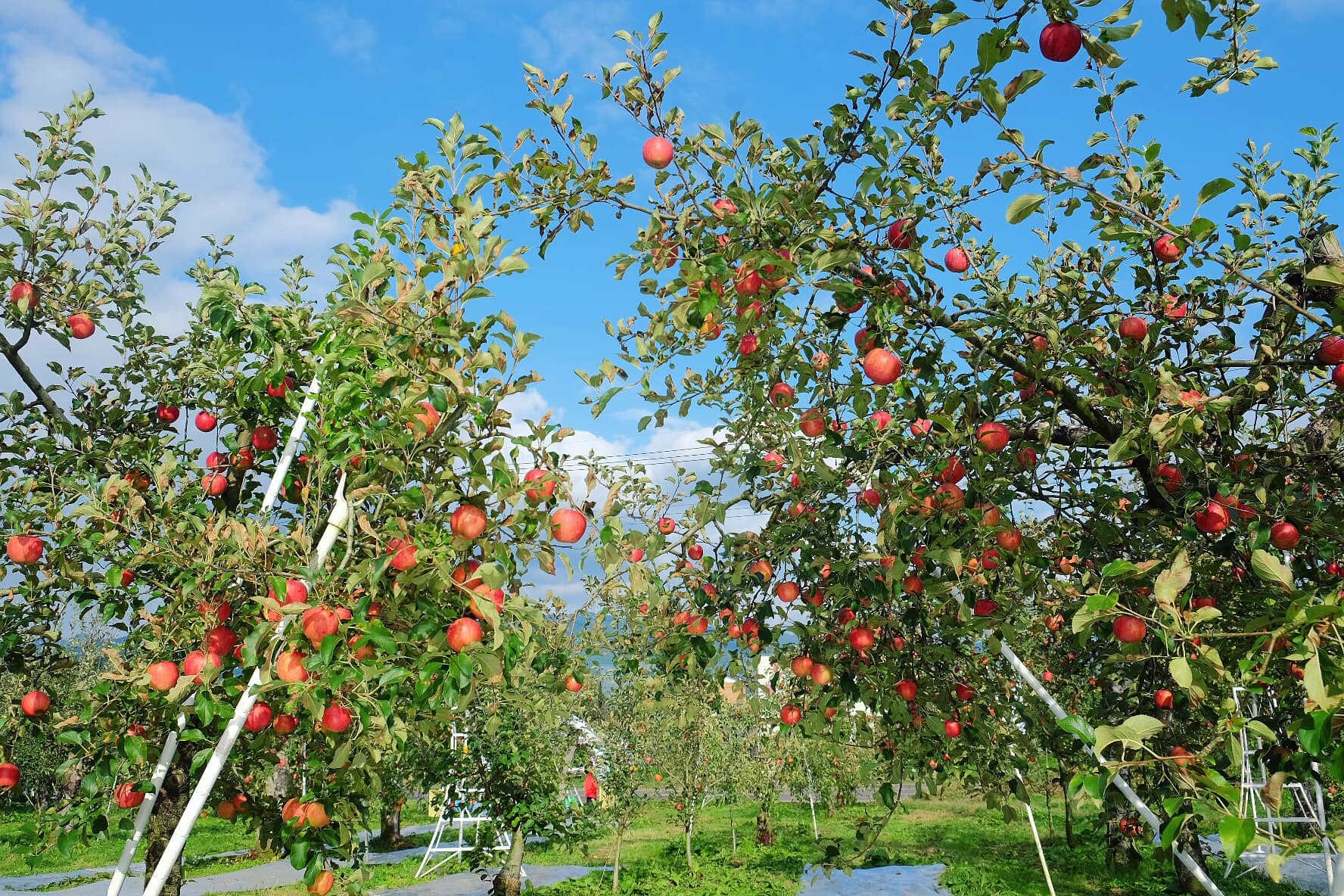
Today, the tree is bigger than I ever imagined.
Its branches stretch across the corner of the yard.
In spring, the flowers attract bees.
In summer, the leaves provide shade.
In autumn, the apples hang heavily from the branches.
And every year, I give most of them away.
Sometimes I make pies.
Sometimes I make cider.
But mostly, I share them.
Because I think that's what Dean would have wanted.
He planted the tree in our backyard.
But somehow, it became part of something much larger than our backyard.
A Living Reminder
When I stand beneath the tree now, I don't think only about the day Dean planted it.
I think about everything that happened afterward.
The grief.
The waiting.
The first twelve apples.
The years of growth.
The conflict.
The damaged branches.
The recovery.
The neighbors who came together.
The children reaching for apples.
All of it is part of the tree's story.
And all of it is part of mine.
The tree didn't remain unchanged.
Neither did I.

Final Thoughts
Sometimes, we plant things without knowing what they will become.
A tree.
A garden.
A friendship.
A family tradition.
A small act of kindness.
We may never get to see the full result.
Dean planted an apple tree only four months before he died.
At the time, it was nothing more than a tiny sapling in a sunny corner of our yard.
For two years, it barely seemed to do anything.
Then, one spring, it bloomed.
A few months later, it produced twelve apples.
Years after that, it became a thriving tree that produced more fruit than one family could possibly use.
It survived difficult weather.
It survived neglect.
It survived deliberate damage.
And each time, it recovered.
Looking back, I realize that the tree became a quiet lesson in resilience.
It taught me that growth doesn't always happen when we expect it to.
Sometimes, the most important things need years before we can see what they are becoming.
And sometimes, what begins as something deeply personal can eventually become something shared by an entire community.
Today, when someone asks whether they can pick an apple, I don't hesitate.
I say yes.
Because there is more than enough.
And because every apple that leaves that tree feels like a small continuation of something Dean started.
He once placed his hand on that tiny trunk and told me:
"Give it time. It'll surprise you."
He was right.
The tree surprised me.
Life surprised me too.
I thought losing Dean would be the end of one chapter and nothing more.
Instead, that little tree became a reminder that endings and beginnings can exist in the same place.
Some things we plant are not meant to belong to us forever. Sometimes, they grow beyond us—offering shade, fruit, memories, and even a sense of community to people we never imagined they would reach.
And every autumn, when I look at that old apple tree covered in fruit, I think about the man who planted it.
Then I smile.
Because after all these years, it is still growing.