If a property introduces a new or unexpected charge at check-in, ask for an itemized explanation before agreeing to pay. If the charge appears inconsistent with your reservation, contact the booking platform or the company through an official channel.
The safest booking is one in which you understand the financial terms before arriving.
4. Read the Cancellation and Refund Policy Carefully
Travel plans can change because of weather, illness, transportation disruptions, work commitments, or family emergencies.
Unfortunately, many travelers focus so heavily on the room price that they overlook the cancellation terms.
Some reservations allow free cancellation until a specified deadline. Others permit changes but impose a fee. Certain discounted bookings may be entirely nonrefundable.
These conditions can make a major difference if your schedule is uncertain.
Imagine booking a cheap room several weeks before a trip, only to discover that a flight change makes the dates impossible. If the reservation is nonrefundable, the money may be lost even though you never use the room.
Before confirming a reservation, identify the cancellation deadline, time zone, and method required to cancel. Check whether a refund is issued to the original payment method or whether the property offers credit for a future stay.
Do not assume that the word "flexible" means unlimited changes without fees.
You should also distinguish between canceling through a booking platform and canceling directly with the hotel. If you booked through an intermediary, the intermediary's process may determine how the reservation must be changed.
Keep your confirmation email, booking reference, and any messages concerning modifications.
If a serious issue arises during your stay, document the problem and contact the hotel or booking platform promptly. Refund eligibility depends on the circumstances and the applicable terms, so avoid assuming that every complaint automatically qualifies for compensation.
Understanding the policy in advance gives you more control when unexpected events occur.
5. Inspect the Door Lock and Room Security as Soon as You Arrive
Once you reach your room, one of the most important checks is whether the entrance closes and locks properly.
A room may be attractively decorated and appear clean, but a faulty lock can undermine your sense of security.
Before unpacking, close the door and test the lock according to its normal operating instructions. If there is a deadbolt, privacy latch, or additional locking mechanism, verify that it engages correctly.
Do not force the hardware or attempt to dismantle it.
Check that the door closes securely without needing to be pushed or lifted unusually. If the lock appears loose, damaged, or unable to secure the door, contact the front desk and request assistance or another room.
What about electronic key cards?
Many hotels use electronic key cards or mobile access systems. These can be convenient, but they still require proper functioning.
If your key card repeatedly fails, staff should be able to verify your reservation and resolve the issue.
Do not leave the door unsecured while waiting for assistance.
When the hotel uses traditional keys, keep them secure and avoid leaving them in obvious places outside the room.
Inspect accessible windows and connecting doors
Some rooms have windows that open, balconies, or adjoining doors connecting neighboring rooms.
Make sure these features operate as expected and secure correctly. If a connecting door should be locked from your side, check its normal lock mechanism.
Do not assume a window is secure simply because it looks closed.
If you notice damaged frames, broken locks, or an entrance that cannot be secured, report the problem before settling in.
A room change may be the most practical solution when the issue cannot be corrected quickly.
Avoid creating unnecessary risks
You do not need to turn the room into an elaborate security inspection. Focus on the ordinary features intended to protect occupants: functioning locks, secure entrances, intact windows, and clear emergency exits.
If a staff member needs to enter the room to address a problem, use the hotel's normal identification and access procedures. When uncertain, contact reception through the official phone number rather than opening the door immediately.
A few routine checks can help you identify obvious problems before they become inconvenient.
6. Check the Smoke Detector and Other Fire-Safety Features
Fire safety is one of the most important aspects of any accommodation, yet travelers may overlook it because they are focused on comfort and cleanliness.
Hotels and motels should follow the fire-safety rules applicable to their location. Requirements vary by jurisdiction and building type, but guests can still look for basic safety features.
Notice whether a smoke detector is present where expected. If the property has a fire alarm system, do not tamper with it or remove its batteries.
Look for visible evidence of damage, missing equipment, or a device that appears to have been disabled.
If you see a serious concern, contact management for clarification. You should not attempt to test or dismantle a detector yourself unless the manufacturer or appropriate staff have provided a safe procedure.
Know how to leave the building
Locate the nearest emergency exit and read any evacuation information provided in the room or corridor.
In a large hotel, it can be helpful to identify more than one possible route out, especially if the first route might become inaccessible during an emergency.
Pay attention to stairwells, exit signs, and instructions about what to do if an alarm sounds.
Do not assume the elevator is safe to use during a fire. Follow the building's emergency instructions.
For ground-floor motel rooms, consider how you would leave the room quickly and whether the exit path is unobstructed.
Watch for blocked exits
Corridors should not be obstructed by large objects that prevent people from leaving safely.
If a fire exit is visibly blocked, an emergency door cannot open, or a serious safety device appears to have been disabled, notify management immediately.
If the problem creates an immediate danger and cannot be resolved, consider moving to another room or property.
Fire-safety concerns should be treated more seriously than cosmetic problems because they can affect everyone inside the building.
7. Look for Signs of Poor Cleanliness Before Unpacking
A hotel room should be reasonably clean and maintained for the next guest.
Although no room will remain perfectly spotless under every condition, obvious hygiene problems deserve attention.
Start with the bathroom, bedding, floors, and high-touch surfaces.
Check whether the toilet appears clean, the sink drains properly, and the shower or bathtub shows signs of appropriate cleaning. Notice any strong unpleasant odor that might indicate a drainage problem, dampness, or inadequate ventilation.
Look at the bed linen and pillowcases. They should appear fresh, without obvious stains, unexplained dampness, or visible debris.
Inspect the floor around the bed and furniture, especially if you notice crumbs, hair, or other material.
You can also look at frequently touched items such as door handles, remote controls, telephone handsets, light switches, and faucet handles. Their condition may help you assess overall housekeeping, although appearance alone cannot establish whether a surface is free from microorganisms.
Do not confuse minor imperfections with serious problems
A small mark on an older piece of furniture may be cosmetic. A visibly dirty bathroom, stained bedding, accumulated debris, or an apparent pest infestation is more concerning.
If a problem is straightforward to correct, the hotel may be able to clean the room again or replace the affected items.
For more substantial hygiene issues, request another room.
Avoid unpacking all your belongings before you have had a brief look around. Keeping your luggage together initially makes changing rooms easier if needed.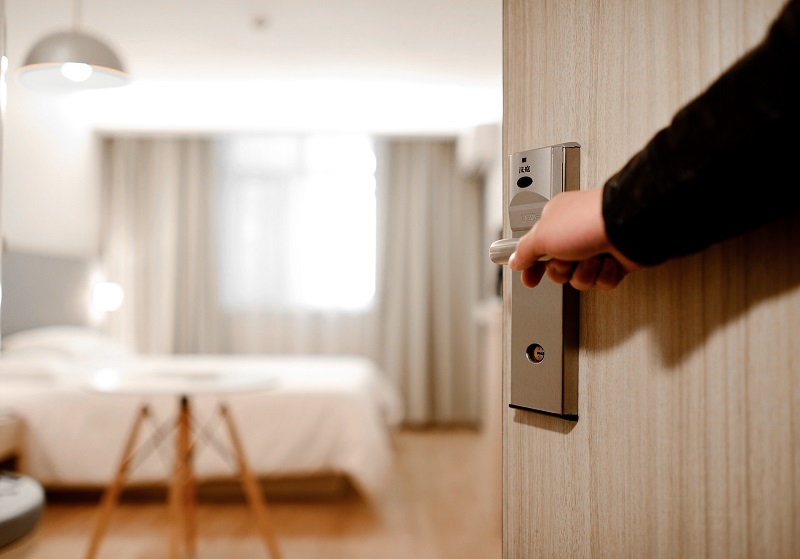
What if the room smells strange?
An unpleasant odor can have several causes, including cleaning products, drains, damp carpets, smoke, or inadequate ventilation.
Do not assume that every unusual smell means a dangerous condition, but do not ignore a strong or persistent odor either.
If you suspect a gas leak, chemical exposure, or another immediate hazard, leave the area and alert the appropriate emergency service or hotel staff from a safe location.
For ordinary but persistent musty or sewage-like odors, request an inspection or room change.