New Parvo Treatment Offers Hope for Sick Puppies
What Is Parvovirus?
Parvo is a highly contagious virus primarily affecting young puppies. It leads to immune system suppression, digestive problems, and sometimes heart issues. Symptoms include severe diarrhea, tiredness, vomiting, and loss of appetite. The virus damages the intestines' lining, hindering nutrient and water absorption.
According to Elanco veterinarian Jennifer Miller, DVM, about 330,000 cases of canine parvovirus are diagnosed annually in the United States. Despite the availability of a vaccine, outbreaks still occur, affecting all aspects of veterinary care.
Unfortunately, even with excellent care, some puppies don't survive parvo. Miller notes that without proper treatment, there's a 91 percent chance of mortality.
How Does the New Treatment Work?
The Canine Parvovirus Monoclonal Antibody functions by directly targeting the parvovirus. According to Miller, it attaches to the virus, preventing it from binding to gut cells and replicating. This one-time intravenous injection is given upon confirmation of a positive parvo diagnosis. While most patients receive supportive care, including hospitalization, fluid therapy, and medications to alleviate symptoms.
Cookie’s Success Story
In July 2023, an 8-week-old pit bull mix named Cookie, who had not received any previous vaccinations, was brought to The Fix Project's Parvo ICU by her owner. She was displaying parvo symptoms, and a test confirmed the diagnosis. Within 30 minutes, Cookie received Elanco's Monoclonal Antibody and was admitted to the ICU for supportive care.
Andrew Cabrera, DVM of the Fix Project tells Daily Paws that Cookie was small, and he was worried about losing her. However, she showed significant improvement by the second day and was eating normally by the third day. Just five days after diagnosis, Cookie was able to return home with her family, fully recovered from parvovirus.
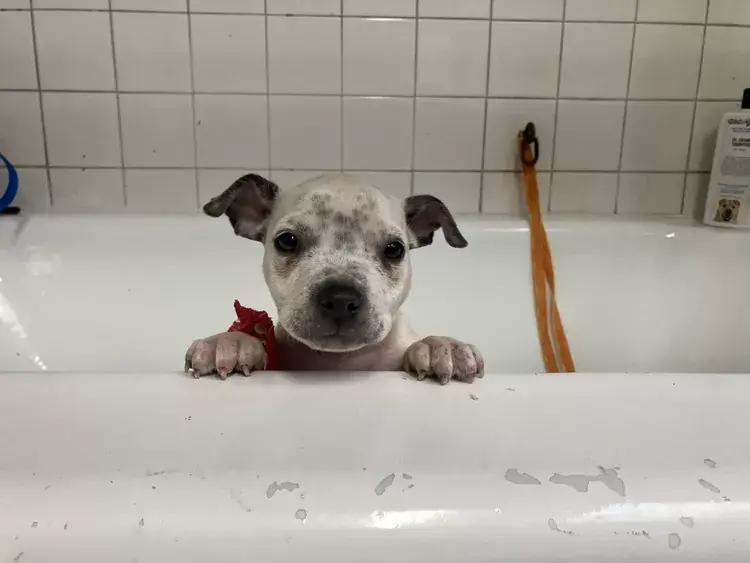
Cookie made history as the first puppy to be treated with Elanco's Canine Parvovirus Monoclonal Antibody, and she wasn’t the last. Cabrera says he has seen similar results in other parvo puppies he has treated.
“The success rate has been night and day,” Cabrera says. “We’re able to get them eating a little faster and out of the hospital a little more quickly.”
Cabrera adds that the treatment has improved the veterinary team’s stress levels and workload. Parvo patients require around-the-clock care, and team members develop strong bonds with their patients. It’s difficult to watch some puppies decline in spite of treatment. But Cabrera says that Elanco’s Monoclonal Antibody has significantly improved their success rate. Almost every single pup who received the treatment survived.
Miller anticipates vets across the country will add Elanco’s Monoclonal Antibody into current parvo protocols to reduce hospitalization time and increase the odds of survival.