Your fingers may reveal more about your health than you realize.
Most changes in your hands are harmless. A minor injury, cold weather, aging, arthritis, or even genetics can affect the appearance of your fingers and nails. However, certain persistent changes—particularly changes in the shape of the fingertips and nails—can sometimes be associated with underlying lung disease.
One of the best-known examples is digital clubbing, a gradual enlargement and rounding of the fingertips accompanied by changes in the nails.
Clubbing is not a disease itself, and it does not mean that someone has lung cancer. It can occur with several lung, heart, gastrointestinal, and other medical conditions. Some people may also have a familial form that isn't associated with serious illness.
Still, if you notice a new, progressive change in the shape of your fingertips or nails, it's worth having it evaluated.
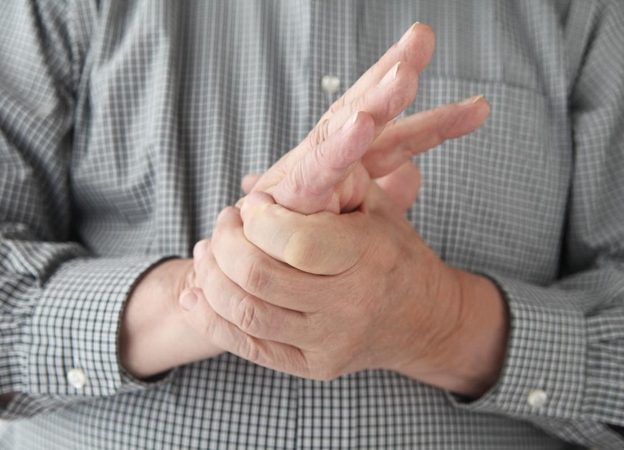
What Is Finger Clubbing?
Digital clubbing is a physical change in which the ends of the fingers become enlarged and the nails become more curved.
The change usually develops gradually rather than overnight.
You may notice that:
-
Fingertips look wider or more rounded
-
Nails appear more curved from side to side
-
The angle between the nail and surrounding skin becomes less distinct
-
The tissue beneath the nail feels fuller
-
The fingertips have a more bulbous appearance
In more advanced cases, the fingers can develop a characteristic "drumstick" appearance.
The changes often affect multiple fingers and may occur on both hands.
1. The Nails May Become More Curved
One of the early features of clubbing can be a change in the curvature of the nail.
Normally, the nail has a relatively gentle shape.
With clubbing, the nail may become increasingly rounded and curved.
The nail can appear:
-
More convex
-
Wider
-
More prominent
-
Curved around the fingertip
This change can be subtle at first.
Comparing your current nails with older photographs can sometimes help you notice gradual changes.
2. The Fingertips May Become Enlarged
As clubbing progresses, the tissue at the ends of the fingers can become thicker.
The fingertips may look:
Broader than before
Rounder
More swollen
More bulbous
This is different from temporary swelling caused by an injury or infection.
Clubbing typically develops gradually and affects several fingers.
3. The Nail-Fold Angle Can Change
Healthcare professionals may evaluate the angle between the nail and the skin at the base of the nail.
Normally, this angle has a characteristic appearance.
With clubbing, the angle can become more prominent or appear to flatten as the tissue beneath the nail changes.
Doctors may use this as one part of a physical examination.
4. The "Window Test" May Offer a Clue
You may have seen a test online called the Schamroth window test.
It is simple:
-
Place the backs of two corresponding fingers together.
-
Press the nails against each other.
-
Look at the small diamond-shaped space normally visible between the nails.
In many people without clubbing, a small diamond-shaped window is visible.
With significant digital clubbing, this space may disappear.
This can be a useful screening clue, but it is not a diagnostic test for lung cancer.
A person should not use the test to diagnose themselves.
There are also limitations to the test, and nail shape can vary naturally.
If you notice a persistent change, a healthcare professional can examine your fingers properly.
5. Why Can Lung Disease Affect the Fingers?
The exact biological mechanism behind digital clubbing isn't completely understood.
Researchers believe that changes involving blood flow, platelets, inflammatory signals, and growth factors may contribute.
In certain diseases, substances or cells may bypass normal filtering in the lungs and reach the circulation around the fingertips.
This may promote changes in blood vessels and connective tissue.
However, the mechanism is complex and varies depending on the underlying condition.
That's why clubbing should be viewed as a clinical sign, not a disease itself.
6. Lung Cancer Is One Possible Cause
Digital clubbing can occur in people with certain lung cancers, particularly some forms of non-small cell lung cancer.
But this is an important distinction:
Clubbing does not mean you have lung cancer.
Many people with clubbing do not have cancer.
And many people with lung cancer do not develop clubbing.
Therefore, finding a change in your fingertips should prompt evaluation rather than panic.
If a healthcare professional notices clubbing, they may consider your medical history, symptoms, smoking history, and other risk factors before deciding whether additional testing is necessary.
7. Other Lung Diseases Can Also Cause Clubbing
Lung cancer is only one possibility.
Digital clubbing may also be associated with certain chronic lung conditions, including:
-
Bronchiectasis
-
Cystic fibrosis
-
Some interstitial lung diseases
-
Certain chronic lung infections
-
Other less common pulmonary disorders
The underlying cause depends on the person's age, medical history, symptoms, and examination.
8. Heart Conditions Can Be Associated With Clubbing
Clubbing isn't exclusively a lung-related finding.
Certain heart conditions can also be associated with it.
These include some forms of cyanotic congenital heart disease, particularly conditions that cause chronically reduced oxygen levels in the blood.
Certain infections involving the heart, such as infective endocarditis, can also be associated with clubbing.
This is another reason why a finger change should not automatically be interpreted as a lung cancer warning.
9. Digestive Diseases May Also Be Involved
Certain gastrointestinal and liver conditions can be associated with digital clubbing.
Examples include:
-
Inflammatory bowel disease
-
Crohn's disease
-
Ulcerative colitis
-
Certain chronic liver diseases
-
Some gastrointestinal disorders
Again, the finding is nonspecific.
The hands provide a clue—not a diagnosis.
10. Clubbing Can Sometimes Run in Families
Some people have familial or hereditary clubbing.
In these cases, the finger shape may be present for many years without an underlying disease.
If several family members have similar fingertips and the appearance has always been that way, it may simply be a familial trait.
A healthcare professional can help distinguish inherited clubbing from newly acquired changes.
11. Not Every Curved Nail Is Clubbing
This is particularly important.
Many completely healthy people have naturally curved nails.
Nail shape can vary because of:
-
Genetics
-
Age
-
Nail trauma
-
Occupation
-
Nail care habits
-
Certain medications
-
Other medical conditions
Clubbing involves more than simply having curved nails.
Doctors look at the overall shape of the fingertip, nail, nail bed, and surrounding tissue.
12. Nail Changes Can Have Many Other Causes
Other nail abnormalities can be caused by:
-
Fungal infections
-
Psoriasis
-
Iron deficiency
-
Thyroid disease
-
Trauma
-
Nutritional deficiencies
-
Certain medications
For example, brittle or ridged nails do not automatically indicate lung disease.
A nail problem should be interpreted according to its specific appearance.
13. Fingertip Swelling Isn't Always Clubbing
Your fingers can temporarily swell because of:
-
Heat
-
Exercise
-
High sodium intake
-
Injury
-
Infection
-
Arthritis
-
Fluid retention
This type of swelling may come and go.
Clubbing generally develops gradually and produces a characteristic change in the shape of the fingertip and nail.
If you're unsure whether what you're seeing is clubbing, don't try to diagnose it from an online photograph.
14. What Other Symptoms Should You Watch For?
If a new finger change is accompanied by respiratory symptoms, the combination deserves more attention.
Possible warning symptoms include:
Persistent Cough
A cough lasting several weeks should be evaluated, particularly if it is new or changing.
Coughing Up Blood
Blood in the sputum can have several causes, some of which are serious.
Unexplained Shortness of Breath
Difficulty breathing that is persistent or worsening should not be ignored.
Chest Pain
Chest pain has many possible causes and can sometimes indicate a serious heart or lung condition.
Unexplained Weight Loss
Unexpected weight loss can occur with many illnesses and deserves medical evaluation when significant or persistent.
Persistent Hoarseness
A lasting change in the voice can have several causes and should be assessed if it doesn't resolve.
15. Persistent Cough Doesn't Automatically Mean Cancer
This is worth emphasizing.
A cough is extremely common.
It can result from:
-
Allergies
-
Asthma
-
Acid reflux
-
Viral infections
-
Smoking
-
Postnasal drip
-
Chronic lung disease
However, a cough that persists for weeks, becomes progressively worse, or is accompanied by blood, unexplained weight loss, chest pain, or breathing difficulties deserves medical evaluation.
16. Smoking Is an Important Lung Cancer Risk Factor
Smoking remains one of the strongest preventable risk factors for lung cancer.
Tobacco smoke exposes the lungs to numerous carcinogens that can damage DNA and contribute to cancer development.
The risk increases with factors such as:
-
Number of cigarettes smoked
-
Years of smoking
-
Age when smoking began
-
Continued exposure
Quitting smoking can reduce risk, even after years of smoking.
If you smoke, discussing cessation support with a healthcare professional can be one of the most valuable things you can do for your long-term health.
17. Secondhand Smoke Matters Too
You don't have to smoke yourself to be exposed to tobacco smoke.
Regular exposure to secondhand smoke can increase the risk of several health problems, including cardiovascular and respiratory disease and lung cancer.
Reducing exposure is beneficial for everyone, particularly children and people with existing respiratory conditions.
18. Other Lung Cancer Risk Factors Exist
Smoking isn't the only factor.
Risk can also be influenced by:
-
Secondhand smoke
-
Radon exposure
-
Certain workplace chemicals
-
Asbestos exposure
-
Air pollution
-
Family history
-
Previous radiation exposure
Having a risk factor doesn't mean you will develop lung cancer.
Likewise, someone without obvious risk factors can still develop the disease.
19. Why Early Evaluation Matters
If a healthcare professional identifies genuine clubbing, they may want to determine whether an underlying condition is present.
The evaluation might include:
-
Medical history
-
Physical examination
-
Blood tests
-
Chest imaging
-
Lung-function testing
-
Other targeted investigations
The appropriate tests depend on your symptoms and risk profile.
You don't necessarily need an extensive cancer workup just because your nails look different.
20. A Doctor May Look at Your Fingertips Differently
During an examination, a healthcare professional may assess:
-
Nail curvature
-
Nail-bed angle
-
Fingertip thickness
-
Symmetry
-
Presence of other physical signs
-
Changes over time
They may also compare both hands.
This is much more informative than relying on a single home test.
21. What Is the Schamroth Window Test Actually For?
The Schamroth window test is a simple bedside observation used to look for a feature associated with digital clubbing.
It is not designed to tell you:
"You have lung cancer."
It simply asks whether a particular physical feature associated with clubbing is present.
Even then, it should be interpreted alongside a physical examination.
A negative result does not guarantee that no disease exists.
A positive-looking result does not prove that disease exists.
22. Don't Panic If the Window Is Hard to See
Finger and nail anatomy varies.
Factors such as:
-
Nail length
-
Nail curvature
-
Finger position
-
Arthritis
-
Previous injury
can affect the appearance of the space between the nails.
Don't repeatedly test your fingers and become anxious over small differences.
If your fingertips genuinely appear to be changing, seek professional evaluation.
23. Clubbing Usually Develops Gradually
Unlike an allergic reaction or injury, clubbing usually doesn't suddenly appear within a few hours.
It tends to develop over time.
You might notice that your nails have become progressively more curved or that your fingertips look broader than they did several months ago.
This is one reason comparing older photographs can sometimes be useful.
24. One Finger May Not Tell the Whole Story
Clubbing typically affects multiple fingers.
A single swollen or painful finger is much more likely to have a local cause such as:
-
Injury
-
Infection
-
Arthritis
-
Tendon problems
If several fingertips are changing in a similar way, especially gradually, it deserves more attention.
25. What Happens If Clubbing Is Confirmed?
The next step isn't necessarily cancer treatment.
The goal is to identify the underlying cause.
Your doctor may ask about:
-
Smoking
-
Breathing symptoms
-
Family history
-
Heart conditions
-
Digestive problems
-
Previous infections
-
Medications
-
Occupational exposures
Further testing depends on the clinical picture.
Treating the underlying condition may sometimes improve associated clubbing, although changes can persist.
26. Can Clubbing Go Away?
That depends on the cause.
If clubbing results from an underlying condition that is successfully treated, the changes may partially or completely improve in some cases.
However, long-standing structural changes may not completely reverse.
The priority is therefore not to "treat the fingers" but to identify and address the underlying disease.
27. Finger Changes Aren't a Substitute for Lung Cancer Screening
People at increased risk for lung cancer may qualify for low-dose CT screening, depending on factors such as age and smoking history.
Screening recommendations vary by country and individual risk.
A finger examination cannot replace appropriate cancer screening.
If you're in a group eligible for lung cancer screening, discuss it with your healthcare professional even if your fingers look completely normal.
28. Don't Wait for Symptoms If You're High Risk
Lung cancer can develop without obvious symptoms during its earlier stages.
This is one reason screening is important for people who meet eligibility criteria.
Don't wait for:
-
Finger changes
-
Persistent coughing
-
Weight loss
-
Chest pain
before discussing screening if you're already considered high risk.
29. Protecting Your Lung Health
You can't control every lung disease risk factor, but several steps can reduce risk.
Quit Smoking
This is one of the most important actions for lung health.
Avoid Secondhand Smoke
Keep indoor environments smoke-free.
Test for Radon Where Appropriate
Radon is a naturally occurring radioactive gas that can accumulate indoors.
Use Workplace Protection
If you're exposed to dust, asbestos, chemicals, or other respiratory hazards, follow workplace safety procedures.
Stay Physically Active
Regular exercise supports cardiovascular and respiratory health.
Keep Vaccinations Up to Date
Certain respiratory infections can be particularly serious in vulnerable people.
30. What About Air Pollution?
Long-term exposure to air pollution has been associated with increased respiratory and cardiovascular risks.
When air quality is poor, people with respiratory conditions may benefit from reducing outdoor exertion and following local public-health recommendations.
Indoor air quality also matters.
Avoid smoking indoors and ensure appropriate ventilation when using products that produce fumes.
31. When Should You See a Doctor About Your Fingers?
Make an appointment if you notice:
-
Gradually enlarging fingertips
-
New changes in nail curvature
-
Multiple fingers becoming unusually rounded
-
Persistent nail-bed changes
-
Finger changes accompanied by respiratory symptoms
You don't need to wait until the changes become dramatic.
Early evaluation can help determine whether the change is simply anatomical or potentially related to an underlying condition.
32. When Should You Seek Urgent Care?
A finger change by itself usually isn't an emergency.
But urgent medical attention may be necessary if it occurs alongside serious symptoms such as:
-
Severe difficulty breathing
-
Coughing up significant amounts of blood
-
Severe chest pain
-
Blue or gray lips
-
Fainting
-
Sudden confusion
These symptoms can indicate a potentially serious heart or lung problem.
33. What Your Doctor May Ask
Expect questions such as:
When did you first notice the change?
Has it been getting worse?
Do other fingers look different?
Do you smoke or have you smoked in the past?
Do you have a chronic cough?
Have you noticed shortness of breath?
Have you experienced unexplained weight loss?
Do you have heart or digestive problems?
These questions help determine whether further investigation is appropriate.
34. Don't Diagnose Yourself From Social Media
Online health content can be useful for raising awareness, but it can also create unnecessary anxiety.
A photograph of someone's fingers may look similar to another person's while having completely different causes.
Likewise, a viral "finger test" may be presented as though it can detect cancer.
It can't.
A physical sign can be a clue, but diagnosis requires medical evaluation.
35. The Difference Between a Clue and a Diagnosis
This distinction is critical.
A clue says:
"This finding may be associated with several medical conditions."
A diagnosis says:
"Testing and clinical evaluation indicate that this specific disease is present."
Digital clubbing is a clue.
It is not a lung cancer diagnosis.
36. A Simple Way to Think About Your Finger Changes
Ask yourself three questions:
Has the shape actually changed?
Compare with older photos if necessary.
Are multiple fingers affected?
Changes affecting several fingers are more significant than a single injured finger.
Are there other symptoms?
Persistent cough, shortness of breath, chest pain, unexplained weight loss, or coughing up blood make medical evaluation more important.
37. Don't Ignore Persistent Changes—But Don't Panic
There is a healthy middle ground between ignoring symptoms and assuming the worst.
If your fingers look different:
Don't immediately assume cancer.
But also:
Don't dismiss a progressive change without checking it.
A healthcare professional can often determine whether the finding is normal, inherited, or related to an underlying condition.
The Bottom Line
A change in your fingertips - particularly gradual enlargement and rounding accompanied by increased nail curvature - can sometimes be associated with lung disease and other medical conditions.
This phenomenon is known as digital clubbing.
It can occur with certain lung cancers, but also with:
-
Chronic lung diseases
-
Some heart conditions
-
Inflammatory bowel disease
-
Certain liver disorders
-
Other medical conditions
-
Familial traits
The Schamroth window test can provide a simple clue, but it cannot diagnose lung cancer or rule it out.
If you notice persistent changes in your fingertips, particularly alongside chronic cough, unexplained shortness of breath, coughing up blood, chest pain, or unexplained weight loss, arrange a medical evaluation.
And if severe breathing difficulty, significant chest pain, or substantial bleeding occurs, seek emergency care.
Final Thoughts
Your fingers aren't a cancer detector—but they can sometimes provide clues that are worth investigating.
Digital clubbing is a good example of how a seemingly small physical change can occasionally be associated with a larger health issue. At the same time, many people with naturally curved nails or unusual finger shapes are completely healthy.
The key is change over time.
If your fingertips and nails have gradually become noticeably different, don't rely solely on an online "finger test." Let a healthcare professional examine them and determine whether further testing is appropriate.
Most importantly, don't wait for a finger change before taking care of your lungs.
Avoid smoking, reduce exposure to secondhand smoke and occupational hazards, pay attention to persistent respiratory symptoms, and discuss appropriate lung cancer screening with your doctor if you're at increased risk.