If you suddenly notice a group of strange, spotted insects gathering on a tree in your backyard, your first reaction might be simple curiosity.
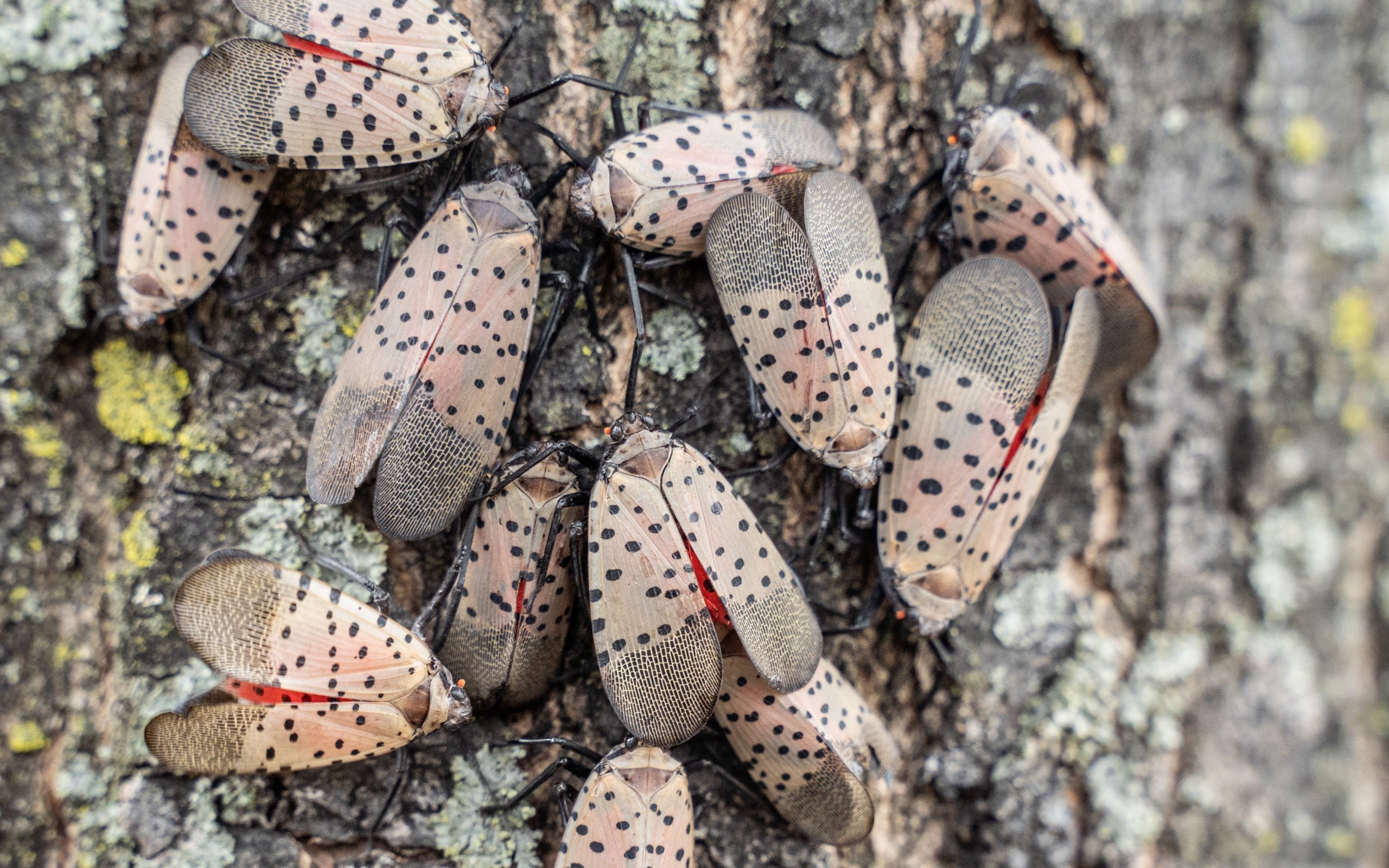
But if they look like the insects shown in the image, you may be looking at spotted lanternflies—an invasive insect that has attracted considerable attention because of the damage it can cause to plants, trees, and agricultural ecosystems.
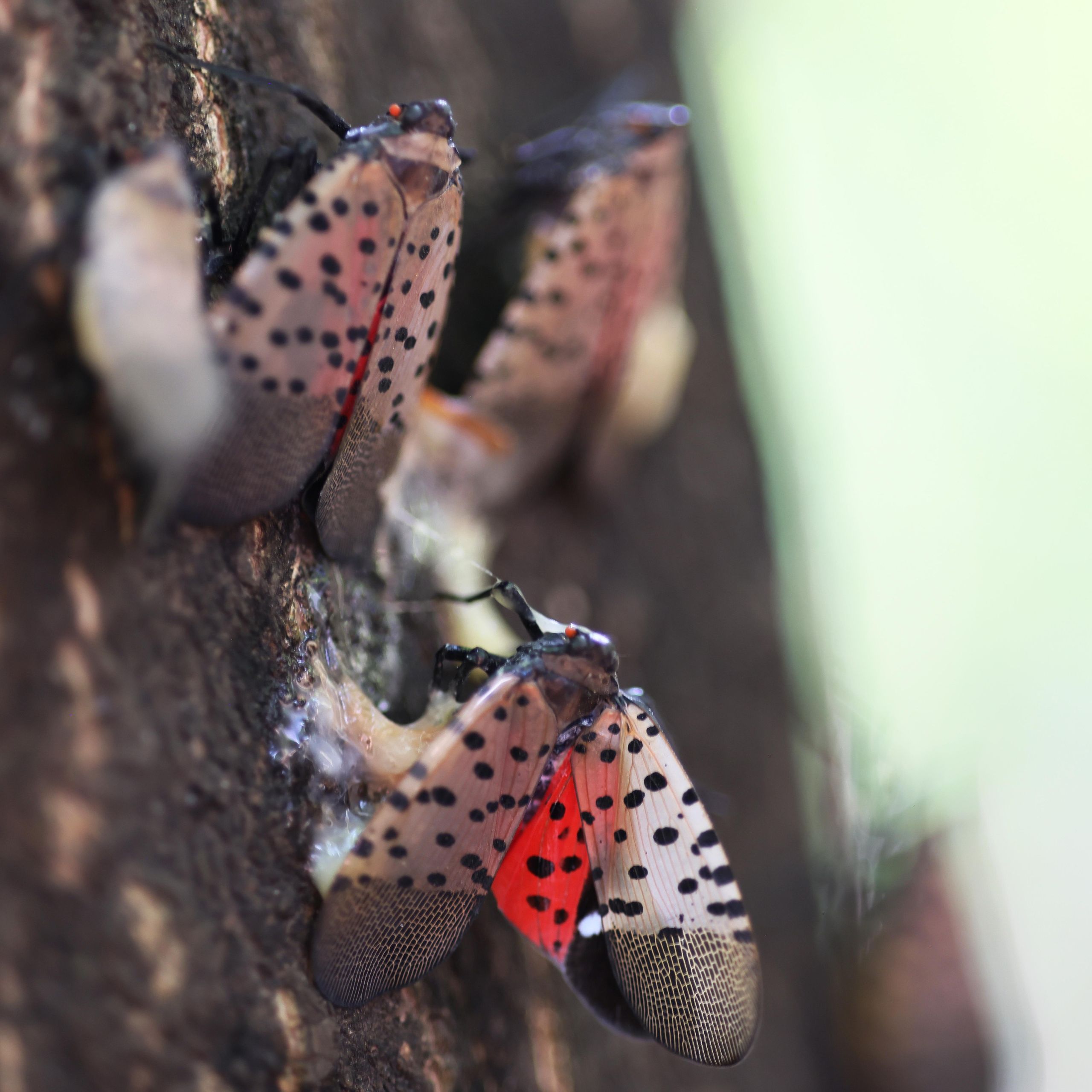
The adults are particularly recognizable. They have pale gray or pinkish wings covered with dark spots, while their hind wings reveal much brighter colors when they open or fly.
Seeing one doesn't mean your property is suddenly in danger. But if you live in an area where spotted lanternflies are considered invasive, an unusual cluster is worth taking seriously and reporting according to local guidance.
Here's what you should know.
What Are These Strange Insects?
The insect shown in the image appears to be the spotted lanternfly (Lycorma delicatula).
Despite its name, it isn't actually a fly.
It belongs to a group of insects called planthoppers, which are related to cicadas and other sap-feeding insects.
The spotted lanternfly is native to parts of China and neighboring regions of Asia. It was introduced to other parts of the world, including the United States, where it has established populations in several areas.
The adults have a distinctive appearance that makes them relatively easy to recognize once you know what you're looking for.
Their forewings are generally grayish or tan with black spots, while the hind wings contain striking red and black coloration.
That contrast can make them look almost decorative.
Unfortunately, their appearance doesn't reflect their potential impact on ecosystems.
Why Are Spotted Lanternflies Considered a Problem?
The main concern isn't that these insects attack people.
They don't typically bite or sting humans.
The bigger issue is what they do to plants.
Spotted lanternflies feed by piercing plant tissue and sucking out phloem, a nutrient-rich fluid transported through plants.
When large numbers feed on the same plant, the cumulative stress can become significant.
This can weaken plants and trees, interfere with normal growth, and make already-stressed vegetation more vulnerable to other problems.
The impact can be particularly concerning for agricultural crops and certain tree species.
Why Are So Many of Them Gathered Together?
One of the most unsettling things about spotted lanternflies is their tendency to appear in groups.
You may see dozens or even many more insects clustered on a tree trunk, branch, fence, or other surface.
This behavior can make it look as though the tree is covered in strange shells or dark insects.
If you've never seen them before, the sight can be genuinely surprising.
The insects may gather around suitable feeding locations and can become particularly noticeable during certain stages of their life cycle.
That means finding a large group doesn't necessarily indicate that something unusual has happened overnight.
It may simply mean you've encountered a concentrated population at the right time.
The Most Important Clue: Their Appearance
Adult spotted lanternflies have a distinctive appearance.
When their wings are folded, they often look relatively muted.
The wings can appear:
-
Gray
-
Tan
-
Beige
-
Speckled with black spots
When the insect opens its wings, however, a much brighter pattern can become visible.
The hind wings include red, black, and white markings.
This striking contrast is one of the easiest characteristics to remember.
Young spotted lanternflies look very different.
Nymphs are smaller and can appear black with white spots during earlier stages. Later, they develop red coloration.
This means you shouldn't expect every spotted lanternfly you encounter to look exactly like the adult insect in the photograph.
Don't Confuse the Insect With Its Egg Masses
Another reason spotted lanternflies can be difficult to control is that their eggs can be deposited on many different surfaces.
Egg masses can sometimes look like mud, grayish patches, or dried material attached to tree trunks, outdoor furniture, vehicles, stones, or other objects.
This is important because the insects can potentially spread when egg masses or other life stages are transported unintentionally.
People may move firewood, outdoor equipment, vehicles, landscaping materials, or other objects without realizing that insects or egg masses are attached.
That's one reason public awareness is such an important part of invasive-species management.
Why the "Don't Ignore Even One" Warning Exists
You may have seen dramatic warnings online telling people to destroy spotted lanternflies immediately if they see even one.
The reason behind that message is related to invasive-species prevention.
When an insect is established outside its native range, early detection can help authorities understand where populations are appearing and how quickly they are spreading.
However, there is an important distinction between responsible reporting and simply killing every insect that vaguely resembles a spotted lanternfly.
Misidentification can happen.
Not every spotted insect is an invasive lanternfly.
If you believe you've found one, especially in an area where sightings are monitored, follow your local agriculture or environmental agency's instructions for identification and reporting.
What Should You Do If You Find One?
The appropriate response depends on where you live.
If spotted lanternflies are regulated or actively monitored in your area, you may be encouraged to:
Take a clear photograph.
A photo can help confirm the identification.
Record where you found it.
The location can be useful for local monitoring programs.
Check official local guidance.
Agricultural departments and invasive-species programs may have specific instructions about reporting or removal.
Avoid transporting the insect or egg masses.
This is particularly important when traveling between areas where the insect is present and areas where it isn't established.
Don't assume that simply putting the insect in a vehicle or carrying infested outdoor materials elsewhere is harmless.
Why Your Car Could Accidentally Help Them Spread
Spotted lanternflies don't need to intentionally "travel" long distances.
Humans can inadvertently move them.
An insect or egg mass attached to:
-
A vehicle
-
Trailer
-
Outdoor furniture
-
Firewood
-
Gardening equipment
-
Landscaping materials
-
Camping equipment
could potentially be transported to another location.
This is one reason invasive insects can spread beyond their original introduction point.
Before moving outdoor items, especially during periods when spotted lanternflies are active, check them carefully if your local authorities recommend doing so.
They Can Affect More Than Just Trees
Spotted lanternflies feed on a wide variety of plants.
Some trees can serve as particularly important hosts, and certain agricultural crops can also be affected.
When large populations feed on vegetation, they can cause stress and contribute to reduced plant vigor.
But there is another issue that homeowners may notice even before they understand what is happening.
It involves a substance called honeydew.
What Is Honeydew?
When spotted lanternflies feed on plants, they consume large amounts of sap.
They don't use all of the nutrients they ingest.
As a result, they excrete a sugary liquid known as honeydew.
When large numbers of insects are present, this honeydew can accumulate on surfaces beneath them.
You may notice:
-
Sticky tree trunks
-
Sticky leaves
-
Sticky outdoor furniture
-
Sticky vehicles
-
Shiny surfaces beneath infested trees
This can be annoying for homeowners.
But there's another consequence.
Honeydew Can Encourage Black Sooty Mold
The sugary honeydew provides a food source for certain fungi.
This can lead to the development of sooty mold, a dark fungal coating that can cover leaves and nearby surfaces.
The mold itself isn't necessarily the primary problem.
Rather, it is evidence that a significant amount of honeydew is being produced.
Heavy sooty mold growth on leaves can interfere with photosynthesis by reducing the amount of light reaching the leaf surface.
Again, the severity depends on the size of the infestation and the plant involved.
Are Spotted Lanternflies Dangerous to Humans?
For most people, the answer is reassuring:
They are not generally considered a direct threat to human health.
They don't have the kind of venomous sting associated with wasps or bees.
The concern is primarily ecological and agricultural rather than personal safety.
That distinction matters because dramatic social-media posts can make the insect sound much more dangerous than it actually is.
You don't need to panic if you see one.
Instead, identify it carefully and follow local recommendations.
Why Invasive Insects Can Be So Difficult to Control
Invasive species can be challenging because they enter ecosystems where natural checks may be different from those in their native range.
An insect that has evolved alongside certain predators, parasites, plants, and environmental pressures may behave differently when introduced elsewhere.
If populations grow rapidly, they can become difficult to manage.
This doesn't mean every invasive insect will destroy an ecosystem.
It means monitoring and early response can be valuable.
Spotted lanternflies are a good example of why scientists, farmers, homeowners, and government agencies pay close attention to invasive species.
Don't Rely on Internet Photos Alone
One of the biggest mistakes people make with unusual insects is assuming that a viral photograph proves the identity.
Images can be misleading.
Lighting changes colors.
Different life stages look different.
Other insects can have surprisingly similar markings.
And social-media captions are not always scientifically accurate.
If you find an unfamiliar insect, compare it with information from a trusted agricultural or environmental authority in your region.
A clear photograph showing the entire insect from above can also make identification easier.
What About the Tree Covered in Insects?
The photograph shows a particularly striking situation: a large number of insects clustered together on a tree trunk.
That kind of gathering is exactly why spotted lanternflies have become so recognizable online.
The tree can look as though it has been covered with dozens of small gray shells.
Look more closely, however, and you can distinguish individual insects.
This is a good reminder that what initially looks like a strange growth or infestation may actually be a group of living insects using the same area.
What Can Homeowners Do?
If spotted lanternflies are present in your region, prevention and monitoring can be useful.
Regularly inspect outdoor areas, particularly trees and objects that remain outside.
Pay attention to:
-
Tree trunks
-
Branches
-
Outdoor furniture
-
Fences
-
Vehicles
-
Garden equipment
-
Landscaping materials
If you find suspected egg masses, don't automatically scrape or treat them with random household chemicals.
Instead, check the current recommendations from your local agriculture or environmental authority.
Management recommendations can change as research develops, and different regions may have different regulations.
Why You Shouldn't Use Random Pesticides
Seeing a large cluster of unfamiliar insects can make people want to reach for the strongest pesticide available.
That's not always a good idea.
Unnecessary pesticide use can harm beneficial insects and other organisms.
It can also expose people, pets, and plants to chemicals unnecessarily.
If treatment is recommended in your area, use only products that are appropriate and legally labeled for the intended use, and follow the label instructions carefully.
When an infestation is extensive or involves valuable trees, professional pest-management advice may be appropriate.
The Bigger Lesson: Learn to Recognize What Lives Around You
The most useful thing about photographs like this isn't simply learning the name of one insect.
It's becoming more observant.
Once you know what spotted lanternflies look like, you may start noticing other insects around your property too.
You'll recognize that some are harmless.
Some are beneficial.
Some are pests.
And some may require reporting because they're invasive.
Understanding the difference is far more useful than reacting to every unusual bug with fear.
What Makes the Spotted Lanternfly So Recognizable?
If you want to remember the basic identification clues, think of three things:
Spots
The adult's forewings have distinctive dark spots.
Grayish Wings
When resting, the insect can look relatively dull and gray.
Red Hind Wings
When the wings open, the bright red coloration can become visible.
Together, these characteristics create the insect's unmistakable appearance.
Still, if you're unsure, use a reliable identification resource rather than relying on memory alone.
Final Thoughts
If you've seen the insects shown in this image gathering on trees around your home, don't panic—but don't casually ignore the sighting either.
The insect appears to be a spotted lanternfly, an invasive planthopper that can affect plants and agricultural ecosystems in areas where it has become established.
The good news is that it isn't generally dangerous to people.
The more important concern is its potential impact on vegetation and its ability to spread when insects or egg masses are accidentally transported.
So if you spot one:
Take a clear photo.
Confirm the identification.
Check your local reporting guidance.
Avoid accidentally transporting insects or egg masses.
And if you discover a large cluster like the one shown in the photograph, document it and follow the recommendations of your local agriculture or environmental authorities.
What looks like an ordinary insect at first glance can sometimes be a sign of a much larger ecological story.
Knowing what you're looking at is the first step—and sometimes, that knowledge can make all the difference.