Most people pay attention to their hands every day without giving them much thought. We use them to prepare meals, work, drive, communicate, and complete countless everyday activities. Yet changes in the appearance or sensation of our hands can sometimes provide clues about what is happening inside the body.
One area worth understanding is kidney health.
The kidneys are two small, bean-shaped organs located near the middle of the back, just below the rib cage. Despite their relatively small size, they perform several essential functions that keep the body working properly.
They filter waste products and excess fluid from the blood, help regulate blood pressure, maintain the balance of important minerals, support red blood cell production, and contribute to healthy bones.
When kidney function becomes impaired, these processes may gradually become less effective. Waste products and fluid can accumulate, mineral levels may become abnormal, and other systems throughout the body can be affected.
The challenge is that kidney disease often develops quietly.
Many people with early chronic kidney disease have no noticeable symptoms. They may continue their usual routines without realizing that their kidney function is gradually declining. In other cases, symptoms become more apparent only after the condition has progressed.
This is why paying attention to changes in your body matters, particularly when several unusual symptoms occur together.
Your hands are not a diagnostic tool, and no single change in their appearance can confirm kidney disease. However, certain symptoms affecting the hands may sometimes occur in people with impaired kidney function.
These include persistent swelling, unusual skin dryness or itching, changes in nail appearance, muscle cramps, and changes in skin color.
Some of these signs have many possible explanations. Dehydration, aging, skin conditions, nutritional deficiencies, circulation problems, medication side effects, and other medical conditions can produce similar symptoms.
Nevertheless, understanding the possible connections can help you recognize when it may be time to seek medical advice.
The following five changes deserve attention, especially when they persist, become more noticeable, or appear alongside other symptoms such as swollen feet, unusual fatigue, changes in urination, or high blood pressure.
The most important thing to remember is that your hands may offer clues, but proper kidney assessment requires medical testing.
And one of the first changes people may notice is something surprisingly simple: their fingers no longer look or feel quite the same.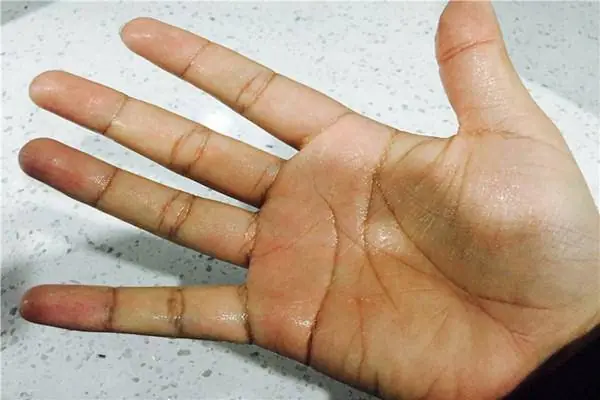
CHAPTER 2: WARNING SIGN #1 - SWOLLEN HANDS AND FINGERS
Have you ever noticed that your fingers look unusually puffy when you wake up? Perhaps your rings suddenly feel tighter, or your hands appear swollen even though you have not injured them.
Occasional mild puffiness can happen for several ordinary reasons. Warm weather, eating a salty meal, hormonal changes, prolonged inactivity, or sleeping in certain positions may contribute to temporary fluid retention.
However, persistent or unexplained swelling deserves closer attention.
One possible cause is a problem with the kidneys' ability to regulate fluid and sodium.
Why Can Kidney Problems Cause Swelling?
Healthy kidneys remove excess water and sodium from the bloodstream through urine.
When kidney function becomes impaired, the body may retain more sodium and water than it needs. This can increase fluid volume and contribute to swelling, a condition medically known as edema.
The swelling often affects the feet, ankles, and legs because gravity encourages fluid to accumulate in these areas.
However, fluid retention can also affect the hands, fingers, face, and the tissues around the eyes.
Some people notice that their rings become difficult to remove or that their fingers feel stiff and swollen in the morning.
In more advanced cases, fluid accumulation may also contribute to rapid weight gain and shortness of breath.
What Does Kidney-Related Swelling Look Like?
Swelling associated with fluid retention may have several characteristics:
-
Fingers appear puffier than usual.
-
Rings feel tighter despite no obvious change in weight.
-
Hands feel unusually heavy or stiff.
-
Swelling may occur alongside puffiness around the eyes.
-
Feet or ankles may also become swollen.
-
The swelling may persist or repeatedly return.
In some cases, pressing gently on the swollen area may leave a temporary indentation. This is called pitting edema.
However, not all swelling caused by kidney disease produces pitting, and the appearance alone cannot identify the underlying cause.
Other Possible Causes of Swollen Hands
Kidney disease is only one possibility.
Swollen fingers can also result from arthritis, inflammation, injuries, allergic reactions, infections, certain medications, and problems affecting the veins or lymphatic system.
For example, people with inflammatory arthritis may experience swelling around the finger joints, often accompanied by stiffness and discomfort.
Some medications used to treat high blood pressure can also contribute to swelling, although the pattern and location vary depending on the drug.