Every year, over 200 people die from consuming what is known as the “world’s deadliest food,” yet nearly 500 million people still eat it.
There are many foods that could fill you up quickly, but you wouldn’t find them on your dinner plate every night. So, what is the food that’s both deadly and widely consumed around the globe?
Cassava, a plant and a staple food for many, plays an important role in the diets of millions of people worldwide. Each year, it is consumed by over 500 million people, and hundreds of millions of tons of cassava are grown around the world.
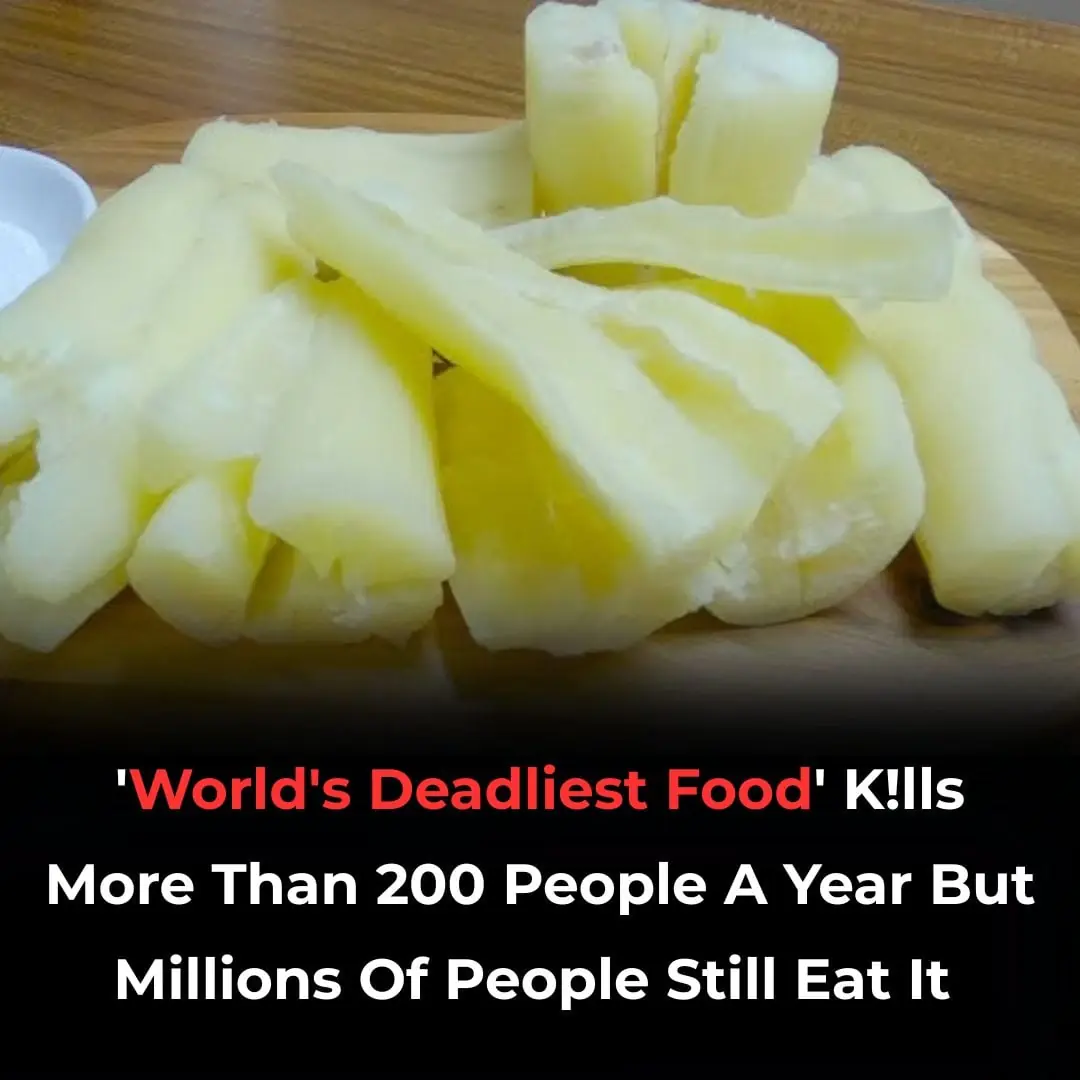
Originating in South America, cassava is both a plant and a well-known food, but it also comes with significant risks. The plant’s stems, peel, and leaves are toxic and can produce hydrogen cyanide, making it potentially fatal if consumed improperly.
The World Health Organization (WHO) reports that around 200 people die annually from eating improperly prepared cassava. This is why it has earned the grim title of the “world’s deadliest food.”
The WHO explains: “Cassava tubers contain varying amounts of cyanogenic glucosides that serve as a defense against animals and insects. When these glucosides are not processed correctly, cassava can release cyanide, leading to high dietary cyanide exposure.”
Such dangerous exposure is especially prevalent during times of famine and war. Cyanide poisoning from cassava is linked to several severe diseases, including konzo.
Konzo is a debilitating, irreversible condition marked by sudden paralysis in the legs, which is often a result of consuming bitter cassava, particularly when combined with a low-protein diet. This condition is most commonly found in regions suffering from extreme poverty, where it can occur sporadically or in epidemics.
Despite its deadly reputation, millions of people continue to eat cassava every day without issue. This raises the important question: how can you make sure that cassava is safe to eat?
The key lies in proper preparation. Ensuring cassava is safe involves a lengthy process, including soaking the plant for up to 24 hours to remove harmful toxins.
In Venezuela, for example, people were consuming cassava in its dangerous form because they relied on salty foods to survive during times of food scarcity, as reported by El País.
While cassava remains a critical food source for many, understanding and practicing safe preparation methods can make it a nourishing and safe part of the diet. As awareness spreads about the risks associated with cassava, the methods for properly processing it are becoming more widely practiced, reducing the dangers of poisoning.
Cassava: The Hidden Risks, Safe Preparation Methods, and Why Millions Depend on This Remarkable Root
1. Why Cassava Can Be Dangerous Despite Being a Common Food
Cassava is a fascinating example of how a plant can be both an essential source of nourishment and a potential health hazard. For millions of people, it is an affordable staple that provides energy, supports livelihoods, and grows in environments where other crops may struggle. Yet the same plant contains naturally occurring chemicals that can become dangerous when cassava is not processed correctly.
The main concern is a group of compounds called cyanogenic glycosides. These substances occur naturally in cassava and can release hydrogen cyanide when the plant tissue is damaged and the compounds undergo chemical reactions.
Hydrogen cyanide is toxic because it interferes with the body's ability to use oxygen at the cellular level. In severe cases, exposure can lead to neurological problems, cardiovascular collapse, and death. The World Health Organization identifies cassava as an important dietary source of cyanogenic compounds in regions where the crop is widely consumed. WHO: Natural toxins in food.
However, it is important to understand that cassava is not inherently unsafe when properly processed. Many communities have developed traditional preparation methods over generations to make it suitable for human consumption.
The danger arises when these methods are skipped, shortened, or performed incorrectly. This can happen when people lack access to clean water, processing equipment, fuel, time, or sufficient food to wait for a proper preparation process.
Understanding this distinction helps explain why cassava can safely nourish entire populations while still causing serious poisoning in particular circumstances.
2. What Are Cyanogenic Glycosides?
Cyanogenic glycosides are natural plant compounds that serve as a defense mechanism against insects and other organisms. They occur in numerous plant species, including cassava and certain other foods.
In cassava, two important cyanogenic glycosides are linamarin and lotaustralin. When plant tissue is cut, crushed, grated, or otherwise damaged, enzymes can help break these compounds down. This process can eventually release hydrogen cyanide.
The amount of cyanogenic compounds varies. Different cassava varieties can contain different concentrations, and levels may also be affected by growing conditions, plant maturity, and other factors.
This variation matters because a preparation method that is adequate for one batch of cassava may not reliably make another batch safe.
People sometimes distinguish between “sweet” and “bitter” cassava. These terms often reflect differences in taste and cyanogenic potential, but taste alone is not a reliable safety test. A cassava root should never be assumed safe simply because it does not taste bitter.
Similarly, a root that looks fresh, smells normal, or appears undamaged may still contain potentially harmful compounds.