People Unable to Comprehend Two Bystanders’ Actions as Plane Nosedived Into Florida Neighborhood
A quiet Florida neighborhood was suddenly transformed into the scene of a devastating aviation disaster. A private jet plunged toward the ground, struck a busy roadway, and erupted into flames. The impact killed all nine people aboard, tore a massive crater into the pavement, and sent debris into the surrounding residential area.
Yet, in the hours after the tragedy, another detail began attracting attention online. In footage recorded near the crash site, two people appeared to walk barefoot across a damaged stretch of road, remarkably close to the wreckage. Viewers were stunned. Some questioned how anyone could approach such a dangerous area without shoes, while others argued that the pair might have been residents who had rushed outside in shock after the aircraft came down.
The brief video created a debate that quickly spread beyond the neighborhood. But the most important question is not simply why two people were barefoot. It is what the footage actually shows, what remains unknown about their circumstances, and why a few seconds of video can lead thousands of people to judge strangers during an unfolding emergency.
Behind that online argument lies a much larger story: a November 1 crash in Palm Beach County that killed nine people, disrupted an entire community, and left investigators searching for answers about the Learjet 60's final moments.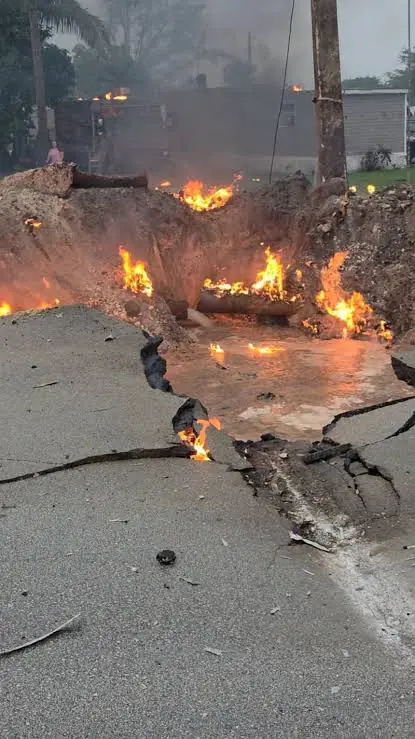
The Moment an Ordinary Neighborhood Became the Scene of a Disaster
On Sunday, November 1, 2026, residents near Military Trail in the Greenacres area of Palm Beach County were going about an ordinary day. Homes, businesses, parked vehicles, and familiar roads formed the landscape of a community where people expected the usual sounds of traffic and neighborhood activity.
Then the aircraft came down.
The plane was a Learjet 60 traveling from Austin-Bergstrom International Airport in Texas toward North Eleuthera Airport in the Bahamas. It crashed at approximately 12:50 p.m. local time near Military Trail and 10th Avenue North. Nine people were aboard, and authorities confirmed that all nine died.
The impact was catastrophic. The aircraft struck the ground beside a busy road and produced a large crater. Flames and thick smoke rose from the crash site, while fragments of the aircraft and other debris were scattered across the surrounding area. Nearby residents suddenly found themselves facing a scene that most people would never expect to witness outside their homes.
Videos and photographs from the aftermath showed emergency vehicles, damaged pavement, fire crews, law enforcement officers, and residents trying to understand what had happened. The force of the impact was visible in the road itself. What had been an ordinary stretch of pavement was now a heavily damaged accident scene requiring a major emergency response.
For the families of the nine people aboard, the crash was an unimaginable loss. For people living nearby, it was a frightening event that threatened homes, disrupted utilities, and forced many residents to leave the area while authorities secured the scene.
The tragedy also raised an immediate question: how could an aircraft traveling between Texas and the Bahamas descend so rapidly and crash into a residential area?
That question remains central to the federal investigation.
Why Two Barefoot Bystanders Became the Focus of Online Attention
As footage from the aftermath circulated, viewers noticed something that seemed difficult to understand. A man and a woman appeared to be walking barefoot along a damaged roadway close to the crash site.
The aircraft had left a crater in the road. Debris was scattered nearby, and flames were visible in footage from the scene. Against that background, the sight of people walking without shoes seemed alarming to many viewers.
Some social media users reacted with disbelief. They questioned why anyone would walk so close to a recent aircraft crash without protecting their feet. Others pointed out that a road damaged by a high-impact collision could contain sharp fragments, broken materials, hot surfaces, or other hazards that might not be visible in a short video.
Their concerns were understandable. A serious aircraft accident can leave behind dangers that extend well beyond the obvious flames and wreckage. Even after the main fire has been brought under control, debris and damaged infrastructure can create risks for anyone who enters the area without authorization or protective equipment.
But another group of viewers urged people not to rush to judgment.
They suggested that the two individuals could have been local residents who had been inside their homes when the aircraft crashed. If the impact happened close to them, they may have rushed outside without stopping to put on shoes. They could have been frightened, confused, or trying to understand whether their homes or neighbors were in danger.
That possibility matters because the video does not establish who the two people were, what they had experienced, or why they were barefoot.
Their identities and motivations have not been independently confirmed in the reporting available. There is also no verified evidence that they deliberately ignored safety instructions or intended to approach the wreckage recklessly.
The footage captures only a brief moment. It does not show what happened before the pair entered the frame, what they had been doing immediately after the crash, or where they were going.
That missing context is the central reason the online debate cannot be settled by watching the clip alone.
What the Footage Appears to Show—and What It Cannot Prove
Short videos can be powerful because they make an event feel immediate. A viewer sees a person walking near a damaged road and may feel as though the entire situation is obvious.
But a video recorded from one position provides only a limited view.
In this case, the footage reportedly shows two people walking barefoot near the damaged roadway after the aircraft had crashed. It does not establish that they were present at the precise moment of impact, nor does it explain whether they had been evacuated, were trying to reach someone, or were simply moving away from their homes.
It is important to distinguish between what can be seen and what is being assumed.
What the footage appears to show:
-
A severely damaged roadway near the crash site.
-
Debris and signs of a major aircraft impact.
-
People standing or moving near the affected area.
-
A man and a woman who appear to be walking without shoes.
What the footage does not establish:
-
The identities of the two individuals.
-
Whether they lived in the nearby neighborhood.
-
Whether they had just escaped from a damaged home.
-
Whether they understood the full extent of the danger.
-
Whether emergency personnel had already instructed them to move.
-
Why they were not wearing shoes.