Questions Persist About Ongoing Health Issues Among Those Vaccinated Against COVID-19: What Does the Evidence Really Show?
For billions of people around the world, COVID-19 vaccination became part of an extraordinary period in modern medical history. People received their injections at workplaces, hospitals, pharmacies, community centers, and temporary vaccination sites, hoping to reduce their risk of severe illness during a global pandemic.
For many, the experience was straightforward: a sore arm, a day of tiredness, perhaps a mild fever, and then a return to normal life. Others reported symptoms that were more worrying, including chest discomfort, unusual heart rhythms, persistent fatigue, or health problems that appeared after vaccination. Some people recovered quickly. Others sought medical attention and continued searching for answers.
Years later, questions remain—not simply because vaccines were given to so many people, but because understanding an individual's health problem can be difficult. Did a symptom occur by coincidence? Was it a recognized but uncommon vaccine reaction? Was it related to a previous or subsequent COVID-19 infection? Or was another medical condition responsible?
These questions deserve serious attention. People who experience health problems should not be dismissed, and genuine vaccine-related adverse events should be investigated. At the same time, a health problem that begins after vaccination is not automatically proof that the vaccine caused it.
The most useful way to examine this subject is to separate what has been established, what is known to be rare, and what remains uncertain. That distinction is essential for understanding vaccine safety without minimizing individual experiences or spreading claims that the available evidence cannot support.
The central question is not whether every person experienced the same outcome. They did not. It is how medical researchers determine which problems are genuinely connected to vaccination, how often they occur, and what people should do if they develop symptoms.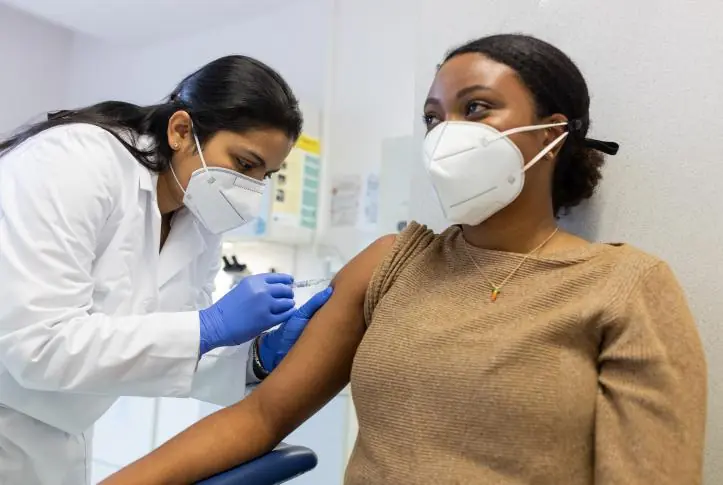
What Is Actually Known About COVID-19 Vaccine Side Effects?
The first point to understand is that COVID-19 vaccines, like other medical interventions, can cause side effects. Most recognized reactions are temporary and relatively mild.
Common short-term effects include:
-
Pain, tenderness, or swelling where the injection was given.
-
Tiredness.
-
Headache.
-
Muscle or joint aches.
-
Chills.
-
A mild fever.
-
Occasionally, swollen lymph nodes.
These reactions generally begin soon after vaccination and settle within a few days. Some people experience several symptoms, while others notice almost nothing.
The World Health Organization describes these familiar reactions as generally mild to moderate and short-lived. It also acknowledges that serious or longer-lasting reactions are possible, but extremely rare.
A temporary fever or sore arm is not the same as a serious adverse event. It is also important to distinguish a side effect from an allergic reaction, an unrelated illness, or a symptom that requires medical investigation.
The fact that most people experience only short-term reactions does not mean every concern should be dismissed. Vaccine safety monitoring exists precisely because uncommon problems may not become apparent until a product is used by very large and diverse populations.
Clinical trials can identify common reactions and some less common problems, but they cannot always detect events that occur only once in tens of thousands or hundreds of thousands of doses. After authorization, monitoring continues across much larger populations.
This is how researchers can identify rare patterns that might otherwise remain unnoticed.
The evidence therefore supports two statements at the same time: most reported reactions are short-lived, and a small number of serious adverse events have been established as genuine vaccine risks.
Both statements matter.
The Rare Adverse Events That Have Been Scientifically Recognized
Public discussion sometimes treats all reported symptoms as if they were equally established. They are not.
Some adverse events have been studied extensively and are recognized by health authorities. Others remain under investigation, and some reports have not demonstrated a causal relationship.
Two important examples of rare adverse events associated with certain COVID-19 vaccines are myocarditis and pericarditis, and a specific type of unusual blood clotting associated with some adenovirus-vector vaccines.
Myocarditis: Inflammation of the Heart Muscle
Myocarditis is inflammation of the heart muscle. It can affect the heart's ability to pump blood and, in some cases, cause abnormal heart rhythms.
Symptoms can include:
-
Chest pain or pressure.
-
Shortness of breath.
-
A racing or irregular heartbeat.
-
Unusual fatigue.
-
Reduced ability to exercise.
Myocarditis can have several causes, including viral infections. It has also been identified as a rare adverse event following certain COVID-19 vaccines.
The strongest recognized association has involved mRNA vaccines, including Pfizer-BioNTech and Moderna products. Cases have occurred most frequently in adolescent and young adult males, often within about a week after a second dose, although cases have also been reported in other groups and after other doses.
The National Academies of Sciences, Engineering, and Medicine reviewed the available evidence in its 2024 report, Evidence Review of the Adverse Effects of COVID-19 Vaccination and Intramuscular Vaccine Administration. Its conclusions state that the evidence establishes a causal relationship between the Pfizer-BioNTech and Moderna mRNA vaccines and myocarditis.
This is an important example of how vaccine safety research works. Researchers did not need to assume that every report was caused by vaccination. Instead, they examined patterns, timing, clinical findings, and comparisons with expected rates in the population.
The result was a recognized, specific risk that could be communicated to patients and healthcare professionals.
Most reported post-vaccination myocarditis cases have been described as improving with treatment and rest, but the condition should never be treated casually. Some patients require hospital care and follow-up.
Anyone who develops chest pain, shortness of breath, or palpitations after vaccination—particularly in the days following an injection—should seek medical evaluation rather than trying to diagnose the problem at home.
It is equally important to remember that myocarditis can occur after infections, including COVID-19 itself. A clinician must evaluate the timing, symptoms, test results, and possible alternative causes.
Pericarditis: Inflammation Around the Heart
Pericarditis is inflammation of the thin sac surrounding the heart.
It can cause sharp chest pain, sometimes worse when taking a deep breath or lying down. Some people feel better when sitting forward. Other symptoms may include fever or a general sense of illness.
Pericarditis can occur after viral infections and in association with several medical conditions. It has also been reported following COVID-19 vaccination.
Myocarditis and pericarditis are related but distinct conditions. They may occur separately or together.
The 2024 National Academies review found that the evidence establishes a causal relationship between the Pfizer-BioNTech and Moderna vaccines and myocarditis. Its conclusions concerning pericarditis without myocarditis were more limited and did not establish the same level of causal certainty for every vaccine and condition.
This distinction illustrates why medical research must be specific. A finding about myocarditis should not automatically be applied to every type of chest pain, every heart condition, or every vaccine product.
A person with new or persistent chest pain should receive medical assessment regardless of whether they were recently vaccinated.
Unusual Blood Clotting After Certain Adenovirus-Vector Vaccines
Another rare adverse event identified during the vaccine rollout was thrombosis with thrombocytopenia syndrome, sometimes called TTS.
This condition involves blood clots occurring alongside low platelet counts. It was associated with certain adenovirus-vector COVID-19 vaccines, including the Johnson & Johnson/Janssen vaccine and the AstraZeneca vaccine.
The condition was unusual because it could involve clotting in locations such as the brain's venous sinuses or abdominal blood vessels, together with a low platelet count.
Symptoms requiring urgent medical assessment can include:
-
Severe or persistent headache.
-
Blurred vision or other visual changes.
-
Severe abdominal pain.
-
Leg swelling or pain.
-
Shortness of breath.
-
Chest pain.
-
Unusual bruising or tiny red or purple spots on the skin.
The timing and specific risk depended on the vaccine product and the medical guidance in the relevant country.
TTS is not the same as the common blood clots that occur in the general population. It is a particular syndrome that requires medical investigation and laboratory testing.
The existence of this rare complication does not mean that every person who develops a clot after vaccination has TTS. Nor does it mean that ordinary bruising or a headache is proof of a vaccine injury.
The diagnosis requires clinical assessment.