Cardiovascular disease remains the leading cause of death worldwide, driven largely by atherosclerosis—the gradual buildup of lipid-rich plaques within arterial walls. While elevated low-density lipoprotein (LDL) cholesterol is a well-established risk factor, growing evidence shows that the oxidation of LDL particles, rather than total LDL concentration alone, plays a central role in initiating and accelerating plaque formation. Oxidized LDL promotes endothelial dysfunction, triggers inflammatory responses, and drives macrophages to form foam cells, which are the foundation of atherosclerotic lesions. Against this background, dietary strategies that directly reduce oxidative stress have attracted increasing scientific interest.
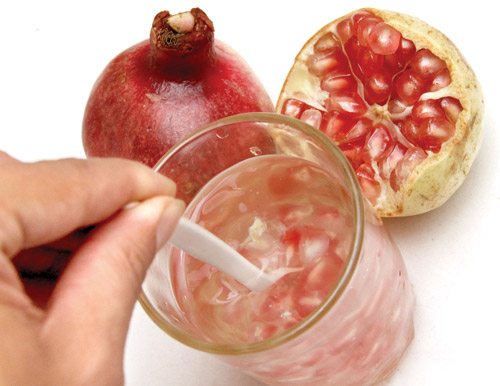
A body of human clinical research summarized in a peer-reviewed review article available on PubMed Central highlights the remarkable cardiovascular effects of pomegranate juice, even at very small daily doses. Across multiple studies, participants consumed approximately 50 mL of pomegranate juice per day—roughly one-fifth of a standard glass. Despite this modest intake, the physiological effects were striking. One of the most consistent findings was a dramatic reduction in LDL oxidation, with decreases reported as high as ~90%. This magnitude of effect is particularly notable given that most conventional lipid-lowering therapies do not directly target LDL oxidation.
The significance of reducing oxidized LDL cannot be overstated. Oxidized LDL is far more atherogenic than native LDL, as it is readily taken up by macrophages via scavenger receptors, leading to foam cell formation and plaque growth. By sharply lowering LDL oxidation, pomegranate juice appears to interfere with one of the earliest and most damaging steps in atherogenesis. Importantly, these effects were observed without major changes in total LDL cholesterol levels, suggesting a mechanism distinct from that of statins or other cholesterol-lowering drugs.
Longer-term clinical studies provide further support for pomegranate’s cardiovascular benefits. In patients with carotid artery stenosis—a condition characterized by plaque buildup that increases stroke risk—daily consumption of the same 50 mL dose of pomegranate juice for periods extending up to one year was associated with a ~30–35% reduction in carotid intima-media thickness (IMT). IMT is a widely accepted structural marker of atherosclerotic burden and a strong predictor of future cardiovascular events. A reduction of this magnitude suggests not merely slowed progression, but potential regression of arterial plaque.
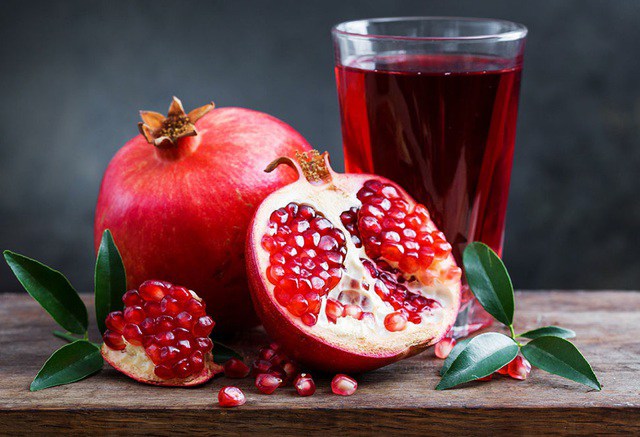
Mechanistically, the benefits of pomegranate juice have been attributed primarily to its exceptionally high content of polyphenols, particularly punicalagins and related ellagitannins. These compounds possess powerful antioxidant properties and directly neutralize reactive oxygen species, thereby reducing oxidative modification of lipids and proteins. In addition, pomegranate polyphenols have been shown to decrease macrophage lipid accumulation and foam cell formation, further limiting plaque development. Unlike many dietary interventions that act indirectly through lipid metabolism, pomegranate appears to exert a direct anti-atherogenic effect at the level of oxidative stress and vascular inflammation.
An important practical implication of these findings is the very small dose required to achieve benefit. Consuming only 50 mL per day makes long-term adherence more feasible and minimizes concerns related to caloric or sugar intake, which can accompany larger volumes of fruit juice. This low-dose efficacy also underscores the potency of pomegranate’s bioactive compounds relative to many other dietary antioxidants.
Despite these promising results, it is essential to interpret the findings with appropriate scientific caution. While the studies summarized in the review were conducted in humans and included objective biochemical and imaging endpoints, many involved relatively small sample sizes. Moreover, although reductions in LDL oxidation and IMT are strongly linked to lower cardiovascular risk, these studies were not designed to directly measure hard clinical outcomes such as heart attacks or strokes. Therefore, while the evidence supports a meaningful cardioprotective effect, it does not establish pomegranate juice as a standalone treatment for cardiovascular disease.

In conclusion, human clinical studies summarized in a peer-reviewed PMC review provide compelling evidence that a small daily intake of pomegranate juice can dramatically reduce LDL oxidation and significantly improve structural markers of atherosclerosis. By targeting oxidative stress and macrophage-driven plaque formation rather than traditional cholesterol pathways, pomegranate represents a unique and biologically plausible dietary strategy for cardiovascular protection (PMC review on pomegranate and cardiovascular health). While not a substitute for established medical therapies, regular low-dose pomegranate juice consumption may serve as a valuable adjunct in the prevention and management of atherosclerotic cardiovascular disease.