A presenter may finish one report and expect the production team to play the next video.
If that video fails to appear, the studio might remain on the presenter.
Even a short delay can create an unexpected situation.
This is why clear communication between the presenter and production team is essential.
7. Other Memorable Moments When Live Television Did Not Go According to Plan
The image accompanying this story is not enough to verify the specific incident suggested by the headline. However, the history of television provides several documented examples of presenters being unexpectedly caught on camera.
These incidents show that live television has always contained an element of unpredictability.
A presenter caught stretching during a BBC broadcast
As mentioned earlier, Lukwesa Burak's May 2023 incident became widely discussed after viewers saw her stretching when the broadcast unexpectedly returned to the studio.
She quickly realized what had happened and resumed her professional presentation.
The episode demonstrated that even experienced presenters can be caught off guard by a technical transition.
A presenter distracted by a mobile phone
In June 2016, BBC presenter Joanna Gosling was filmed looking at her phone shortly before a news bulletin.
She appeared to miss her cue before putting the phone aside and beginning the broadcast.
The incident attracted attention because she recovered quickly and continued with the news.
A camera that refused to cooperate
In January 2023, BBC presenter Victoria Valentine encountered an unexpected problem when a studio camera moved away from its intended position.
Rather than waiting helplessly, she moved after the camera and continued presenting while the situation was corrected.
Her relaxed response was widely praised as an example of quick thinking.
NDTV
These examples demonstrate that live television mistakes are not always embarrassing.
Sometimes they reveal the skills that make experienced presenters successful.
A professional is not someone who never encounters a problem. A professional is someone who can respond effectively when a problem occurs.
8. Why a Calm Reaction Can Be More Impressive Than a Perfect Broadcast
One of the most valuable qualities a presenter can develop is the ability to remain composed.
A live broadcast places the presenter in an environment where mistakes cannot always be removed.
A technical failure might happen without warning. A guest might say something unexpected. A microphone might stop working.
The presenter must continue communicating even when the situation becomes uncomfortable.
This requires concentration and emotional control.
The Importance of Recovering Naturally
When something unexpected happens, an exaggerated reaction can make the situation more noticeable.
A presenter who panics might interrupt the program unnecessarily.
By contrast, someone who calmly acknowledges the situation and moves forward can help viewers remain focused on the broadcast.
This does not mean presenters should pretend that nothing has happened in every circumstance.
If a serious technical or safety issue occurs, it may be necessary to explain the problem.
But for minor interruptions, a simple recovery is often the most effective response.
A brief pause, a smile, or a quick return to the script can be enough.
Experience Makes a Difference
Experienced presenters have usually encountered a wide range of situations.
They have worked with different directors, studio layouts, camera systems, and program formats.
They understand that unexpected events are part of the job.
Over time, they develop the ability to recognize when something has gone wrong and decide how to respond.
That experience is particularly valuable when working live.
A presenter may not be able to control every technical detail, but they can control their own response.
This is one reason audiences often admire broadcasters who recover gracefully from mistakes.
The moment may be unexpected, but the professionalism shown afterward is not accidental.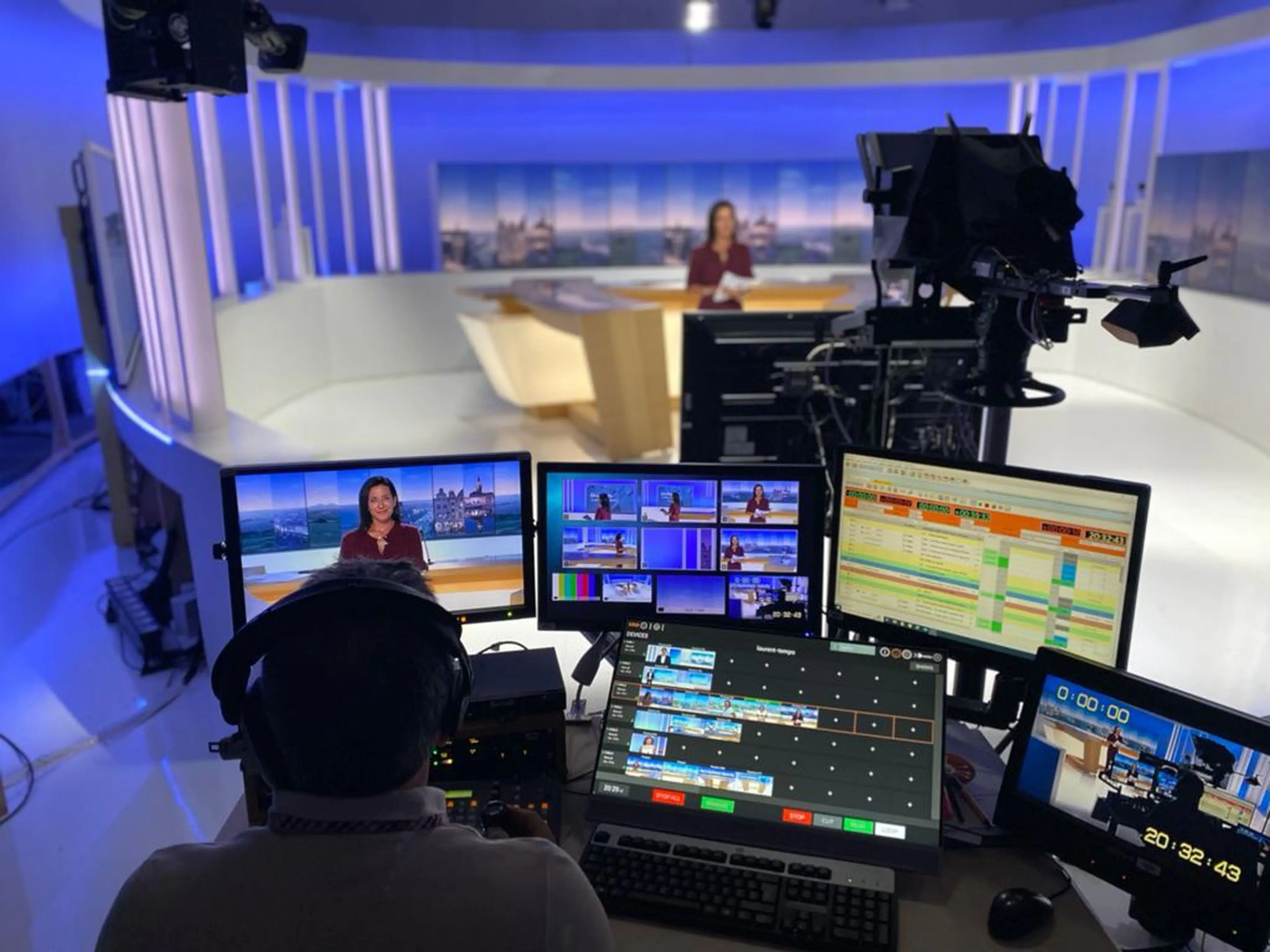
9. The Social Media Effect: When a Few Seconds Become a Worldwide Conversation
The relationship between television and social media has become increasingly complicated.
A live broadcast may originally be intended for a specific television audience, but an interesting moment can quickly reach people in completely different countries.
A viewer records a clip. Another person shares it with a humorous caption. Someone else adds a reaction video. Before long, the original broadcast becomes part of a much larger online discussion.
The speed of this process can be surprising.
A moment that lasts only a few seconds may receive more attention online than an entire television program.
Why People Share Unexpected Moments
There are several reasons people enjoy sharing unscripted television footage.
First, it creates a feeling of spontaneity.
Many online videos are carefully edited or deliberately produced to attract attention. A moment that appears unplanned can feel different because viewers believe they are witnessing something genuine.
Second, the footage is easy to understand.
A viewer does not necessarily need to know the presenter, the television station, or the subject of the program to understand that something unexpected may have happened.
Third, these clips create opportunities for discussion.
Some people focus on the presenter. Others discuss the camera operator, the production team, or the technical circumstances behind the incident.
The same short video can produce many different reactions.
The Danger of Reposting Without Context
Although sharing entertaining footage can be harmless, problems arise when the original context is removed.
A clip might be shortened so that viewers cannot see what happened before the incident.
A humorous caption might make a routine action appear embarrassing.
A photograph might be presented as proof of an event that has not been independently verified.
In some cases, old footage is circulated again as if it were new.
This is particularly common with viral content because many users encounter the material without knowing its original source.
The result is that an ordinary moment can acquire a completely different meaning.
Readers should therefore ask a few basic questions:
-
Where did the original footage come from?
-
Is there a complete recording?
-
Has the television station confirmed the incident?
-
Does the headline accurately describe what can be seen?
-
Is the date of the footage known?
These questions are useful not only for television stories but also for other viral photographs and videos.
10. The Privacy Question: Does Being on Television Mean Everything Is Fair Game?
There is another important issue behind unexpected camera moments.
People who work in television understand that they will be visible to the public while performing their professional duties.
However, that does not mean every personal moment should automatically become an object of ridicule.
A presenter adjusting clothing, checking a microphone, or stretching between segments is not necessarily doing anything inappropriate.
These are normal activities in a working environment.