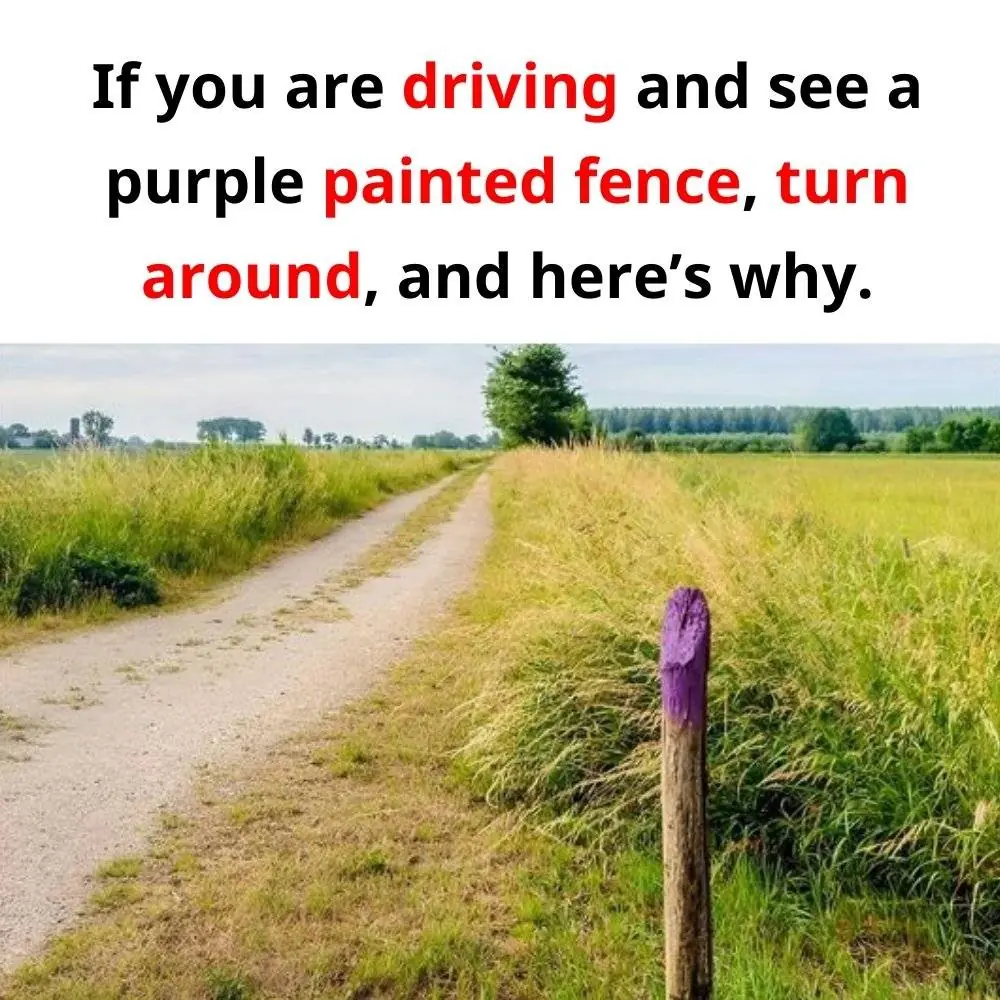
1. The Silent Warning of Purple Fences: More Than Just a Color
In the scenic landscapes of rural and suburban areas, fences play a more significant role than simply marking property boundaries. They’re like quiet guardians, sending vital messages without saying a word. Among the array of fence colors, one stands out with a clear and urgent purpose: purple. Encountering a purple fence isn’t just a coincidence—it’s a serious warning to stop, turn around, and stay away.
2. The Meaning Behind Purple Fences
The tradition of painting fences purple as a no-trespassing marker stems from legal statutes enacted in various states. These laws allow property owners to mark their land boundaries with purple paint, serving as a clear, non-verbal warning to potential trespassers. The choice of purple is deliberate: it’s a color that is visible even to most colorblind individuals and stands out in low-light conditions, such as dawn or dusk.
3. Understanding Purple Paint Laws
Known as "purple paint statutes," these laws outline the proper way for landowners to display the markings. Requirements often include:
- Height and Placement: Marks must be at a specific height above the ground.
- Size and Frequency: The paint must be large and spaced consistently along the fence line.
These regulations ensure the markings are unmistakable to anyone approaching the property.
4. Why Purple? The Purpose of the Warning
The primary goal of purple fences is safety. They serve as a proactive measure to protect people from wandering into potentially dangerous areas. These might include:
- Aggressive Animals: Farms or properties with protective livestock.
- Hunting Grounds: Areas where hunting is active, posing a risk to passersby.
- Hazardous Terrain: Dangerous landscapes like cliffs, swamps, or restricted zones.
By marking boundaries with purple, landowners can prevent accidents, conflicts, and legal disputes.
5. The Role of Purple Fences in Agricultural Areas
In rural regions, purple fences often surround farmland or ranches, signaling areas actively used for agriculture. They warn against interfering with livestock, damaging crops, or entering restricted zones. These markings are visible even from a distance, serving as a clear boundary for all.