White rice has been a staple food in many diets for generations. It is inexpensive, easy to prepare, filling, and pairs well with almost everything. But if you regularly replace some of your white rice with sweet potatoes, you may notice several changes in your diet and, over time, in how you feel.
Sweet potatoes are naturally rich in carbohydrates, but they also provide dietary fiber, potassium, vitamin C, and carotenoids such as beta-carotene. Depending on the variety, preparation method, and portion size, they can offer a different nutritional profile from white rice.
That doesn't mean white rice is "bad" or that sweet potatoes are automatically better for everyone. Both can be part of a healthy diet. The real question is what happens when one carbohydrate source is substituted for another.
Here are some potential changes worth knowing.

1. You May Get More Fiber
One of the most noticeable nutritional differences is dietary fiber.
Refined white rice contains relatively little fiber because the outer layers of the grain are removed during processing. Sweet potatoes, particularly when eaten with their skin, can contribute more fiber to the meal.
Fiber is important for normal digestive function and can help promote feelings of fullness.
If your usual meal consists of a large serving of white rice with very few vegetables or other fiber-rich foods, replacing part of that rice with sweet potato may increase your overall fiber intake.
However, the exact difference depends on portion size and preparation.
A meal containing sweet potato alongside vegetables, beans, or whole grains will provide considerably more fiber than a meal centered only around a small serving of peeled sweet potato.
2. Your Blood Sugar Response May Be Different
Another reason people consider switching from white rice to sweet potatoes is blood sugar.
White rice is relatively easy to digest because it contains mostly starch and has little fiber.
Sweet potatoes also contain substantial carbohydrate, so they can still raise blood glucose. They should not be considered a carbohydrate-free or "blood-sugar-proof" food.
However, their fiber content and overall food structure may influence how quickly the carbohydrate is digested.
The glycemic response can also vary significantly depending on the type of sweet potato, portion size, cooking method, and what you eat alongside it.
For example, eating sweet potatoes with protein, vegetables, and healthy fats can produce a different blood sugar response than eating a large portion by itself.
So rather than asking whether sweet potatoes "don't raise blood sugar," a better question is:
How does this portion, prepared this way, fit into your overall meal?
3. You May Feel Fuller After Meals
If you're accustomed to eating a large bowl of white rice, switching some of it to sweet potato may change how satisfied you feel.
Sweet potatoes contain fiber and water, which can contribute to food volume and satiety.
This can make a meal feel substantial without relying entirely on a large serving of refined grains.
However, fullness depends on the entire meal.
A plate containing sweet potato, vegetables, beans, fish, eggs, chicken, tofu, or another protein source is generally more satisfying than a plate containing carbohydrates alone.
If your goal is weight management, portion size still matters.
Sweet potatoes contain calories and carbohydrates, so simply replacing rice with an unlimited amount of sweet potato won't automatically result in weight loss.
4. Your Diet May Provide More Beta-Carotene
One major nutritional advantage of orange-fleshed sweet potatoes is their high content of beta-carotene.
Beta-carotene is a carotenoid that the body can convert into vitamin A.
Vitamin A is important for normal:
-
Vision
-
Immune function
-
Cell growth
-
Skin and tissue maintenance
The amount of beta-carotene varies among sweet potato varieties, with orange-fleshed varieties generally providing much more than white or purple varieties.
White rice, by comparison, isn't naturally a significant source of beta-carotene.
This means that replacing some rice with orange sweet potato can increase your intake of this particular plant compound.
5. You Can Get More Potassium
Sweet potatoes are also a useful source of potassium, an essential mineral involved in fluid balance, nerve signaling, and normal muscle function.
Potassium is particularly important because many people don't consume enough potassium-rich foods.
Sweet potatoes aren't the only option, of course.
Bananas, beans, lentils, potatoes, leafy greens, yogurt, and several other foods also contribute potassium.
Still, adding sweet potatoes to your diet can be a convenient way to diversify your sources.
People with kidney disease or certain medical conditions may need to monitor potassium intake, however. If you've been advised to follow a low-potassium diet, speak with your healthcare professional before making major dietary changes.
6. You May Increase Your Intake of Antioxidant Compounds
Sweet potatoes contain various plant compounds with antioxidant activity.
Orange varieties are particularly rich in carotenoids, while purple sweet potatoes contain pigments called anthocyanins.
These compounds help give different sweet potato varieties their characteristic colors.
Antioxidants are part of a broader dietary pattern associated with plant-rich eating.
But it's important not to exaggerate the effect.
Eating sweet potatoes does not "detox" your body or prevent every disease. Their value comes from being one nutritious component of a varied diet.
7. Your Digestive System May Notice the Difference
A sudden increase in fiber can affect digestion.
If you're currently eating very little fiber and suddenly replace a significant amount of rice with large servings of sweet potato, you may experience temporary gas, bloating, or changes in bowel habits.
This doesn't necessarily mean sweet potatoes are bad for you.
It may simply mean your digestive system needs time to adjust.
Increase fiber gradually and make sure you're drinking enough fluids.
Eating a variety of fiber-containing foods—including vegetables, fruits, legumes, nuts, seeds, and whole grains—can be more beneficial than relying heavily on a single food.
8. Your Micronutrient Intake May Become More Diverse
White rice provides energy primarily through carbohydrates and also contributes some nutrients, particularly when it is enriched or fortified.
Sweet potatoes bring a different combination of nutrients to the table.
Depending on the variety, they can provide:
-
Vitamin C
-
Potassium
-
Vitamin B6
-
Manganese
-
Fiber
-
Beta-carotene
-
Other plant compounds
This is one of the biggest advantages of dietary variety.
Instead of relying heavily on one staple food, rotating different carbohydrate sources can broaden the range of nutrients you consume.
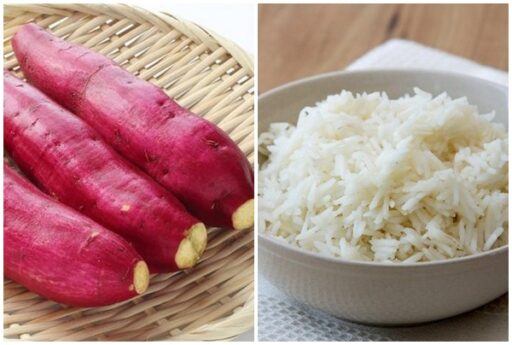
9. Preparation Makes a Big Difference
How you prepare your sweet potatoes matters.
A plain baked, steamed, or boiled sweet potato is very different from sweet potatoes that are deep-fried and covered with butter, sugar, syrup, or highly processed sauces.
The same principle applies to rice.
Steamed white rice is nutritionally different from fried rice prepared with large amounts of oil, processed meat, and salty sauces.
So the comparison shouldn't simply be:
Rice = bad
Sweet potato = good
The more useful comparison is:
How are both foods prepared, what portion are you eating, and what else is on your plate?
10. You Don't Have to Give Up Rice Completely
If you enjoy rice, there's no nutritional requirement to eliminate it.
White rice can absolutely fit into a balanced diet.
One practical approach is simply to reduce the portion of rice rather than eliminate it.
For example, instead of filling most of your plate with rice, you might combine a moderate portion of rice with:
-
A serving of protein
-
Several types of vegetables
-
A small amount of healthy fat
-
Or a portion of sweet potato
You can also alternate between different carbohydrate sources throughout the week.
Variety makes healthy eating easier to sustain.
What About Brown Rice?
If you're looking for an alternative to white rice, sweet potatoes aren't the only choice.
Brown rice retains more of the grain's outer layers and generally contains more fiber and micronutrients than white rice.
Other options include:
-
Oats
-
Barley
-
Quinoa
-
Whole-grain bread
-
Beans
-
Lentils
-
Potatoes
-
Sweet potatoes
Each has its own nutritional profile.
The best choice depends on your preferences, health needs, cultural eating habits, and overall diet.
What If You Have Diabetes?
People with diabetes or prediabetes don't necessarily need to avoid sweet potatoes.
The key issue is total carbohydrate intake, portion size, and individual blood glucose response.
Sweet potatoes still contain carbohydrates and can raise blood glucose.
Pairing them with protein, non-starchy vegetables, and healthy fats may help create a more balanced meal.
If you're monitoring blood glucose, you can learn a lot by observing how your body responds to different portions and preparation methods.
If you use glucose-lowering medication or insulin, major dietary changes should be discussed with your healthcare team.
Can Replacing Rice With Sweet Potatoes Help You Lose Weight?
It can potentially help if the substitution lowers overall calorie intake or improves fullness, but the food itself isn't a weight-loss treatment.
Weight management depends on the overall relationship between energy intake and expenditure, along with factors such as sleep, activity, appetite, medications, and individual metabolism.
A large serving of sweet potato can contain plenty of calories, particularly when prepared with substantial amounts of oil, butter, cheese, or sugary toppings.
The simplest strategy is often to focus on portion control and meal composition rather than labeling individual foods as fattening or fat-burning.
A Better Way to Build Your Plate
Instead of making carbohydrates the entire meal, consider using a balanced plate.
A simple structure might include:
Half the plate: vegetables and other plant foods
One-quarter: protein such as fish, chicken, eggs, tofu, beans, or lean meat
One-quarter: a carbohydrate source such as rice, sweet potato, potatoes, or whole grains
Add a modest amount of healthy fat if appropriate.
This approach allows you to enjoy rice or sweet potatoes without making either one the centerpiece of your entire diet.
Is Sweet Potato Always Better Than White Rice?
Not necessarily.
They're simply different foods.
Sweet potatoes generally offer more fiber and certain micronutrients, particularly beta-carotene in orange varieties. White rice is convenient, easy to digest, inexpensive, and culturally important in many diets.
For someone who needs a lower-fiber food temporarily because of a digestive condition, white rice may actually be easier to tolerate.
For someone trying to increase fiber and plant-food intake, sweet potatoes may be a useful choice.
Nutrition isn't about finding one universally superior food.
It's about finding the foods that work well within your individual dietary pattern.

The Bottom Line
Replacing some white rice with sweet potatoes can be a simple way to increase dietary variety and potentially add more fiber, potassium, vitamin C, and carotenoids to your meals.
You may also find that sweet potatoes provide greater fullness because of their combination of fiber and water.
But don't expect a dramatic transformation simply because you changed one carbohydrate source.
Your overall diet matters far more than whether your plate contains rice or sweet potato.
The most useful approach is to choose minimally processed foods, pay attention to portions, include plenty of vegetables, consume adequate protein, stay active, and vary your carbohydrate sources.
White rice doesn't need to be your enemy, and sweet potatoes don't need to be a miracle food.
They're simply two different options. By learning how each fits into your meals, you can build a diet that is nutritious, satisfying, and realistic enough to maintain for the long term.