Some communities also have independent bereavement organizations, faith-based support services and child-focused grief programs.
Families can ask a hospital, hospice provider, primary-care clinician or local community organization about available services.
Faith and spiritual communities
For people who draw comfort from religion or spirituality, a trusted faith leader or community may provide emotional support, rituals and practical assistance.
Others may prefer nonreligious counseling or peer support.
The most useful support is the kind that respects the grieving person's beliefs rather than imposing a particular explanation for the loss.
How to Support the Person Who Is Supporting Everyone Else
An important but often overlooked part of bereavement is the experience of the person who becomes responsible for helping everyone else.
A surviving parent may be arranging practical matters while trying to comfort children. An older sibling may take on household responsibilities. A relative may become the main contact for visitors, paperwork and family communication.
These people can become exhausted while appearing outwardly capable.
Caregivers need permission to grieve
Adults sometimes believe they must remain strong at all times because children or relatives depend on them.
But strength does not mean never crying. It means recognizing when help is needed and allowing other people to share the responsibility.
A caregiver can tell a child:
"I miss them too. Sometimes I cry because I am sad, but you are not responsible for making me feel better."
This helps the child understand that adults have feelings while making clear that the child does not need to become the caregiver.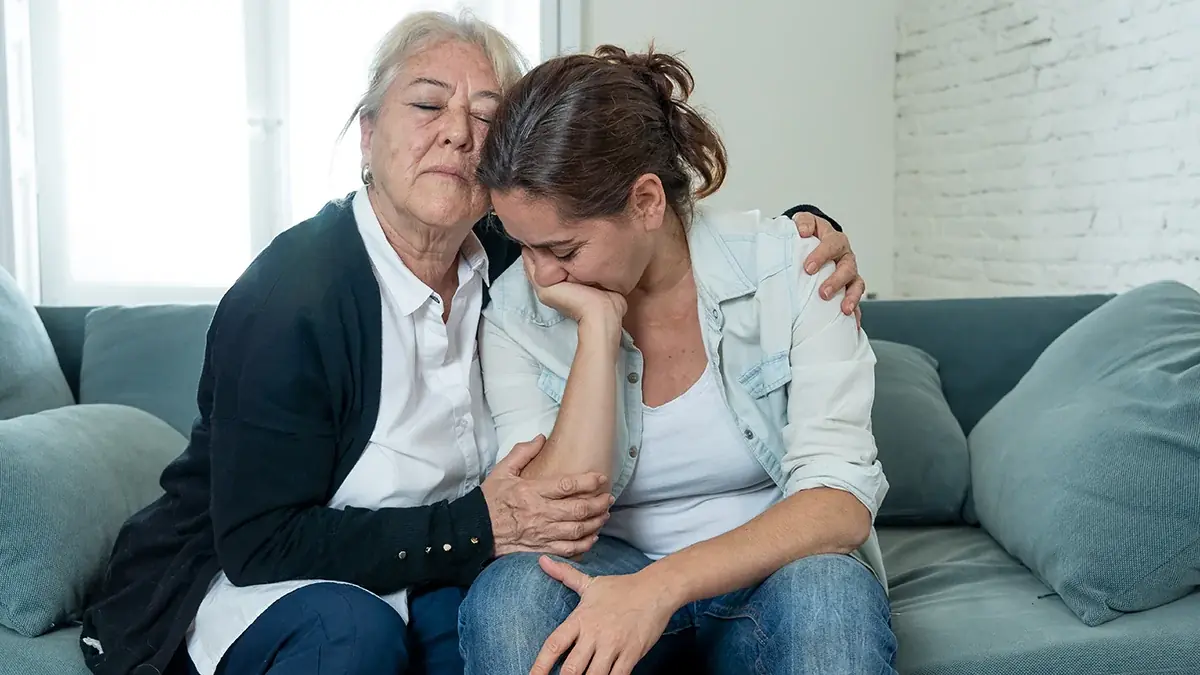
Share responsibilities
Relatives and friends can help by taking over specific tasks for a limited period.
This might include grocery shopping, transportation, school pickups, meal preparation or managing routine appointments.
A family should not have to wait until exhaustion becomes severe before accepting practical help.
Make time for rest
Sleep, meals and short periods of quiet may seem insignificant compared with the loss, but they are essential to basic functioning.
Caregivers can benefit from having someone they trust take over responsibilities for a while.
Rest does not mean forgetting the person who died. It helps people maintain the energy needed to care for themselves and others.
The Meaning of "Rest in Peace"
The phrase "Rest in Peace" is often used in messages of sympathy, memorial posts and funeral tributes.
For many people, it expresses a wish that the person who died may be free from suffering and remembered with dignity. For others, it reflects religious or spiritual beliefs about peace after death.
The phrase can be meaningful, but it does not need to be accompanied by a long speech.
A short message can communicate care:
"Rest in peace. You will be remembered with love."
"May your memory bring comfort to everyone who misses you."
"Sending strength and compassion to the family during this difficult time."
When writing a tribute, it is important not to invent details about the person's life, the circumstances of death or the family's feelings.
If the circumstances are not known, a respectful message can focus on sympathy and remembrance without making assumptions.
The same principle applies to social media posts. A memorial image should not be treated as proof of a particular tragedy, and photographs of grieving people should not be presented as the actual family involved unless that is verified and permission has been obtained.
The image accompanying this article is best understood as an illustration of grief and family support, not evidence of a specific event.
Moving Forward Does Not Mean Leaving Someone Behind
Perhaps the most difficult misunderstanding about grief is the idea that healing means forgetting.
People may worry that laughing again, returning to work, celebrating a birthday or making future plans somehow diminishes the importance of the person who died.
It does not.
A person can continue to miss someone while also finding moments of happiness. They can remember the past while building a future. They can experience sadness on an anniversary and still enjoy an ordinary afternoon.
The relationship does not have to disappear simply because the person is no longer physically present.
For children, this may mean keeping photographs available, talking about memories and allowing questions to arise naturally. For adults, it may mean finding ways to carry meaningful values, stories and traditions into everyday life.
There may be difficult days along the way. A family might discover that a holiday feels different, that a familiar place brings back painful memories or that a milestone is harder than expected.
These experiences do not erase the progress already made.
Small steps can matter
After a major loss, it may be unrealistic to think about rebuilding an entire life at once.
Instead, the next step might be getting out of bed, preparing a meal, taking a short walk, answering one message or helping a child return to school.
These actions may seem ordinary, but ordinary routines can become meaningful achievements during a difficult period.
Friends and relatives can help by recognizing these small steps without demanding rapid improvement.
Hope does not need to be forced
People sometimes tell grieving families that everything will eventually be fine.
But the future may not look the way the family once imagined. The loss may remain part of their story.
A more compassionate form of hope recognizes that life can gradually contain new experiences, relationships and moments of peace without pretending that the loss never happened.
Hope can begin with knowing that someone is willing to listen tomorrow, that a child has a trusted adult to speak with, or that a family does not have to manage every responsibility alone.
A Final Message to Families Facing Loss
The image of a grieving adult beside a crying child is a reminder that bereavement is not experienced by one person alone. A death can affect an entire family, and the people involved may need different kinds of support at different times.
Some will want to speak. Others will need quiet. Children may ask the same questions repeatedly, while adults struggle to find words. Friends may feel unsure how to help, and caregivers may become so focused on everyone else that they forget their own needs.
There is no perfect response to a profound loss.
But there are meaningful ways to show care: tell children the truth in language they can understand, let people express their feelings without judgment, protect familiar routines where possible, offer practical help and continue checking in after the funeral has passed.
Professional support can also make a difference when grief becomes overwhelming, when a child struggles to function or when someone feels unsafe.
Most importantly, nobody should have to prove that they are grieving enough, or recover according to someone else's timetable.
A family may never return to exactly the life it had before. Yet with time, understanding and support, it may find ways to live with the absence while preserving the love and memories that remain.
Rest in peace is a message for the person who has died. Compassion, patience and continued support are messages for the people who are still here.