
Dry Mouth Every Morning? These 8 Underlying Causes Are Worth Knowing
💧 Most People Ignore Morning Dry Mouth—Until They Learn These 8 Reasons 😨
Health 20/07/2026 23:05

Tinnitus is the perception of sound—such as ringing, buzzing, hissing, roaring, or clicking—in one or both ears without an external source. It affects millions of people worldwide and can range from a mild annoyance to a condition that interferes with sleep, concentration, and quality of life.
Tinnitus itself is not a disease, but rather a symptom of an underlying condition. Understanding its possible causes is the first step toward effective treatment.
One of the most common causes of tinnitus is damage to the tiny hair cells in the inner ear from loud sounds.
Common sources include:
Loud concerts
Fireworks
Power tools
Factory machinery
Headphones at high volume
Repeated noise exposure can lead to permanent hearing damage and chronic tinnitus.
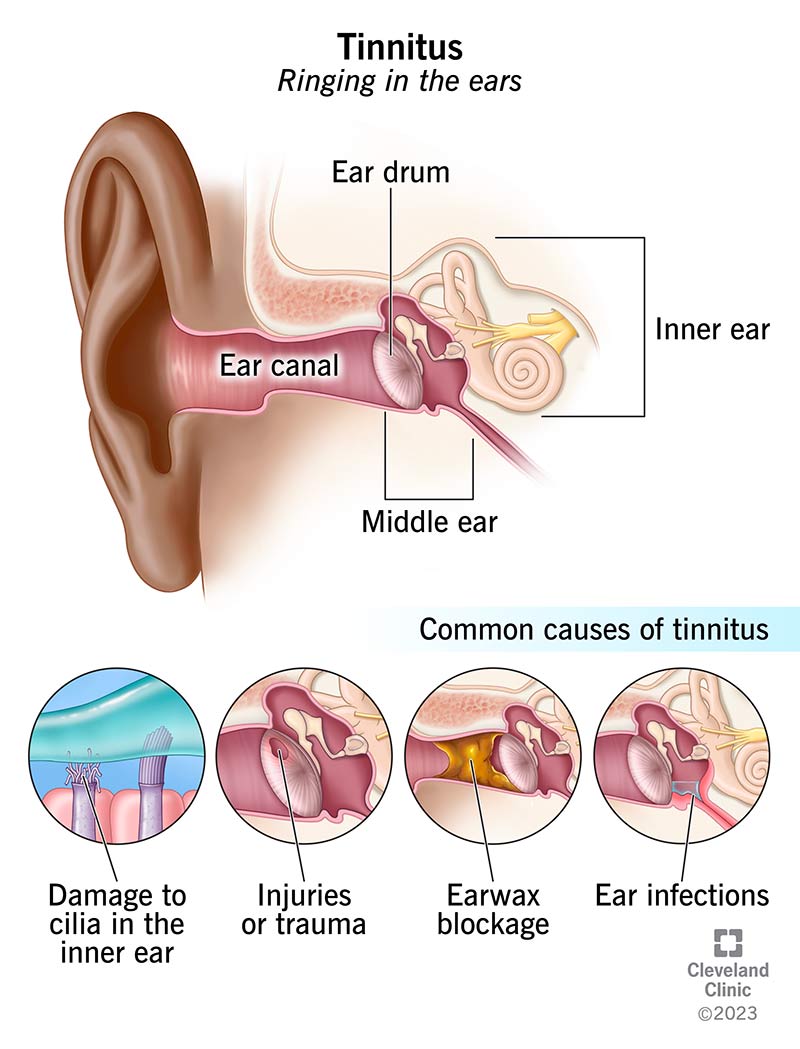
As people age, the delicate structures of the inner ear naturally wear down.
Age-related hearing loss (presbycusis) often develops gradually and may be accompanied by persistent ringing in the ears, especially after age 60.
A blockage of earwax can trap sound and irritate the ear canal or eardrum.
Symptoms may include:
Ringing in the ear
Muffled hearing
Ear fullness
Mild discomfort
A healthcare professional can safely remove impacted earwax if needed.
Middle ear infections or fluid buildup can change the pressure inside the ear and temporarily cause tinnitus.
Other symptoms may include:
Ear pain
Fever
Reduced hearing
A feeling of fullness in the ear
Tinnitus often improves once the infection is treated.

Some medications may cause or worsen tinnitus, particularly when taken at high doses.
Examples include:
High-dose aspirin
Certain antibiotics
Some chemotherapy drugs
Loop diuretics
Quinine-based medications
Never stop taking a prescribed medication without consulting your healthcare provider.
Problems affecting blood flow can sometimes produce tinnitus.
High blood pressure, narrowed arteries, or other cardiovascular conditions may contribute to a rhythmic sound known as pulsatile tinnitus, which often beats in time with the heartbeat.
Stress does not directly cause tinnitus, but it can make existing symptoms feel much more noticeable.
Anxiety, poor sleep, and emotional distress may create a cycle in which tinnitus becomes increasingly bothersome.
Stress-management techniques may help reduce its impact.
Ménière's disease is an inner ear disorder that can cause:
Tinnitus
Episodes of vertigo
Hearing loss
A feeling of pressure in the ear
Symptoms often occur in recurring attacks and should be evaluated by an ear specialist.
The jaw joint is located close to the ear.
Problems involving the temporomandibular joint (TMJ), such as teeth grinding or jaw misalignment, may contribute to tinnitus in some individuals.
Treating the TMJ disorder may improve symptoms.
Less commonly, tinnitus may be associated with conditions such as:
Acoustic neuroma (a noncancerous nerve tumor)
Head or neck injuries
Inner ear disorders
Certain neurological diseases
Although these causes are uncommon, persistent or one-sided tinnitus should be medically evaluated.
While there is no single cure for all types of tinnitus, the following strategies may help:
Protect your ears from loud noise.
Keep headphone volume at a safe level.
Manage stress through relaxation techniques.
Get enough sleep.
Control high blood pressure if present.
Limit excessive caffeine or alcohol if they worsen your symptoms.
Treat underlying hearing or ear conditions.
For people with hearing loss, hearing aids may also reduce the perception of tinnitus.
Seek medical attention if tinnitus:
Lasts longer than one week without improvement.
Occurs in only one ear.
Is accompanied by sudden hearing loss.
Is associated with dizziness or severe vertigo.
Pulses in rhythm with your heartbeat.
Develops after a head injury.
Sudden hearing loss with tinnitus is considered a medical emergency and should be evaluated immediately.
Tinnitus is a common symptom that can result from noise exposure, age-related hearing loss, earwax buildup, infections, certain medications, cardiovascular conditions, stress, or disorders affecting the inner ear or jaw. Although many cases are not dangerous, persistent, worsening, or one-sided tinnitus should be assessed by a healthcare professional to identify the underlying cause and determine the most appropriate treatment.
💧 Most People Ignore Morning Dry Mouth—Until They Learn These 8 Reasons 😨

8 Types of Pain That Could Signal an Underlying Health Condition

🧐 Is Urinating in the Shower Really as Safe as People Think?

⚠️ Your Body May Be Sending a Message if Frequent Gas Comes With These Symptoms 👇
Many Heart Attacks Are Preceded by Warning Signs—Here Are 7 to Recognize ❤️

Why More Nutritionists Recommend Eating Walnuts Every Day 👇

8 Possible Warning Signs of Kidney Problems You Shouldn't Ignore








8 Ways Garlic May Support Your Health

Could Your Bl00d Sugar Be Higher Than Normal? Here Are 14 Symptoms to Know
💧 Most People Ignore Morning Dry Mouth—Until They Learn These 8 Reasons 😨
8 Types of Pain That Could Signal an Underlying Health Condition
🧐 Is Urinating in the Shower Really as Safe as People Think?

Why Turmeric Is Popular: Exploring Its Potential Health Benefits
⚠️ Your Body May Be Sending a Message if Frequent Gas Comes With These Symptoms 👇
Many Heart Attacks Are Preceded by Warning Signs—Here Are 7 to Recognize ❤️
Why More Nutritionists Recommend Eating Walnuts Every Day 👇


8 Possible Warning Signs of Kidney Problems You Shouldn't Ignore