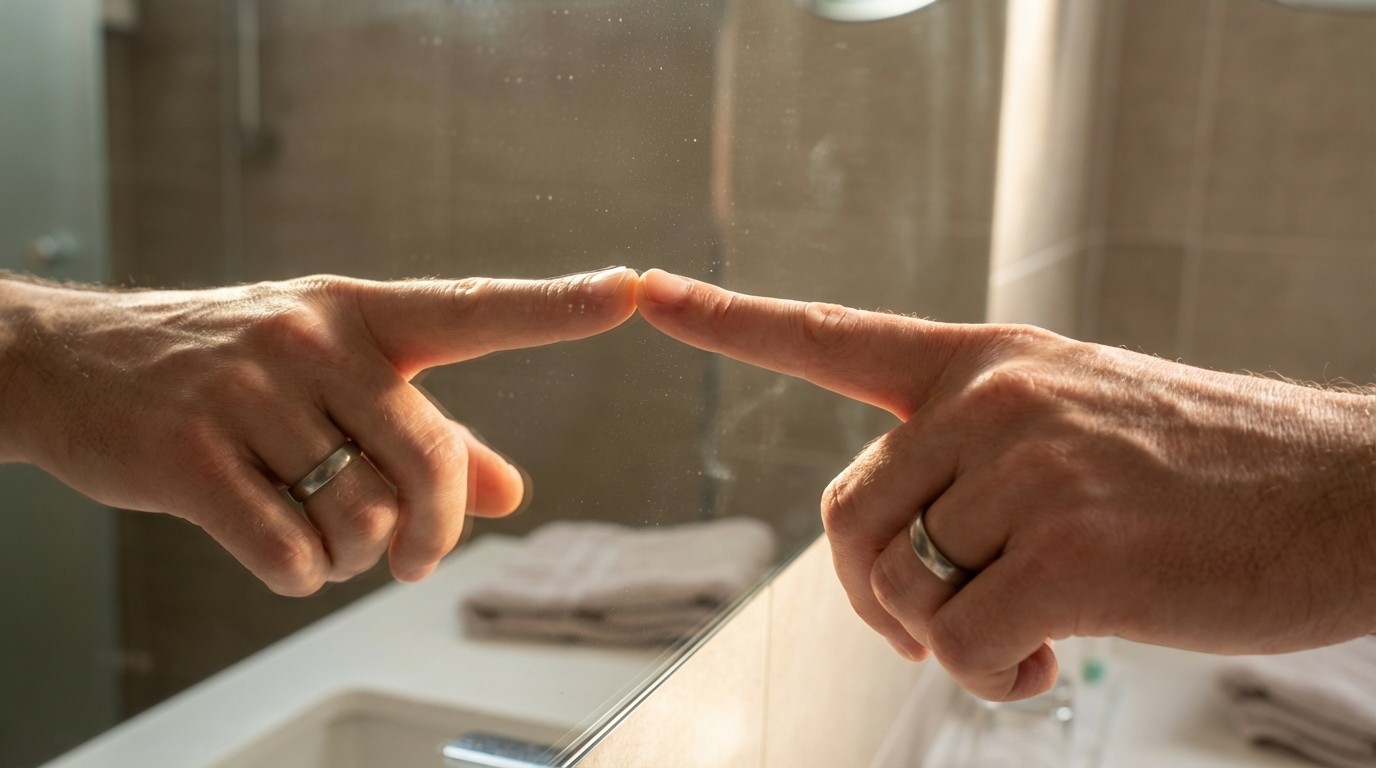
Concerns about privacy in fitting rooms are understandable. Posts online often claim there’s a quick trick to tell a normal mirror from a “two-way mirror.” The reality is more nuanced: true surveillance behind mirrors in retail changing rooms is illegal in most places and extremely rare. Still, knowing what’s realistic and what isn’t - helps you stay calm and make sensible checks.

What Is a “Two-Way Mirror,” Really?
In everyday language, a “two-way mirror” suggests a surface you see your reflection in, while someone on the other side can see through. Technically, that setup works only under specific lighting conditions:
- The observer’s side is dark
- The user’s side is brightly lit
In typical retail environments (well-lit on both sides), this effect doesn’t function as people imagine. Most fitting-room mirrors are simply standard mirrors—glass with a reflective coating on the back.
❗ Why the Topic Gets Confusing
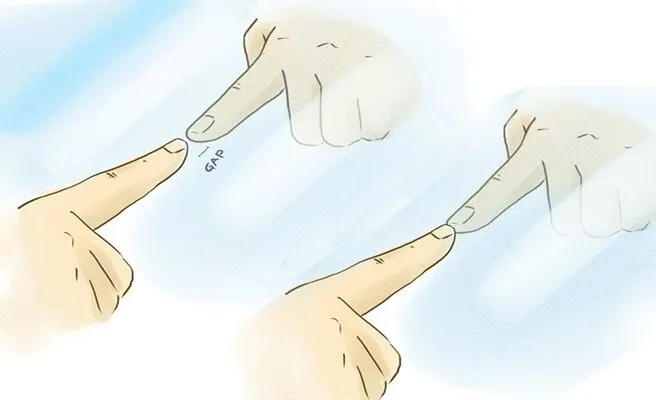
Viral tips often oversimplify or spread myths. The most common example is the “fingernail test” (touching the mirror to see if there’s a gap). This is not a reliable method and depends on mirror construction, not whether someone can see through it.
🔍 Practical, Reality-Based Checks
If you still feel uneasy, use sensible observation, not gimmicks:
1) Look at the Surroundings
- Is the fitting room well-lit and visible from the store area?
- Are there clear privacy curtains or doors?
- Does the mirror look firmly mounted (not loose or oddly installed)?
👉 Legitimate stores follow standard fixtures and layouts.
2) Check for Unusual Features
- Gaps, hidden holes, or odd wiring near the mirror
- Devices or fixtures that don’t match the rest of the room
👉 Anything out of place is more meaningful than “mirror tricks.”
3) Notice the Back Side (When Visible)
In most shops, the back of fitting-room mirrors is against a wall or structure—not an accessible hidden space.
4) Trust the Overall Context
Reputable retailers have:
- Strict privacy policies
- Legal compliance requirements
- Regular inspections
👉 The environment itself is often your best indicator.
🚫 Myths to Ignore
- “Fingernail gap test” → unreliable
- “Tap and listen for hollow sound” → not definitive
- “All bright mirrors can be two-way mirrors” → false
These methods can create unnecessary anxiety without giving accurate answers.
🧠 What Actually Matters for Safety
Focus on what genuinely protects your privacy:
- Choose well-known, reputable stores
- Avoid changing rooms that feel isolated or poorly maintained
- If something feels off, leave and notify staff immediately
- Report serious concerns to store management or local authorities
⚖️ Legal Perspective
In most countries, installing surveillance in changing rooms is:
- Strictly illegal
- Subject to severe penalties
👉 That’s why confirmed cases are extremely rare.
🔥 Bottom Line
The idea of hidden two-way mirrors in fitting rooms is far more common online than in real life.
Your best protection isn’t a “trick” - it’s awareness, common sense, and trusting your instincts.
If something looks normal and the environment feels safe, it almost certainly is.