Salt is one of the most common ingredients found in kitchens around the world. Most people use it to season food, preserve ingredients, or enhance flavor. However, many homeowners have discovered that salt can serve a variety of practical purposes beyond cooking.
One household trick that has been passed down for generations involves placing a small bowl of salt inside the refrigerator. While it may seem unusual at first, many people believe this simple practice can help address several common refrigerator problems, including unwanted odors and excess moisture.
But does it actually work? And what are the potential benefits of keeping salt in the fridge?
Let's explore the science and practical uses behind this surprisingly simple household hack.
Why Refrigerators Sometimes Develop Problems
Even well-maintained refrigerators can experience issues such as:
- Unpleasant odors
- Excess moisture
- Condensation
- Food spoilage smells
- Lingering scents from strong foods
Common odor-producing foods include:
- Onions
- Garlic
- Fish
- Leftovers
- Certain cheeses
Over time, these smells can spread throughout the refrigerator.
Keeping the refrigerator clean remains the most important solution, but some people use salt as an additional tool.

How Salt Interacts With Moisture
One reason salt has attracted attention for household uses is its ability to absorb moisture from the surrounding environment.
Salt is considered hygroscopic, meaning it can attract water molecules from the air.
In environments with elevated humidity, salt may help:
- Absorb excess moisture
- Reduce dampness
- Limit condensation
Although the effect is generally modest, some people find it useful in enclosed spaces.
Potential Benefit #1: Helping Control Refrigerator Odors
One of the most common reasons people place salt in the refrigerator is odor management.
Strong odors often linger because airborne particles circulate within the refrigerator.
A bowl of salt may help by:
- Absorbing moisture associated with odors
- Reducing some airborne odor compounds
- Supporting a fresher environment
However, salt should not be viewed as a substitute for proper cleaning.
If spoiled food is present, removing the source remains essential.
Potential Benefit #2: Reducing Excess Moisture
Moisture buildup can contribute to:
- Condensation
- Frost formation
- Damp produce drawers
Because salt naturally attracts water, it may help absorb small amounts of excess humidity inside the refrigerator.
Less moisture may help create a more stable storage environment.
Potential Benefit #3: Supporting Food Freshness
Many people believe that reducing excess moisture helps support food preservation.
Excess humidity may sometimes accelerate spoilage in certain foods.
By helping manage moisture levels, salt may contribute to a slightly drier environment.
However, food freshness depends primarily on:
- Proper temperature
- Food packaging
- Storage methods
- Refrigeration quality
Salt alone cannot significantly extend shelf life.
How to Use Salt in the Refrigerator
The method is simple.
What You Need
- A small bowl
- A handful of table salt or coarse salt
Instructions
- Fill a small container with salt.
- Place it on a refrigerator shelf.
- Replace the salt periodically if it becomes damp.
Some people choose to refresh the salt every few weeks.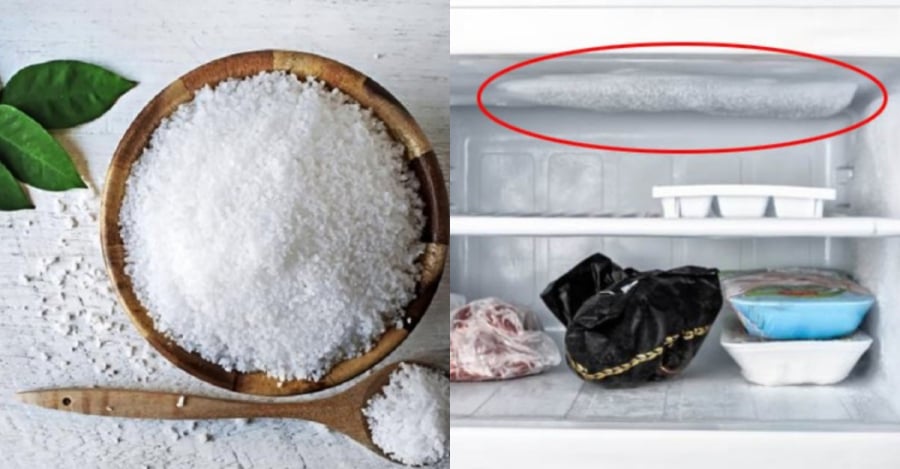
Salt vs. Baking Soda
Baking soda is another popular refrigerator deodorizer.
Both substances are commonly used for odor control, but they work somewhat differently.
Salt
May help absorb moisture and some odors.
Baking Soda
May help neutralize acidic and alkaline odor compounds.
Many households prefer baking soda for odor management, while others use salt because it is readily available.
Other Household Uses for Salt
The refrigerator trick is just one example of salt's versatility.
People also use salt for:
- Cleaning cutting boards
- Scrubbing cookware
- Removing stains
- Freshening drains
- Household cleaning tasks
Its low cost and widespread availability make it a popular household staple.
Common Myths About Salt in the Refrigerator
The internet contains many exaggerated claims regarding refrigerator salt hacks.
Some articles claim that salt can:
- Prevent all food spoilage
- Eliminate bacteria completely
- Keep food fresh indefinitely
These claims are not supported by evidence.
Salt may offer modest benefits, but it cannot replace proper food safety practices.
The Most Effective Ways to Keep a Refrigerator Fresh
Experts generally recommend:
- Cleaning spills immediately
- Checking expiration dates regularly
- Storing foods in sealed containers
- Maintaining proper refrigerator temperature
- Removing spoiled foods promptly
These habits are far more important than any household hack.
When Salt May Not Be Enough
If persistent odors remain despite cleaning, possible causes include:
- Hidden spoiled food
- Dirty drip trays
- Mold growth
- Drain issues
In these cases, a deeper cleaning may be necessary.
A bowl of salt can only address minor odor and moisture concerns.
Why This Traditional Trick Has Endured
The refrigerator salt trick has survived for decades because it is:
- Simple
- Inexpensive
- Easy to try
- Low risk
Even if the benefits are modest, many people appreciate practical household solutions that require little effort.
Final Thoughts
Salt is much more than a cooking ingredient. Thanks to its moisture-absorbing properties, some people place a small bowl of salt in the refrigerator to help manage odors and reduce excess humidity. While the effect may be relatively modest, it can serve as a simple complement to good refrigerator maintenance.
The most important factors for a fresh, odor-free refrigerator remain proper cleaning, safe food storage, and regular inspection of stored items. Used alongside these habits, a bowl of salt may provide a small but useful boost in keeping your refrigerator feeling fresher.