Large vs. Small Navel Oranges: Which Is Better for Adults Over 50?
A simple way to choose sweeter, juicier oranges may be hiding in a detail most shoppers overlook. When you stand in front of a basket of navel oranges, the largest fruit may look like the best choice. It seems more substantial, more impressive, and perhaps more satisfying. But does a bigger orange really contain more juice? And can the tiny mark at the bottom help you identify a sweeter fruit?
For adults over 50, choosing fresh fruit is about more than appearance. Oranges can be a refreshing source of vitamin C, water, fiber, and naturally occurring plant compounds. They are easy to enjoy as a snack, convenient to serve with breakfast, and simple to include in a balanced eating pattern.
Yet many shoppers still make the same mistake: they judge an orange by its size alone.
The truth is a little more interesting. Large and small navel oranges can both be delicious, but size does not automatically determine sweetness, juiciness, or nutritional value. The small circular mark at the blossom end may offer a useful clue about the fruit's variety and development, but it is not a reliable sweetness meter.
So which orange should you choose if you are over 50?
The answer depends on what you want from the fruit, how it feels in your hand, how fresh it is, and what you notice when you look beyond its size. In the following chapters, we will examine the difference between large and small navel oranges, explain what the navel actually tells you, and reveal the practical signs that can help you bring home better fruit.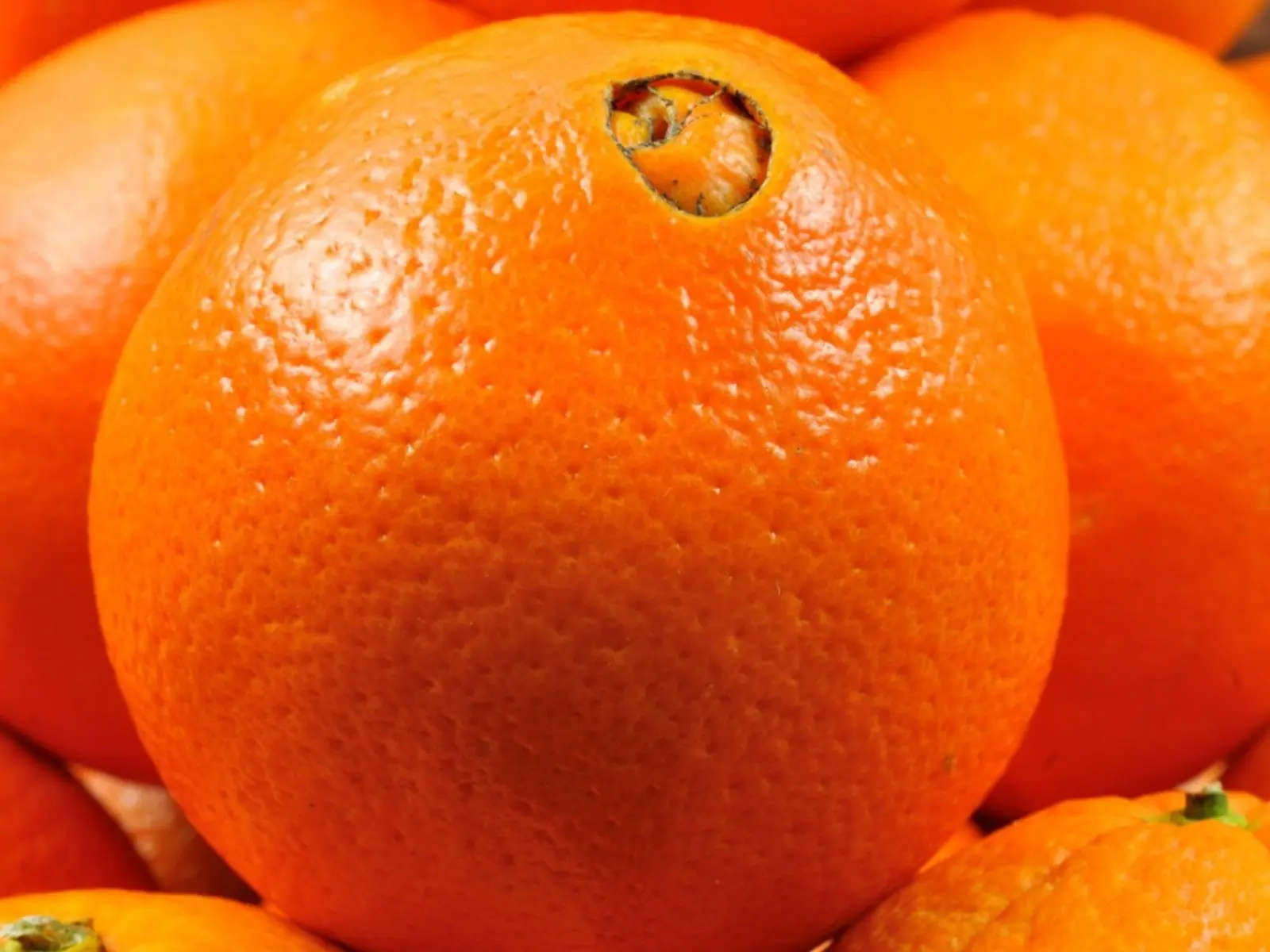
Chapter 1: What Is a Navel Orange, and Why Does It Have a “Belly Button”?
Before comparing large and small oranges, it helps to understand what makes a navel orange different from other citrus fruits.
A navel orange is a variety of sweet orange recognized by the small, rounded formation at the blossom end of the fruit. This mark resembles a human belly button, which is why the fruit received its familiar name.
But the navel is not simply a scar or a random hole in the peel.
It develops because a small secondary fruit forms inside the main orange. This additional fruit remains embedded in the larger one, creating the distinctive structure visible at the bottom. The feature is a natural characteristic of navel oranges rather than a sign of damage or disease.
UA Cooperative Extension
Navel oranges are popular because they are generally seedless, easy to peel, and convenient to eat fresh. Their segments separate relatively easily, making them a practical snack for people who prefer not to deal with seeds or complicated preparation.
They are also widely enjoyed because their flavor is typically sweet with a gentle citrus tang.
However, not every navel orange looks exactly the same.
Some have a prominent, open navel that is easy to see from a distance. Others have a tiny mark that barely protrudes from the peel. The size and appearance of the navel can vary according to the variety and the way the fruit develops.
This is where the popular comparison between large-navel and small-navel oranges begins.
Many shoppers believe that a large, open navel indicates a sweeter and juicier orange. Others prefer oranges with a smaller mark because they believe these fruits have thinner skins and more edible flesh.
Both ideas are commonly discussed in fruit-buying advice, but neither should be treated as a universal rule.
A navel can provide a clue about the fruit's structure, yet it cannot reveal everything about the taste inside. The variety, growing conditions, maturity, storage, and freshness of the orange all influence the final eating experience.
The most useful approach is to understand what the navel can tell you—and what it cannot.
Chapter 2: Large Navel vs. Small Navel — What Is the Real Difference?
When you compare two navel oranges side by side, the difference may be obvious.
One orange may have a wide, deep opening at the blossom end. The surrounding peel may curve outward, making the navel look almost like a small flower.
The other orange may have a much smaller mark. Its blossom end may look nearly closed, with only a tiny circular indentation.
These differences are natural.
A large navel does not automatically mean that the orange is a different species. Both fruits may belong to the same broad category of sweet navel oranges, while differences in variety and development produce different appearances.
The size of the entire fruit also needs to be separated from the size of the navel.
A large orange can have a small navel. A smaller orange can have a more noticeable one. The two measurements are not interchangeable.
Some shoppers mistakenly assume that a large navel means the fruit has a large hollow space inside. In reality, the secondary fruit is part of the orange's natural structure, and the visible opening does not necessarily correspond to a large empty cavity.
The more important question is whether the fruit has developed properly and remains fresh.
A large navel may be attractive to someone who likes easy-to-recognize fruit. A small navel may appeal to someone who prefers a more compact appearance.