What Causes Dyshidrotic Eczema?
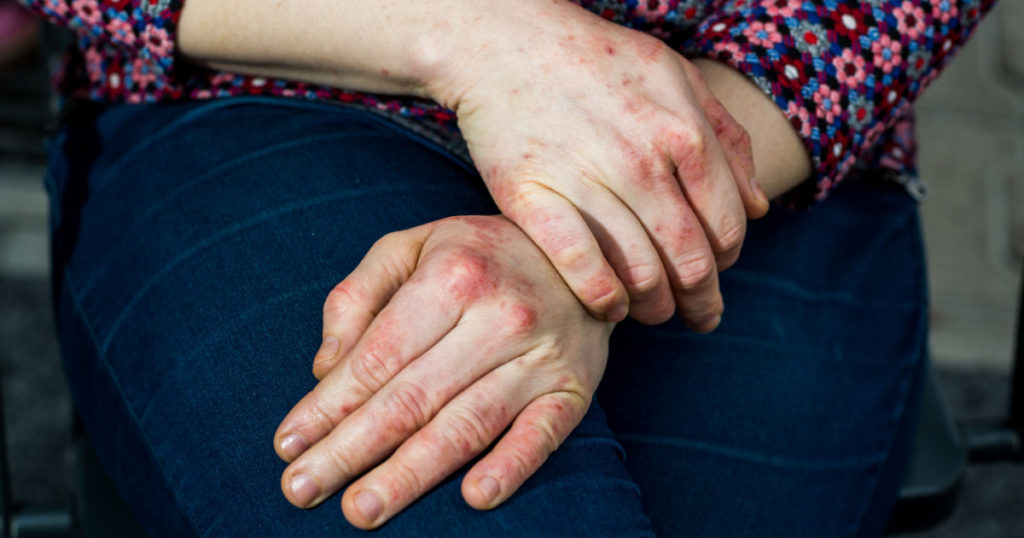
Dyshidrotic eczema is twice as common in women as it is in men, and while it can occur in people of any age, it is most common in adults aged 20-40. People with contact dermatitis, atopic eczema, or hay fever are at a higher risk of developing dyshidrotic eczema. It also is hereditary, so if you have a close relative that has dyshidrotic eczema than your likelihood of getting it increases [3]. Dyshidrotic eczema does have a tendency to get infected, which delays the healing process [3]. If you believe that this is the case for you, then contact your healthcare provider immediately to seek advanced treatment.
Read: Family is sharing their story of tragic loss to raise awareness about allergies
How to Treat Dyshidrotic Eczema on Hands
Unfortunately, dyshidrotic eczema is not curable, but in many cases, it is manageable with treatment. While there is no surefire way to prevent flare-ups from happening, a good skincare regime can help to strengthen your skin against inflammation.
Conventional Treatment
While most cases of dyshidrotic eczema may be handled with natural treatments that are less invasive to the body, severe cases are often remedied with dyshidrotic eczema treatment cream (e.g., a corticosteroid cream or ointment or a prescribed injection or pill).