Different ants perform different tasks depending on the species, the colony's needs, and environmental conditions. Workers may forage for food, maintain tunnels, care for developing ants, or respond to threats. Chemical signals help many species communicate information and follow established trails.
This cooperation has made ants powerful symbols of teamwork and collective effort.
A single ant may appear insignificant. A colony, however, can accomplish tasks that would be impossible for one individual acting alone. Their survival depends on a system in which many small contributions support a shared outcome.
For people, this can serve as a reminder that success is not always an individual achievement.
Families depend on cooperation. Communities depend on people fulfilling different responsibilities. Workplaces function more effectively when individuals communicate and contribute toward shared goals.
The appearance of ants in a home might therefore inspire questions about the way people work together.
Are household responsibilities being shared fairly? Are family members supporting one another? Are small contributions being recognized, even when they do not attract attention?
These questions are especially relevant because the work that keeps a household functioning is often repetitive and largely invisible. Cleaning, preparing meals, maintaining supplies, paying bills, and caring for family members may not produce immediate recognition, but these tasks help create stability.
Ants are not moral teachers, and their social behavior is not identical to human relationships. Still, observing them can provide a simple reminder that cooperation and consistency are essential in many areas of life.
Sometimes, the most impressive achievements begin with many small efforts working together.
5. What Does It Mean When Ants Appear in the Kitchen?
The kitchen is one of the most common places to discover ants, and it is also the location where people may attach symbolic interpretations to their appearance.
Because kitchens are associated with food, nourishment, hospitality, and family life, some people connect ants found there with abundance or the activity of a busy household.
In traditional interpretations, food-related symbolism can be linked to prosperity, preparation, and the importance of maintaining a stable home.
Yet the practical explanation is usually much simpler.
Ants need food and water to survive. Kitchens frequently provide both. A few crumbs beneath a table, a sticky patch of spilled juice, an uncovered container of sugar, or a drop of cooking oil can attract foraging ants.
Some species are particularly attracted to sweet foods, while others may seek proteins or fats. Their preferences can change depending on the colony's needs and the food sources available.
Once a worker ant discovers a useful resource, it may leave chemical trails that help other ants locate the same source. This is why a few scattered ants can sometimes turn into a clearly defined line seemingly overnight.
The colony is not necessarily growing inside the kitchen itself. The ants may be entering from a nest outdoors, beneath flooring, inside a wall, or through a small opening around a pipe or window.
If you notice ants near a food-storage area, the most useful response is to inspect the area carefully.
Store food in tightly sealed containers, wipe away spills, clean beneath appliances when practical, and check for moisture around sinks and refrigerators. Pay particular attention to pet food, fruit bowls, and containers that may leave sticky residue.
You can appreciate the symbolic associations if they interest you, but you should not overlook the practical explanation. An ant trail in the kitchen is often evidence that the insects have found something worth collecting.
6. Why Do Ants Appear in the Bathroom?
Finding ants in a bathroom can seem especially strange because the room may contain little or no food.
Nevertheless, bathrooms can provide an important resource: water.
Leaking pipes, damp surfaces, condensation, wet towels, and moisture around sinks or bathtubs may attract certain ants. Some colonies also establish nests in wall voids, beneath flooring, or near sources of moisture.
If ants appear repeatedly around a bathroom sink, shower, or toilet, inspect the area for plumbing leaks and persistent dampness.
The symbolic interpretation is different from the practical explanation. Some people use water as a metaphor for emotion, renewal, or change, and may associate insects found near water with the need to pay attention to neglected aspects of life.
These associations are matters of personal or cultural interpretation. They are not evidence that ants are communicating a hidden warning.
Even so, the situation offers a useful reminder: small environmental problems can be easy to miss until they become visible.
A slow leak may remain unnoticed for weeks. A damp cabinet may encourage mold growth. A tiny opening around a pipe may provide insects with a convenient route into the building.
The ants themselves are not necessarily dangerous, but their presence can prompt an inspection that reveals a maintenance problem.
That is a practical reason to take recurring bathroom activity seriously, even when the insects appear harmless.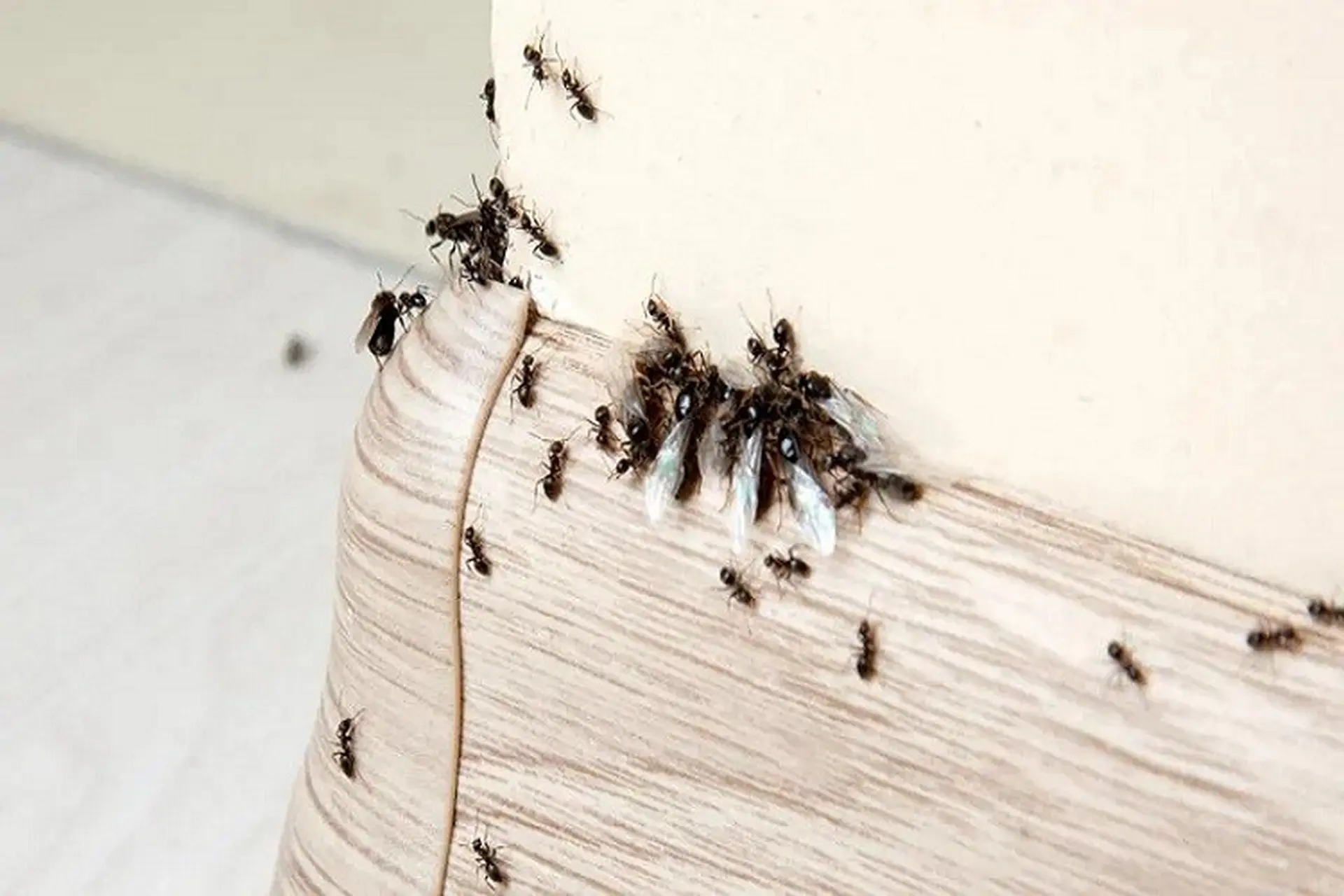
7. What If Ants Keep Appearing in Your Bedroom?
Discovering ants in a bedroom can be unsettling, especially when the room appears clean and there is no obvious food nearby.
People sometimes interpret the bedroom symbolically as a place of rest, privacy, and personal security. Consequently, an unexpected insect infestation may feel more intrusive than one confined to a kitchen or outdoor area.
Some personal interpretations associate this experience with the need to restore order, protect one's peace, or pay attention to details that have been neglected.
There is no established evidence that ants in a bedroom indicate negative energy, relationship problems, bad luck, or an approaching life event.
From a biological perspective, several explanations are more likely.
Ants may be following a trail from another room. They may be attracted to a forgotten snack, crumbs beneath furniture, a sugary drink, or a pet's food bowl. Some species may also seek moisture or use cracks in walls, windows, and flooring as entry points.
If the ants repeatedly appear near a window, inspect the frame and surrounding wall for small openings. If they appear around a bedside table, check for food residue or drink spills. If they emerge from a baseboard or electrical-adjacent gap, observe the route without disturbing the area unnecessarily.
A recurring trail may indicate that ants have established a regular pathway through the building.
Avoid spraying liquid insecticides directly into electrical outlets or electrical equipment. If the colony appears to be nesting inside a wall, or if the infestation persists despite cleaning and sealing entry points, a qualified pest-control professional can help identify the species and determine an appropriate treatment.