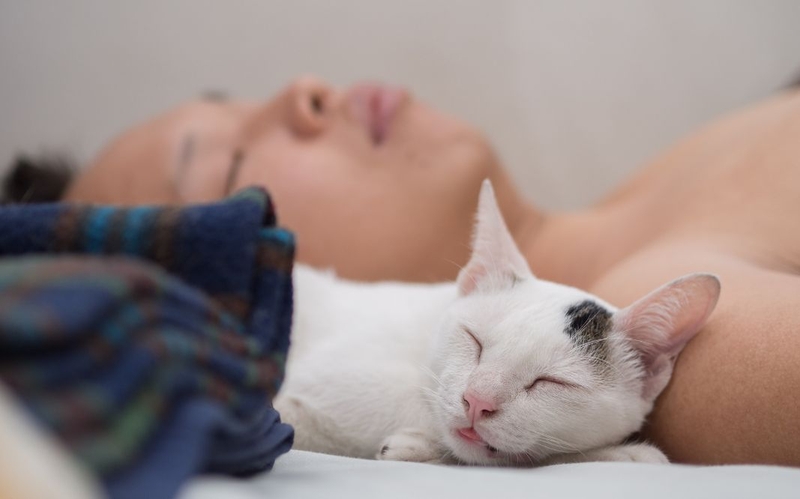
For many cat owners, letting a cat sleep on the bed is part of the bond they share. A warm, purring cat curled up beside you can feel comforting, relaxing, and even help you fall asleep.
But sleeping with a cat also means closer and more prolonged exposure to pet hair, dander, saliva, litter particles, and microorganisms.
For most healthy adults, having a cat sleep in the bedroom is unlikely to cause serious illness. However, certain people may face higher risks, particularly those with allergies, asthma, weakened immune systems, or specific medical conditions.
The goal isn't to make cat owners afraid of their pets. Instead, it's about understanding the potential risks and learning how to reduce them while still enjoying the companionship of your cat.
![12 Lý Do Bạn Nên Cân Nhắc Khi Ngủ Với Mèo [Quan Trọng] - Thichthucung.com](https://thichthucung.com/wp-content/uploads/trem-em-ngu-chung-voi-meo-co-duoc-khong.jpg)
1. Allergies May Become Worse
One of the most common problems associated with sleeping closely with a cat is allergy exposure.
Cats produce allergens in their:
-
Saliva
-
Skin
-
Sebaceous glands
-
Urine
These allergens can become attached to fur and spread throughout the home.
When your cat sleeps on your pillow or blankets, you may spend hours with your face very close to these allergens.
People with cat allergies may experience:
-
Sneezing
-
Runny or stuffy nose
-
Itchy eyes
-
Watery eyes
-
Coughing
-
Wheezing
-
Skin irritation
For someone with asthma, exposure to cat allergens can potentially trigger symptoms.
If you regularly wake up congested or coughing after sleeping with your cat, consider whether pet allergens may be contributing.
2. Cat Dander Can Remain in Your Bedroom
A common misconception is that cat allergies come primarily from fur.
The main problem is actually allergen-containing particles from the cat's skin and bodily secretions, not simply the hair itself.
These particles can become airborne or attach to:
-
Bedding
-
Mattresses
-
Pillows
-
Curtains
-
Clothing
-
Carpets
-
Furniture
This means that even removing the cat from the bed doesn't instantly eliminate allergens from the bedroom.
Regular cleaning can help reduce exposure.
3. Fleas Can Come Home With Your Cat
Even indoor cats can potentially encounter fleas.
Fleas can enter homes through:
-
Other pets
-
People
-
Outdoor exposure
-
Previously infested environments
If a flea-infested cat sleeps in your bed, fleas may also end up in bedding and other parts of the home.
Flea bites can cause:
-
Small itchy bumps
-
Redness
-
Irritation
-
Allergic reactions in sensitive people
Fleas can also transmit certain pathogens.
Keeping your cat on an appropriate veterinarian-recommended parasite prevention program can significantly reduce this risk.
4. Ticks Are Another Consideration
Cats that spend time outdoors can pick up ticks.
A tick attached to a cat can potentially enter your household environment.
Depending on your region, ticks can transmit diseases to both animals and humans.
This is another reason outdoor cats should receive appropriate parasite prevention recommended by a veterinarian.
If you find a tick attached to your cat, don't ignore it.
Follow appropriate removal procedures and contact your veterinarian if you're concerned about exposure or disease risk.
5. Cats Can Carry Certain Bacteria
Cats, like all animals, can carry microorganisms on their bodies.
One example is Bartonella henselae, the bacterium associated with cat-scratch disease.
Cats can acquire Bartonella through flea exposure, and transmission to humans can occur through scratches or bites.
Symptoms of cat-scratch disease can include:
-
A small bump at the scratch site
-
Swollen lymph nodes
-
Fever
-
Fatigue
Most cases are not severe, but complications can occur, particularly in people with weakened immune systems.
Sleeping beside a cat doesn't automatically mean you'll develop cat-scratch disease.
The greater concern is exposure to scratches, bites, and contaminated wounds.
6. Toxoplasmosis Is Often Misunderstood
Toxoplasmosis is caused by the parasite Toxoplasma gondii.
Cats can become infected and may shed the parasite in their feces.
However, simply sleeping next to your cat isn't the primary route of transmission.
The greater concern is exposure to infected cat feces or contaminated soil, followed by accidental ingestion.
This is why litter-box hygiene matters.
Pregnant people and individuals with weakened immune systems should take additional precautions because toxoplasmosis can cause serious complications in certain circumstances.
If you're pregnant or immunocompromised, ask your healthcare professional about appropriate cat-litter precautions.
7. Litter Particles Can End Up on Bedding
Even a well-maintained litter box can contain microscopic particles.
Cats can sometimes carry tiny amounts of litter or fecal material on their paws after using the box.
If your cat jumps directly from the litter box onto your bed, some of that material can potentially end up on:
-
Blankets
-
Sheets
-
Pillows
-
Clothing
This isn't necessarily dangerous for a healthy person, but it highlights the importance of good litter-box hygiene.
Keep the litter box away from food-preparation areas and clean it regularly.
8. Ringworm Can Spread Between Cats and Humans
Despite its name, ringworm is a fungal infection—not a worm.
Cats can sometimes carry fungi that cause ringworm.
In humans, it may appear as:
-
An itchy rash
-
A circular or ring-like lesion
-
Scaling
-
Redness or discoloration
-
Expanding patches
Cats may show:
-
Hair loss
-
Scaly skin
-
Crusty patches
-
Itching
However, some cats can carry the infection with minimal visible symptoms.
If your cat has unexplained skin lesions or hair loss, have a veterinarian examine it.
9. Bites and Scratches Are a Bigger Concern Than Sleeping
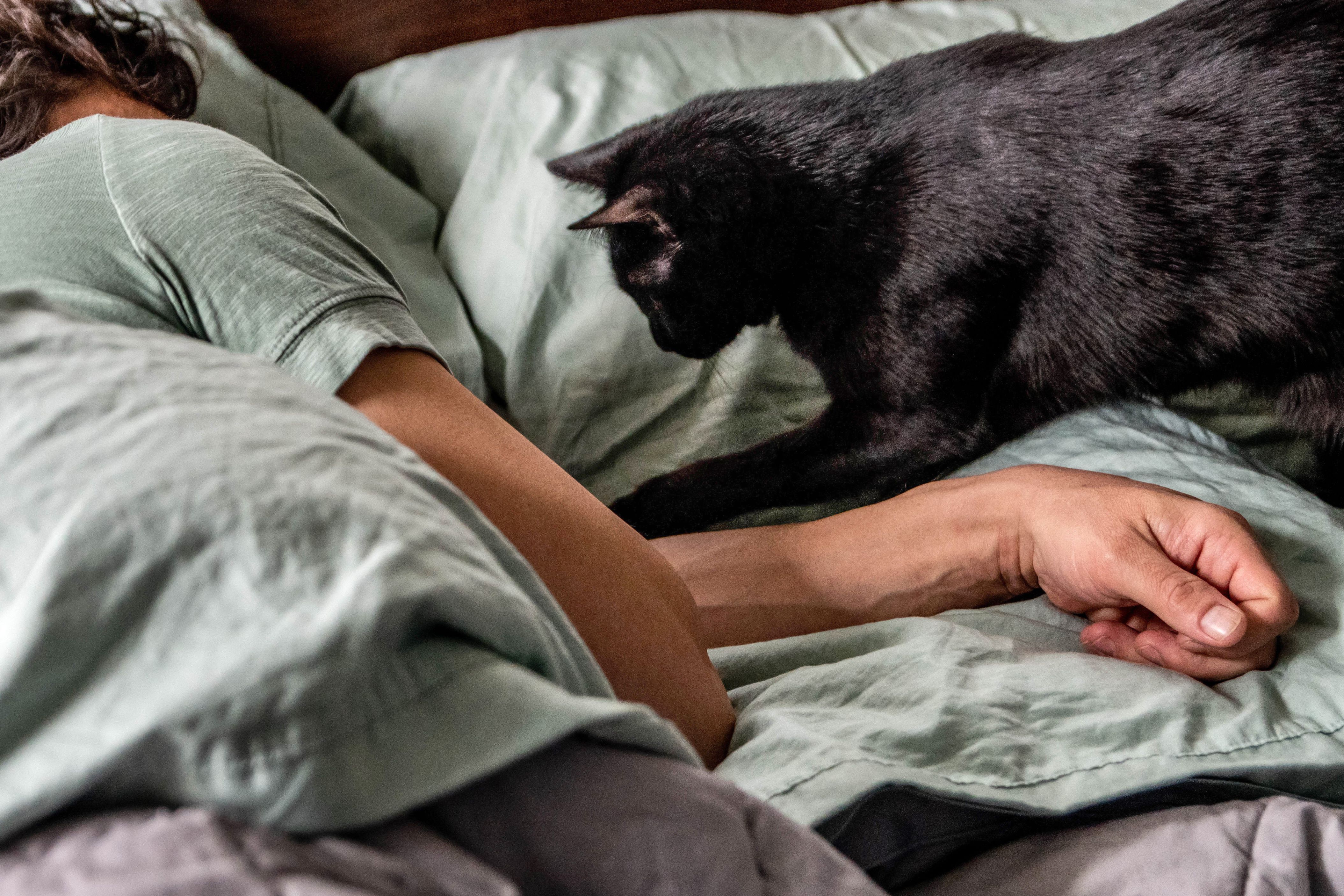
A cat lying quietly beside you isn't usually a major source of infectious disease.
The risk increases substantially if the animal:
-
Bites
-
Scratches
-
Licks open wounds
-
Licks your face or mouth
Cat bites can introduce bacteria deep into tissue and can become infected.
If a cat bite breaks the skin, wash the area thoroughly with soap and running water and seek medical advice, especially for deep bites or bites involving the hands, face, or joints.
10. Cats Shouldn't Lick Open Wounds
A cat's mouth contains bacteria.
Even though cats groom themselves constantly, that doesn't make their saliva sterile.
Avoid allowing your cat to lick:
-
Open cuts
-
Surgical wounds
-
Fresh scratches
-
Eyes
-
Mouth
If a wound has been licked, wash it appropriately and monitor it for signs of infection.
11. Sleep Quality Can Sometimes Be Affected
Not every risk is infectious.
Cats are naturally active at different times of day and may become particularly energetic at night.
Your cat may:
-
Walk across the bed
-
Scratch furniture
-
Vocalize
-
Play with toys
-
Wake you for food
-
Move around frequently
If your sleep is repeatedly interrupted, the health consequences of chronic sleep deprivation may outweigh the comfort you get from sharing the bed.
Poor sleep can affect:
-
Concentration
-
Mood
-
Immune function
-
Metabolic health
-
Cardiovascular health
If your cat consistently wakes you, consider giving it a separate sleeping area.
12. Some People Are More Vulnerable
Sleeping with a cat is not equally risky for everyone.
Extra caution may be appropriate for people who are:
-
Pregnant
-
Immunocompromised
-
Undergoing certain cancer treatments
-
Taking immune-suppressing medications
-
Living with severe asthma
-
Highly allergic to cats
-
Very young children
-
Frail older adults
These groups may be more vulnerable to certain infections or complications.
13. Pregnancy Requires Special Attention to Litter Hygiene
Pregnant people don't necessarily need to give up their cats.
The key issue is reducing exposure to potentially contaminated cat feces.
If possible, someone else should clean the litter box.
If you must do it yourself:
-
Wear disposable gloves
-
Wash your hands thoroughly afterward
-
Clean the litter box regularly
-
Avoid touching your face during cleaning
Talk to your healthcare professional about your individual risk.
And remember: petting or sleeping beside your cat isn't the main concern for toxoplasmosis.
14. What About Indoor Cats?
Indoor cats generally have fewer opportunities to encounter certain infectious agents and parasites than outdoor cats.
But indoor doesn't mean risk-free.
Cats can still develop:
-
Fleas
-
Skin infections
-
Intestinal parasites
-
Other infections
They can also carry allergens regardless of whether they go outside.
Routine veterinary care remains important.
15. Keep Your Cat on Regular Veterinary Care
One of the best ways to reduce potential health risks is to keep your cat healthy.
Regular veterinary care may include:
-
Vaccinations
-
Parasite prevention
-
Dental care
-
Skin examinations
-
Weight monitoring
-
Routine health checks
Your veterinarian can recommend parasite prevention based on your cat's lifestyle and local risks.
16. Wash Your Bedding Regularly
If your cat sleeps on your bed, regular laundering becomes especially important.
Wash:
-
Sheets
-
Pillowcases
-
Blankets
-
Pet bedding
according to the care instructions for the materials.
Frequent cleaning can help reduce:
-
Dander
-
Hair
-
Dirt
-
Allergens
-
Flea debris
If you have significant cat allergies, washing bedding alone may not be enough, but it can be part of a broader strategy.
17. Keep the Litter Box Clean
Regular litter-box maintenance is important for both human and feline health.
Place the litter box in an appropriate location and:
-
Scoop waste regularly
-
Clean the box as recommended
-
Wash your hands afterward
-
Keep litter away from food-preparation areas
If you are immunocompromised or pregnant, follow additional precautions recommended by your healthcare professional.
18. Grooming Can Reduce Environmental Mess
Regular grooming can help reduce loose hair and may help you notice problems early.
Depending on your cat's coat, grooming can help remove:
-
Loose fur
-
Debris
-
Mats
However, grooming doesn't eliminate allergens.
The allergen-producing proteins remain even when there is very little visible shedding.

19. Keep Flea Prevention Consistent
Don't wait until you see fleas before taking action.
Your veterinarian can recommend a prevention strategy appropriate for your cat.
This is particularly important for cats that:
-
Go outdoors
-
Live with other pets
-
Live in warm climates
-
Have previously had fleas
If fleas enter your home, controlling them may require treating both the pet and the environment.
20. Wash Your Hands After Handling Litter
This simple habit is one of the most useful.
Wash your hands after:
-
Cleaning the litter box
-
Handling cat feces
-
Cleaning vomit or diarrhea
-
Treating an infected skin lesion
-
Handling a sick animal
Avoid preparing food immediately after handling litter without washing your hands.
Can Sleeping With Your Cat Actually Be Healthy?
There can be benefits too.
For some people, having a cat nearby can provide:
-
Emotional comfort
-
Companionship
-
Relaxation
-
A sense of security
The sound of purring and the routine of caring for an animal can be calming.
For many healthy people, sharing a bed with a well-cared-for cat is unlikely to cause serious health problems.
The decision ultimately depends on the individual.
How to Make Sleeping With Your Cat Safer
If you enjoy sleeping with your cat, you don't necessarily have to stop.
Instead, consider these habits:
1. Keep Your Cat Healthy
Maintain routine veterinary care.
2. Use Appropriate Parasite Prevention
Follow your veterinarian's recommendations.
3. Keep the Litter Box Clean
Reduce exposure to feces and litter.
4. Wash Bedding Regularly
This can reduce hair, dander, and environmental debris.
5. Keep Your Cat Away From Open Wounds
Don't allow licking of cuts or surgical sites.
6. Wash Your Hands
Especially after litter-box cleaning.
7. Keep Cats Off Food-Preparation Surfaces
This reduces potential contamination.
8. Consider Allergy Symptoms
If sleeping with your cat makes you congested or wheezy, reassess the arrangement.
When Should Your Cat Sleep Somewhere Else?
Consider creating a separate sleeping area if:
-
You have significant cat allergies
-
Your asthma worsens at night
-
Your cat frequently wakes you
-
Your cat has fleas
-
Your cat has a contagious skin infection
-
Your cat has diarrhea or another illness
-
You have a weakened immune system
-
Your healthcare professional has advised limiting exposure
A comfortable cat bed placed near your bedroom can sometimes be a good compromise.
What If Your Cat Has a Skin Infection?
If your cat develops:
-
Bald patches
-
Scaly skin
-
Crusting
-
Persistent itching
-
Sores
don't assume it's simply dry skin.
A veterinarian can determine whether the problem is caused by:
-
Fungi
-
Parasites
-
Allergies
-
Bacteria
-
Other skin conditions
If a contagious infection is suspected, follow the veterinarian's instructions about handling and environmental cleaning.
What If Your Cat Sleeps on Your Pillow?
This is where personal preference and hygiene become particularly relevant.
Your face is in direct contact with the pillow for hours.
If you're allergic to cats, having the cat sleep on your pillow can increase allergen exposure.
A simple compromise is to let your cat sleep at the foot of the bed or provide a dedicated pet bed nearby.
Do You Need to Ban Your Cat From the Bedroom?
Not necessarily.
There is no universal rule that cats must sleep outside the bedroom.
For a healthy person with no allergies and a healthy, parasite-controlled cat, the risk is generally low.
The situation changes if you have:
-
Severe allergies
-
Asthma
-
A weakened immune system
-
Pregnancy-related concerns
-
A contagious pet infection
-
Significant sleep disruption
In those situations, separate sleeping arrangements may be more appropriate.
Warning Signs in Yourself to Pay Attention To
If you sleep with your cat and develop persistent symptoms, consider whether they may be related to allergies or another exposure.
Watch for:
-
Persistent sneezing
-
Chronic nasal congestion
-
Itchy or watery eyes
-
Nighttime coughing
-
Wheezing
-
Skin irritation
-
Unexplained rashes
These symptoms have many possible causes, so they shouldn't automatically be blamed on your cat.
A healthcare professional can help determine the cause.
Warning Signs in Your Cat
Your cat may need veterinary attention if you notice:
-
Persistent scratching
-
Hair loss
-
Skin sores
-
Crusting
-
Fleas
-
Ticks
-
Diarrhea
-
Vomiting
-
Unusual lethargy
-
Changes in appetite
Keeping your cat healthy is also one of the best ways to protect yourself.
The Biggest Myth: "Sleeping With a Cat Will Give You a Deadly Disease"
This kind of claim is usually exaggerated.
For most healthy people, sleeping beside a healthy, properly cared-for cat does not automatically put them at high risk of a deadly disease.
The potential health concerns are more specific:
Allergies
Parasites
Fungal infections
Bacterial infections
Cat bites and scratches
Exposure to feces
Sleep disruption
These risks can often be reduced through basic hygiene, veterinary care, and sensible precautions.
A Simple Checklist for Cat Owners
If your cat sleeps with you, consider:
☐ Regular veterinary checkups
☐ Recommended vaccinations
☐ Appropriate flea and parasite prevention
☐ Clean litter box
☐ Regular hand washing
☐ Frequent bedding changes
☐ No licking of open wounds
☐ Keep cats away from food-preparation areas
☐ Monitor for skin infections
☐ Consider separate sleeping arrangements if allergies or asthma worsen
☐ Seek medical care after serious bites or scratches
The Bottom Line
Sharing your bed with your cat isn't automatically unhealthy.
For many people, it is a perfectly reasonable part of living with a beloved pet.
However, close contact can increase exposure to cat allergens, fleas, ticks, microorganisms, litter particles, and occasional infections. The risks are particularly relevant for people with allergies, asthma, weakened immune systems, or certain pregnancy-related concerns.
The good news is that many of these risks can be reduced.
Keep your cat healthy with regular veterinary care and appropriate parasite prevention. Maintain good litter-box hygiene. Wash your bedding regularly. Don't let your cat lick open wounds, and wash your hands after handling litter or animal waste.
If sleeping with your cat causes persistent congestion, coughing, wheezing, or disrupted sleep, consider giving your cat its own comfortable sleeping space.
Final Thoughts
Your cat doesn't have to choose between being part of your family and being kept completely away from you.
For most healthy people, the key is responsible pet care rather than fear.
A healthy, well-groomed, parasite-controlled cat that receives regular veterinary care presents far fewer concerns than a pet with untreated fleas, skin infections, or other health problems.
If you love having your cat curled up beside you at night, you can often continue the habit while taking a few sensible precautions.
The real question isn't simply whether cats belong in the bed. It's whether the arrangement works safely for both you and your cat.