A person's energy requirements depend on:
-
Body size
-
Physical activity
-
Age
-
Metabolic health
-
Medical conditions
-
Other foods eaten during the day
For some people, one small or medium sweet potato may fit comfortably into breakfast.
For others, half of one may be appropriate.
Someone who is very physically active may require more carbohydrate.
Someone with diabetes may need to monitor portions more carefully.
Someone with kidney disease may need to consider potassium.
The right amount depends on the individual.
One Important Detail: Don't Throw Away the Rest of the Diet
This is perhaps the biggest lesson from the story.
If someone eats a sweet potato every morning but rarely eats protein, vegetables, fruit, whole grains, legumes, nuts, or healthy fats, the diet may still be incomplete.
A healthy diet isn't built around one superfood.
It is built around variety and balance.
Think of the sweet potato as one piece of the puzzle.
Not the entire puzzle.
What Changes Might Actually Be Worth Watching?
If you're experimenting with a healthier breakfast, don't focus only on the scale.
Pay attention to broader changes such as:
-
How long you stay full
-
Energy levels throughout the morning
-
Bowel regularity
-
Overall food cravings
-
Portion sizes at later meals
-
Blood pressure
-
Blood glucose, if you monitor it
-
Weight trends over several months
-
Exercise performance
-
General dietary quality
These observations can tell you much more than expecting one dramatic transformation.
And if you have a chronic medical condition, objective measurements such as blood pressure, blood glucose, cholesterol, kidney function, and other appropriate laboratory tests are far more meaningful than assuming a food is working because you feel different.
The Real Surprise May Be How Simple Healthy Eating Can Be
The most interesting part of this story isn't necessarily that a woman ate a sweet potato for 365 mornings.
It's that a very ordinary food can become part of a sustainable routine.
Healthy eating doesn't always require expensive ingredients.
It doesn't necessarily require exotic supplements.
It doesn't have to involve complicated recipes.
Sometimes it starts with something as simple as replacing a heavily processed breakfast with a whole food.
A boiled sweet potato won't transform someone's health overnight.
But when combined with adequate protein, vegetables, fruits, healthy fats, regular physical activity, good sleep, and appropriate medical care, it can be a nutritious part of an overall lifestyle.
What Happens After One Year?
After a year, the biggest potential changes wouldn't necessarily be visible in the sweet potato itself—or even in the person's appearance.
The more meaningful changes could come from the cumulative effect of a healthier routine.
One better breakfast.
One less sugary snack.
One more serving of vegetables.
One additional walk.
One consistent sleep schedule.
Repeated thousands of times, small choices can become meaningful habits.
That's a much more realistic explanation for long-term health improvements than the idea that a single food possesses extraordinary powers.
The Bottom Line
Eating a boiled sweet potato every morning can be a nutritious habit for many people.
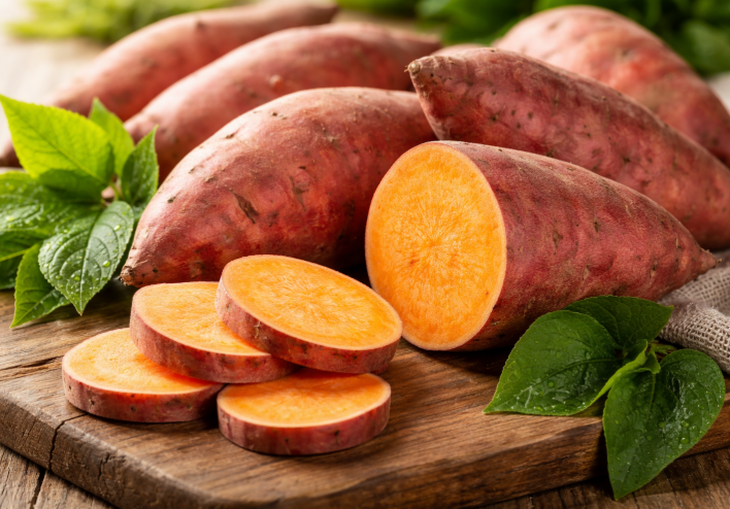
Sweet potatoes provide fiber, potassium, carbohydrates, beta-carotene, and other plant compounds, while their naturally satisfying texture can make them a useful alternative to highly processed breakfast foods.
They may support digestive health, contribute to a nutrient-rich diet, and help with fullness when they replace less nutritious foods.
But they are not a miracle food.
They don't automatically cause weight loss, cure disease, detox the body, or prevent every health problem.
And for people with conditions such as diabetes or reduced kidney function, portion size and individual nutritional needs can be particularly important.
So if a 64-year-old woman ate one boiled sweet potato every morning for a year and felt healthier, the most useful lesson isn't that everyone needs to copy her exact routine.
It's this:
Sometimes the simplest dietary changes are the ones we can maintain long enough to matter.
A humble sweet potato may not be a miracle—but as part of a varied, balanced diet, it can certainly earn a place on the breakfast table.