Shocking truth: No matter how much you wash them, clams will still be gritty if you skip this trick!
Just one simple step — and all the sand comes out on its own!
Before steaming, boiling, or making soup, clams should be soaked in warm water or diluted salt water, with added fresh chili and cooking oil to help them quickly release all the sand.
Lemongrass–pineapple steamed clams are a popular dish on rainy days. Many people prefer to cook them at home rather than eat out to ensure cleanliness and choose better-quality ingredients. However, one common mistake when steaming or boiling clams is ending up with grit because the clams didn’t release all the sand during preparation.
Choosing clams
Select clams with bright, firm shells that feel heavy and are not cracked. You can also test by tapping the shells together: fresh clams produce a clear, solid sound, while dead ones sound dull and may have a bad odor. It’s best to buy clams in the morning when they are freshest.
Soaking clams
Clams live in salty, sandy coastal waters, so soak them in diluted salt water. Mix 1–2 tablespoons of salt into the water, stir to dissolve, then add the clams. The salty taste mimicking their natural habitat encourages them to open up and release sand.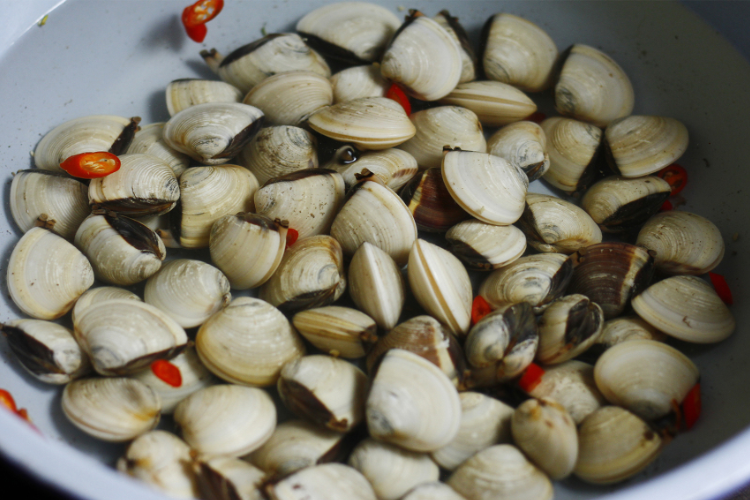
A quick sand-releasing tip is to soak the clams in slightly warm water at a 5:1 ratio of cold to boiling water (5 bowls cold water, 1 bowl hot). The water should be below 50°C and enough to fully submerge the clams. Rice-washing water can also help clams release sand within 1–2 hours. You can add a few slices of chili — the spiciness encourages clams to expel sand faster.
Another special method is to add a spoon of cooking oil to the soaking water. The oil forms a thin layer over the water surface, limiting oxygen and making clams “uncomfortable,” so they release sand.
Clams are sensitive to noise, so keep the soaking container in a quiet place to prevent them from tightly closing their shells.
Washing clams
After soaking, rinse the clams several times under running water to remove remaining sand and dirt on the shells. You can place the clams in a sealed container or two basins stacked together with a little water, then shake vigorously. This helps “dizzy” the clams so they release even more sand. Rinse again afterward.
Steaming clams
Place crushed lemongrass and sliced ginger at the bottom of the pot. Add clean clams on top and layer pineapple and sliced lemongrass above them. For more flavor, you can add a bit of seasoning powder, sugar, or fish sauce to taste. Cover the pot and cook on medium heat until all the clams open—about 5–7 minutes after the water boils. Stir gently and turn off the heat.
Besides steaming, clams can also be stir-fried, cooked Thai-style, made into pineapple clam soup, tamarind clam soup, miso clam soup, or kimchi clam soup.