Air fryers have become one of the most popular kitchen appliances in recent years. Many people appreciate their ability to cook crispy foods quickly while using little or no added oil. Some households even find themselves using an air fryer more often than a conventional oven.
But does that mean an air fryer should completely replace your oven?
The answer is not necessarily. Although air fryers and conventional ovens use similar cooking principles, each appliance has unique strengths and limitations. Which one is better depends on what you're cooking, how much food you're preparing, and your personal cooking goals.
Understanding how these appliances work can help you choose the right tool for every meal.
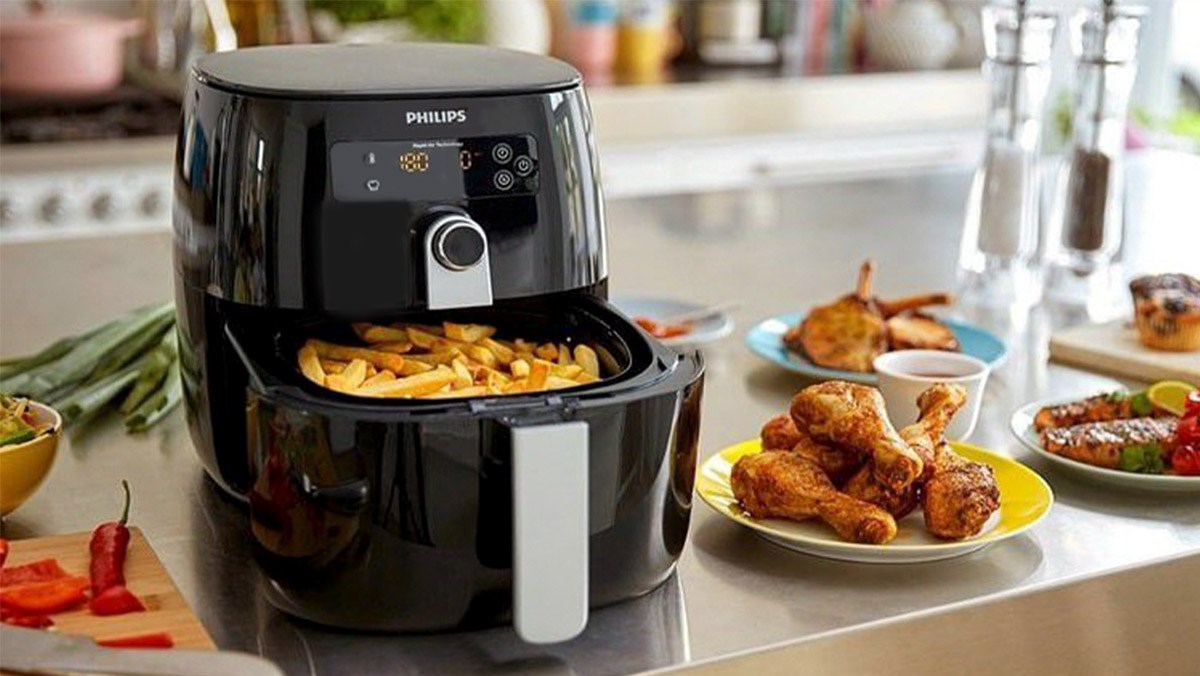
How Does an Air Fryer Work?
Despite its name, an air fryer doesn't actually "fry" food in the traditional sense.
Instead, it is essentially a compact convection oven.
It cooks food by:
-
Heating air with an electric element.
-
Circulating very hot air rapidly around the food.
-
Creating a crispy outer layer through browning.
Because the cooking chamber is small, the hot air circulates efficiently, often reducing cooking time compared with a conventional oven.
How Does a Conventional Oven Work?
Traditional ovens heat food using electric heating elements or gas burners.
Some ovens use convection fans to circulate hot air, while others rely on natural heat movement.
Conventional ovens are designed to:
-
Cook larger meals.
-
Bake evenly.
-
Roast large cuts of meat.
-
Prepare multiple dishes simultaneously.
Their larger cooking space provides greater versatility for family-sized meals.
Are Air Fryers Healthier Than Deep Frying?
In many cases, yes.
Deep frying requires food to be submerged in hot oil.
Air fryers typically require:
-
Little oil
-
Or no added oil at all
This often results in foods containing less added fat than deep-fried versions.
For example:
-
French fries
-
Chicken wings
-
Breaded vegetables
may be prepared with much less oil while still developing a crisp texture.
However, the overall nutritional quality still depends on:
-
The ingredients used.
-
Portion sizes.
-
Overall dietary pattern.
An air fryer does not automatically make every food healthy.
Can an Air Fryer Replace an Oven?
Sometimes—but not always.
For many everyday meals, an air fryer can work very well.
Examples include:
-
Chicken breasts
-
Fish fillets
-
Frozen vegetables
-
French fries
-
Roasted potatoes
-
Chicken wings
-
Small batches of cookies
However, ovens remain the better choice for many situations.
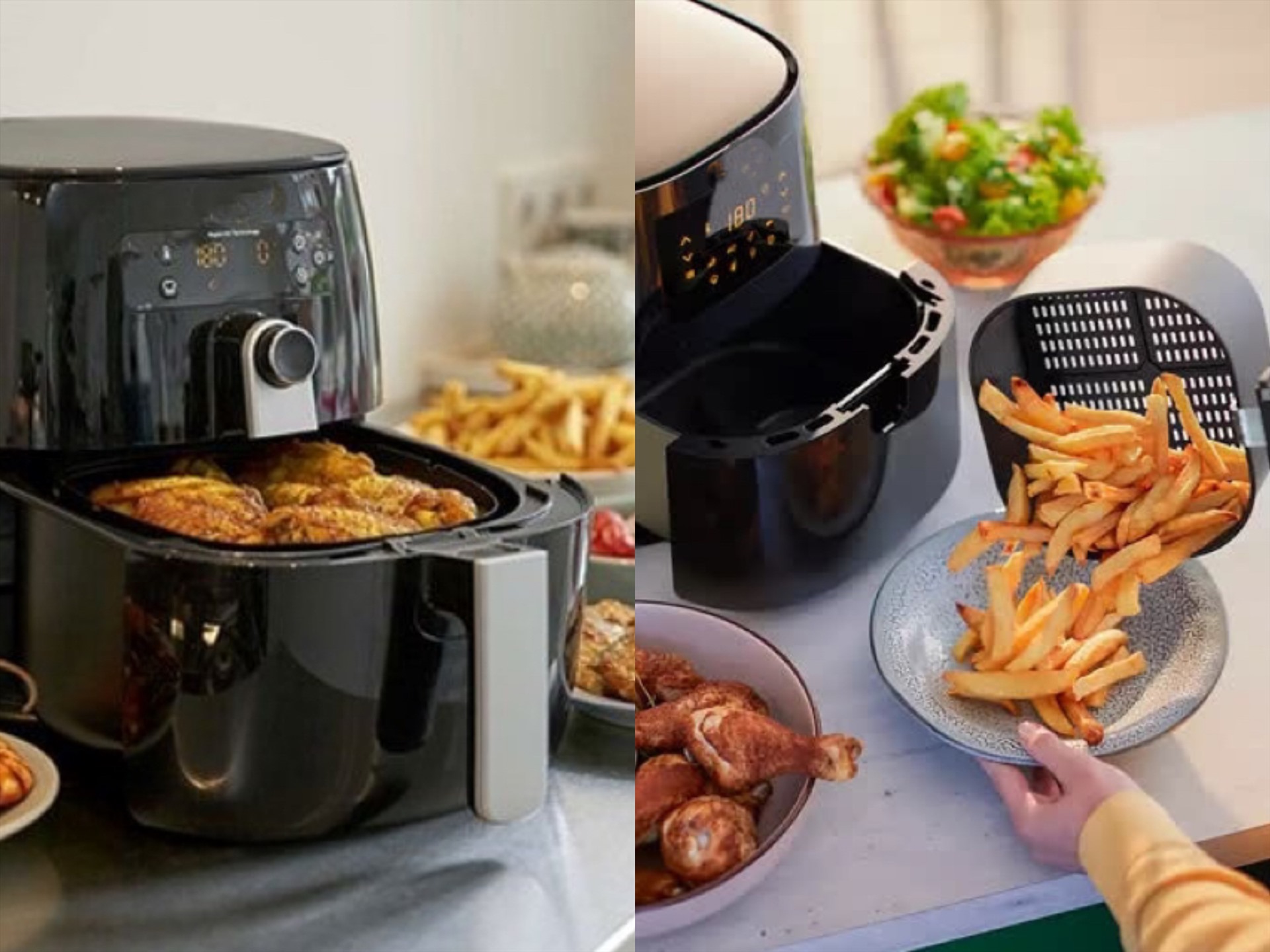
When an Air Fryer Works Best
1. Small Portions
Air fryers are ideal for:
-
One person
-
Couples
-
Small families
Preparing a small amount of food is often quicker than heating an entire oven.
2. Faster Cooking
Because the cooking chamber is compact, air fryers generally:
-
Preheat quickly.
-
Cook food faster.
-
Use less energy for small meals.
This makes them convenient for busy schedules.
3. Crisp Foods
Rapid air circulation promotes browning.
Foods that often cook well include:
-
Potato wedges
-
Chicken tenders
-
Tofu
-
Brussels sprouts
-
Cauliflower
4. Reheating Leftovers
Many people prefer air fryers for reheating foods because they often restore crispness better than microwaves.
Examples include:
-
Pizza
-
Fried chicken
-
Roasted vegetables
When an Oven May Be Better
1. Cooking for a Crowd
If you're preparing food for several people, an oven is usually more practical.
Examples include:
-
Large casseroles
-
Family-sized lasagna
-
Roast turkey
-
Whole chickens
-
Multiple baking trays
2. Baking Cakes and Bread
Although some air fryers can bake, conventional ovens generally provide:
-
More even temperatures.
-
Greater baking consistency.
-
Better space for larger pans.
Many professional bakers still prefer conventional ovens.
3. Cooking Multiple Foods
A standard oven allows you to prepare:
-
Vegetables
-
Meat
-
Side dishes
at the same time on different racks.
Most air fryers have limited cooking capacity.
4. Large Roasts
Whole turkeys, large briskets, and oversized baking dishes simply won't fit in many air fryers.
Is Food More Nutritious in an Air Fryer?
Current evidence does not suggest that air fryers make food inherently more nutritious than ovens.
Both appliances can preserve many nutrients when foods are cooked appropriately.
Nutrient retention depends on factors such as:
-
Cooking temperature.
-
Cooking time.
-
Type of food.
-
Moisture loss.
Cooking vegetables for excessively long periods—whether in an oven or an air fryer—may reduce some heat-sensitive vitamins, such as vitamin C.
Do Air Fryers Reduce Harmful Compounds?
Some research suggests that air frying may produce lower levels of certain compounds, such as acrylamide, in some starchy foods compared with deep frying.
Acrylamide can form when foods like potatoes are cooked at high temperatures.
However:
-
Air frying does not eliminate acrylamide.
-
It can still form when foods become overly browned or burnt.
Regardless of the appliance you use, avoiding excessive charring is a good practice.
Energy Efficiency
For smaller meals, air fryers often use less electricity than heating a full-size oven because:
-
They preheat quickly.
-
Their cooking chamber is smaller.
-
Cooking times are often shorter.
For large meals, however, an oven may be more efficient because it can cook several dishes at once.
Common Myths About Air Fryers
Myth 1: Air Fryers Fry Food
Not exactly.
Air fryers cook with rapidly circulating hot air rather than immersing food in oil.
Myth 2: Air-Fried Food Is Always Healthy
False.
Air-fried foods can still be:
-
High in sodium.
-
High in saturated fat.
-
Highly processed.
Cooking method is only one part of healthy eating.
Myth 3: Air Fryers Destroy All Nutrients
False.
No cooking method preserves every nutrient perfectly.
Both air fryers and ovens can retain many nutrients when foods are cooked appropriately.
Myth 4: Air Fryers Can Replace Every Kitchen Appliance
False.
Although versatile, air fryers cannot fully replace:
-
Ovens
-
Microwaves
-
Slow cookers
-
Pressure cookers
Each appliance serves different purposes.
Tips for Healthier Air Fryer Cooking
If you use an air fryer regularly, consider these tips:
-
Use minimal oil instead of heavily coating foods.
-
Choose fresh ingredients whenever possible.
-
Include plenty of vegetables.
-
Avoid burning foods.
-
Shake or turn food halfway through cooking for even browning.
-
Clean the basket regularly to prevent smoke and buildup.
-
Follow the manufacturer's instructions for safe use.
Choosing Between an Air Fryer and an Oven
Rather than asking which appliance is better, it's more useful to ask which one is better suited to the meal you're preparing.
An air fryer may be the better choice if you:
-
Cook small portions.
-
Want food quickly.
-
Enjoy crispy textures.
-
Are reheating leftovers.
-
Want to reduce the amount of oil used compared with deep frying.
An oven may be the better choice if you:
-
Cook for several people.
-
Bake cakes or bread.
-
Roast large cuts of meat.
-
Prepare multiple dishes at once.
-
Need more cooking space.
Many households benefit from having both appliances available.
Frequently Asked Questions
Is air-fried food healthier than oven-baked food?
Not necessarily. Both methods can be part of a healthy diet. The nutritional value depends more on the ingredients, portion sizes, and overall eating pattern than on whether the food is cooked in an air fryer or an oven.
Can you use aluminum foil in an air fryer?
Many manufacturers allow limited use of aluminum foil, but recommendations vary by model. Always consult your appliance's instruction manual and ensure that airflow is not blocked, as proper air circulation is essential for safe and effective cooking.
Do air fryers cook food faster?
Often, yes. Their smaller cooking chamber and rapid hot-air circulation can reduce both preheating and cooking times, particularly for small batches of food.
Should you stop using your oven if you own an air fryer?
No. Air fryers and conventional ovens are complementary appliances. Each performs better for different types of meals and cooking tasks.
Final Thoughts
Air fryers have earned their popularity because they are convenient, energy-efficient for small meals, and capable of producing crispy foods with little or no added oil. For many everyday dishes, they can be an excellent alternative to deep frying and a practical choice for quick cooking. However, they are not a universal replacement for a conventional oven.
Ovens remain the better option for baking, preparing large family meals, roasting large cuts of meat, and cooking multiple dishes at the same time. Ultimately, the healthiest choice isn't determined by the appliance itself but by the foods you prepare, the ingredients you use, and your overall dietary habits. Choosing the right tool for the right task allows you to enjoy both convenience and nutritious home-cooked meals.