Choosing Fresh Pork
For crispy roasted pork, it's best to choose pork belly from the lower abdomen of the pig. This cut has 3-5 layers of fat and lean meat intertwined, creating a solid piece. When roasted, the meat won’t dry out or become too fatty.
Choose pork with a natural pale pink color. The layers of meat and fat should be clearly distinct but still solid. Press your fingers into the meat to check for good elasticity. The meat should not have signs of bruising or white spots like grains of rice.
For crispy crackling, choose a piece with moderately thick skin. If the skin is too thin, it won’t crisp up as desired. If it’s too thick, it will be hard to crackle and could become tough.
Properly Preparing the Pork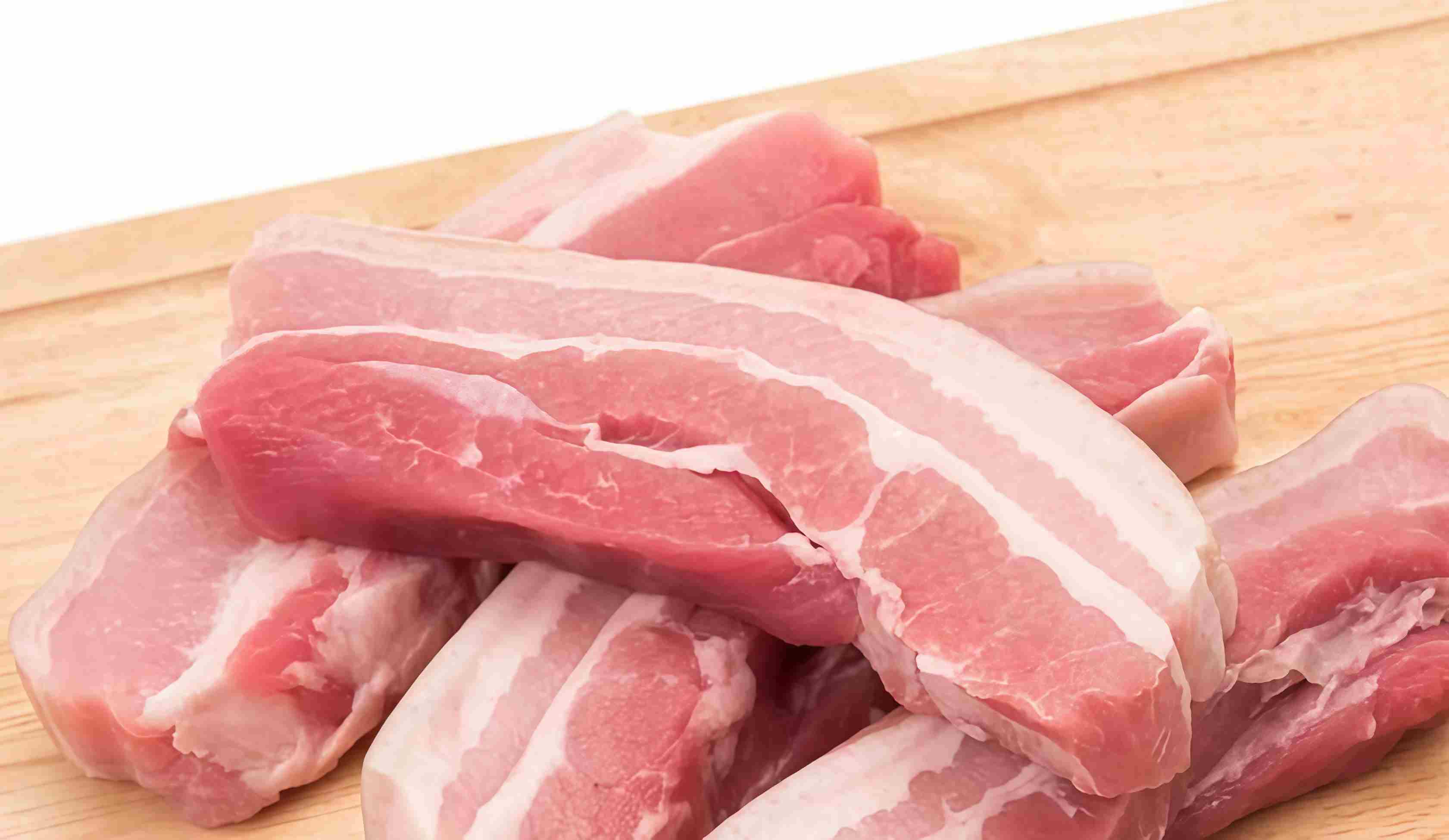
Once you buy the pork, scrape off any remaining hairs. Rinse the pork with diluted salt water to remove surface dirt and eliminate odors. You can rub the pork with lemon juice and wash it again with clean water to make it smell fresher. Let the meat dry.
Prepare a pot of boiling water, add some thinly sliced ginger and a bit of white vinegar. Place the pork into the pot to blanch it, which will remove any remaining odors.
Rinse the pork once more and let it dry.
Use a sharp tool to prick the surface of the skin several times. Then, brush a mixture of white vinegar and salt on the skin of the pork.
For extra flavor, you can marinate the meat with spices such as five-spice powder, garlic powder, onion powder, ground pepper, chili powder, seasoning powder, and salt. If you don't have garlic or onion powder, you can crush fresh garlic and onion, then squeeze out the juice to marinate the pork. Be careful not to marinate the skin, as it should remain clean and dry without any spices.
Wrap the meat with aluminum foil, leaving the skin exposed.
Drying the Skin Before Roasting
Before roasting, you can dry the skin by placing it under the sun or in the fridge for at least 6 hours, or use a hairdryer to dry the skin.
Roasting the Pork
Place the pork in an air fryer with the skin facing up, and the meat wrapped in aluminum foil. Roast the pork for the first time at 200-230°C (depending on your air fryer) for 30 minutes.
After 30 minutes, remove the pork and take off the aluminum foil.
Roast it for a second round at 180-200°C for 10 minutes. Once the skin crisps up evenly and turns golden, it’s ready to be removed and sliced into bite-sized pieces. If the skin isn’t as crispy as you want, you can increase the temperature to over 200°C and roast for an additional 5-10 minutes.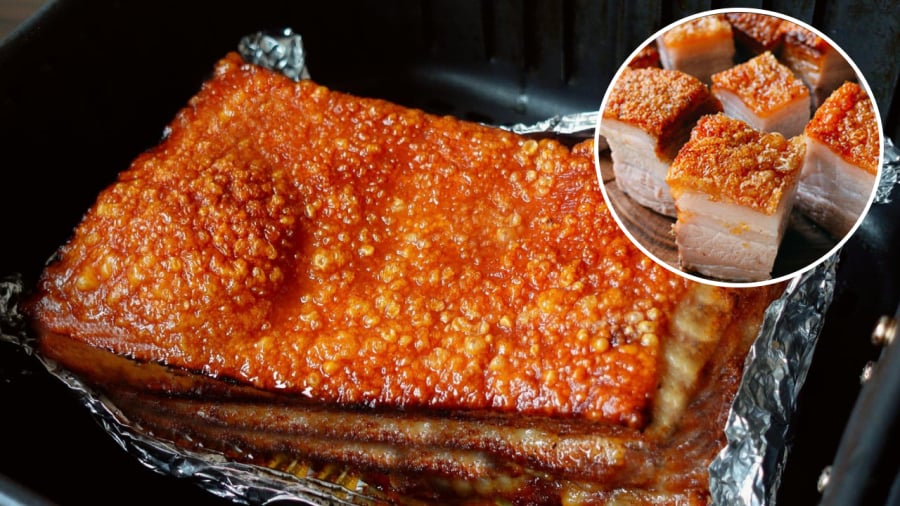
Tips for Achieving Perfectly Crispy Roasted Pork
Making crispy roasted pork at home may seem difficult at first, especially when you want the skin to develop a golden, crunchy crust while the meat underneath remains tender and juicy. However, with the right preparation, careful temperature control, and a little patience, you can achieve excellent results without using a professional oven or specialized roasting equipment.
The secret is not simply turning up the heat. Instead, it involves managing moisture, seasoning the meat properly, drying the skin thoroughly, and allowing enough time for the fat beneath the skin to render.
1. Choose the Right Cut of Pork
Pork belly is one of the most popular choices for crispy roasted pork because it contains alternating layers of lean meat and fat. During roasting, the fat gradually melts, helping keep the meat moist while contributing to its rich flavor.
When shopping for pork belly, look for a piece with relatively even thickness. A uniform cut is easier to cook because the heat can reach the center at a more consistent rate. If one end is significantly thinner than the other, that portion may become dry before the thicker section is fully cooked.
The balance between meat and fat is also important. Too much lean meat can produce a dry result, while excessive fat may leave the finished dish feeling heavy. A piece with several distinct layers generally provides a satisfying combination of tenderness, flavor, and texture.
Fresh pork should have a natural pink to pale reddish color, depending on the cut and lighting. The fat should generally appear creamy white rather than unusually yellow or gray. The surface should be reasonably moist but not sticky, slimy, or covered with unusual discoloration.
Smell is another useful indicator. Fresh pork typically has a mild, neutral smell. A strong sour, rancid, or unpleasant odor is a reason to avoid the meat. However, appearance and smell alone cannot guarantee safety, so purchase pork from a reputable supplier, check its storage conditions, and pay attention to the use-by date.
If you are buying pork specifically for crispy crackling, ask the butcher to leave the skin intact. Avoid cuts with deep cuts or tears across the skin, as these can make it more difficult to achieve an even crust.
2. Understand the Importance of the Skin
The skin is the defining feature of crispy roasted pork. Unlike the meat underneath, which benefits from retaining moisture, the skin needs to become sufficiently dry before it can blister and turn crunchy.
When the skin contains too much moisture, heat must first evaporate that water. This delays browning and can leave the surface rubbery instead of crisp. Once the skin is dry, high heat can help the remaining moisture escape and encourage the surface to develop its characteristic crunchy texture.
Skin thickness also affects the final result. Moderately thick skin can provide a satisfying crackle without becoming excessively tough. Very thick skin may require more time and careful preparation, while very thin skin can brown quickly and may burn before the underlying fat has rendered sufficiently.
Try to choose a piece with skin that is relatively even across the surface. Thick ridges, folds, or deep wrinkles can create areas that cook differently from the rest.