A 14-Year-Old Girl Suffered Stomach Pain for Six Months—What Doctors Found During Surgery Raises an Important Health Warning
Persistent pain can also affect a teenager's emotional well-being.
Adolescence is a period when friendships, independence, school performance, and social confidence become increasingly important.
Missing classes or declining invitations because of an unpredictable stomachache can leave a young person feeling isolated. Repeated visits to medical appointments may create anxiety, especially when initial examinations do not reveal a clear explanation.
Parents may feel equally uncertain.
They want to believe that the problem is temporary, but they may become concerned when familiar remedies do not help or symptoms continually return.
Some teenagers hesitate to describe their discomfort because they do not want attention. Others worry that adults will assume they are exaggerating.
For this reason, the way families respond can make a difference.
Listening carefully, acknowledging the child's experience, and describing symptoms accurately to a healthcare professional can support more effective assessment.
Keeping track of when the pain occurs, what makes it worse, and whether other symptoms appear may provide useful information.
It is also important to remember that the absence of an immediate diagnosis does not mean the pain is imaginary.
Some conditions become clearer over time. Others require a particular test or specialist evaluation before their cause can be identified.
Why six months should raise questions
A six-month period of recurring abdominal discomfort is not automatically a sign of a dangerous disease. Many young people experience chronic abdominal symptoms without having a surgical condition.
However, persistent symptoms should not be dismissed simply because they have become familiar.
Pain that interferes with eating, sleeping, attending school, or participating in everyday life deserves medical attention and, when necessary, reassessment.
A particularly important concern is whether additional warning signs have developed.
Unintentional weight loss, persistent vomiting, blood in the stool, a growing abdominal swelling, unexplained fever, or difficulty maintaining normal hydration can change how urgently a patient needs to be evaluated.
The goal is not to frighten families into believing that every stomachache hides a serious condition.
Instead, it is to recognize that prolonged symptoms tell doctors something important: further questions may need to be answered.
And in rare circumstances, the explanation may involve something that has gradually accumulated inside the digestive tract.
Chapter 2: The Unexpected Possibility—What Can Accumulate Inside the Stomach?
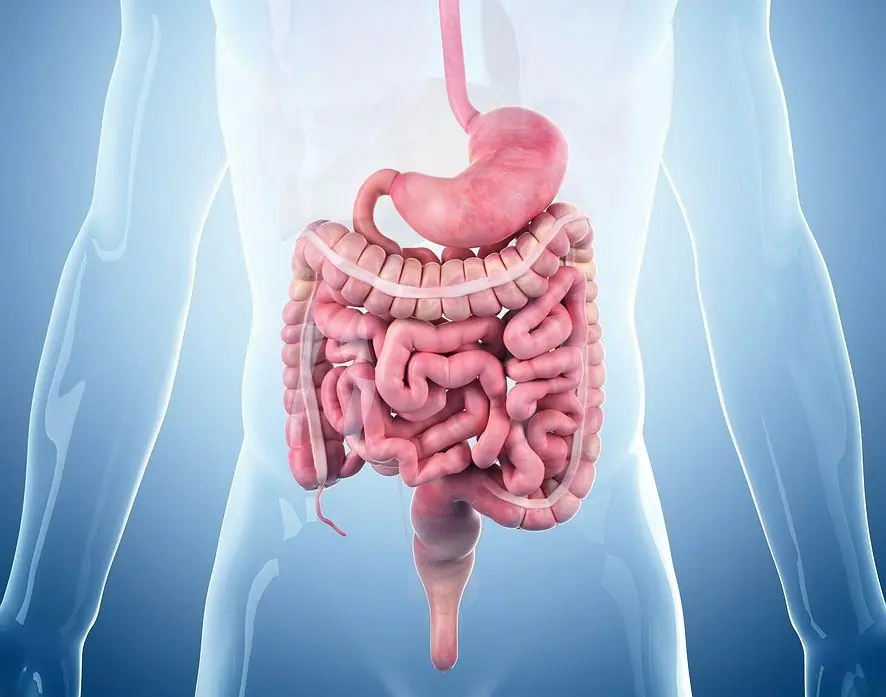
When people think about stomach problems, they usually imagine inflammation, excess acid, an infection, or something they ate.
Few consider the possibility that a solid mass of accumulated material might be occupying space inside the stomach itself.
Yet such masses exist.
Doctors refer to them as bezoars, a medical term describing compact collections of material that remain within the digestive system instead of passing through normally.
According to the Merck Manual, bezoars most commonly form in the stomach and may contain substances that are partially digested or cannot be digested effectively.
Some consist of plant fibers. Others develop from medications or different types of swallowed material.
One particularly unusual type is made of hair.
It is known as a trichobezoar.
What exactly is a trichobezoar?
A trichobezoar is a tightly packed collection of hair that accumulates within the stomach.
Human hair contains keratin, a strong structural protein that the digestive system cannot efficiently break down.
When someone swallows small amounts of hair, the material may sometimes pass through the gastrointestinal tract without causing an obvious problem.
However, repeated ingestion can allow strands to become tangled and trapped inside the stomach.
Over time, additional strands may attach to the existing material.
Food particles and mucus can become mixed into the growing mass, producing a dense collection that may occupy an increasingly large portion of the stomach.
Unlike ordinary food, which is processed and moved onward through the intestines, accumulated hair can resist digestion and remain in place.
The resulting mass may gradually interfere with the stomach's ability to function normally.
For some patients, this process develops without immediately producing dramatic symptoms.
In others, nausea, abdominal discomfort, a reduced appetite, or a feeling of fullness may appear.
The mass can also contribute to complications if it becomes large enough to obstruct the normal movement of food.
The Cleveland Clinic identifies abdominal pain and constipation among possible symptoms associated with trichobezoars and explains that large accumulations may interfere with digestion.
Why can a hair mass become so large?
The stomach is designed to mix food with digestive juices and gradually move its contents into the small intestine.
Its muscular walls repeatedly contract to break down food and propel it onward.
But hair behaves differently from most dietary substances.
It does not dissolve readily in stomach acid, and its long, flexible strands can become entangled.
As more hair collects, the strands may form a dense structure that resists the normal movements of the stomach.
The shape of the mass can sometimes reflect the space in which it developed.
In reported medical cases, surgeons have removed trichobezoars that occupied substantial portions of the stomach.
Some masses have extended beyond the stomach into the small intestine.
This is one reason a rare condition involving swallowed hair can eventually require invasive medical treatment.
However, the size, appearance, and composition of any mass cannot be reliably established from an isolated online photograph.
An unusual object shown in a viral image could represent different materials, and photographs may be separated from their original clinical context.
The diagnosis must come from medical evidence, not visual resemblance alone.
The rare condition called Rapunzel syndrome
One of the most unusual complications associated with trichobezoars is known as Rapunzel syndrome.
The name comes from the fairy-tale character Rapunzel, famous for her exceptionally long hair.
In this medical condition, a large hair mass forms within the stomach and extends through the stomach's outlet into the intestine.
The resulting structure can resemble a long tail of tangled material.
Rapunzel syndrome is rare, but it is well documented in medical literature.