Sometimes the body doesn't announce a health problem with dramatic symptoms. Instead, it may produce subtle changes on the skin that are easy to overlook.
The image above shows an underarm area with multiple small, raised, skin-colored to brownish growths and areas of darker, thicker-looking skin. Changes like these can have several possible explanations. One possibility is a combination of skin tags and darkened skin associated with acanthosis nigricans, but a photograph alone cannot establish a diagnosis.
The important lesson is that new or changing skin findings deserve attention, particularly when they appear alongside other changes such as unexplained weight gain, increased thirst, fatigue, or changes in blood sugar.
Let's take a closer look at what these signs can mean and when it may be worth talking with a healthcare professional.
Why the Underarms Can Reveal Health Changes
The underarm, or axilla, is an area where several factors come together.
It has:
-
Sweat glands
-
Hair follicles
-
Friction from clothing and skin
-
Numerous blood vessels
-
A warm, moist environment
-
Sensitive skin
Because of this, the area is particularly susceptible to irritation, pigmentation changes, infections, and benign skin growths.
Some changes are completely harmless.
Others may provide clues about underlying metabolic or hormonal conditions.
That's why context matters.
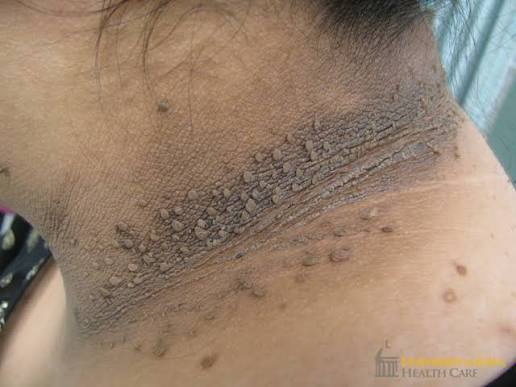
What Could the Small Bumps in the Image Be?
The raised lesions visible in the photograph appear somewhat similar to skin tags, medically known as acrochordons.
Skin tags are common, soft growths that often develop in areas where skin rubs against skin.
Common locations include:
-
Neck
-
Underarms
-
Groin
-
Eyelids
-
Under the breasts
They can be flesh-colored, slightly darker, or brown.
Most skin tags are benign.
However, having numerous skin tags—particularly when they develop alongside darker, thicker skin—can sometimes be associated with metabolic conditions.
That doesn't mean the bumps in this specific photograph are definitely skin tags.
A clinician would need to examine them directly.
What Is Acanthosis Nigricans?
Another condition worth knowing about is acanthosis nigricans.
It typically causes areas of skin to become:
-
Darker
-
Thicker
-
Velvety
-
More prominent in skin folds
Common locations include:
-
Neck
-
Underarms
-
Groin
-
Beneath the breasts
-
Other skin folds
The color may range from light brown to dark brown or grayish.
The texture can be more noticeable than the color itself.
Why Blood Sugar Can Be Connected to Skin Changes
One of the most important associations with acanthosis nigricans is insulin resistance.
Insulin is a hormone that helps move glucose from the bloodstream into cells.
When the body becomes less responsive to insulin, the pancreas may produce more insulin to compensate.
Higher insulin levels can affect growth signals in the skin, potentially contributing to the thickened appearance characteristic of acanthosis nigricans.
This is one reason doctors may pay attention when dark, velvety skin appears around the neck or underarms.
It can sometimes be a clue that metabolic health deserves a closer look.
Acanthosis Nigricans Does Not Automatically Mean Diabetes
This distinction is extremely important.
Seeing darker skin in an underarm does not mean a person definitely has diabetes.
Acanthosis nigricans can have many possible causes, including:
-
Insulin resistance
-
Obesity
-
Certain hormonal disorders
-
Some medications
-
Genetic factors
-
Rare underlying conditions
A medical professional can help determine which explanation is most likely.
If the change is new or progressing, it may be reasonable to discuss it during a routine medical appointment.
Skin Tags and Metabolic Health
Research has found associations between multiple skin tags and metabolic conditions, including insulin resistance and type 2 diabetes.
However, the presence of skin tags alone isn't enough to diagnose anything.
Skin tags are extremely common, particularly as people get older.
They can also develop because of:
-
Genetics
-
Age
-
Friction
-
Pregnancy
-
Body composition
-
Hormonal factors
So don't panic if you notice one or two.
The bigger picture matters.
When Several Skin Changes Appear Together
A pattern may be more informative than an isolated lesion.
For example, someone might notice:
Multiple new skin tags
along with
darkened, thickened skin around the neck or underarms
and also experience
increased thirst, frequent urination, fatigue, or unexplained weight changes.
That combination deserves more attention than a single harmless-looking skin tag.
A healthcare professional may consider checking metabolic markers such as blood glucose or HbA1c.
Could This Be Related to Weight?
Body composition can influence the likelihood of insulin resistance and certain skin changes.
However, it's important not to assume that every person with acanthosis nigricans or skin tags is overweight.
These conditions can occur in people of different body sizes.
Genetics, hormones, medications, and other health factors can also play a role.
The skin should never be used as a reason to judge someone's health or appearance.
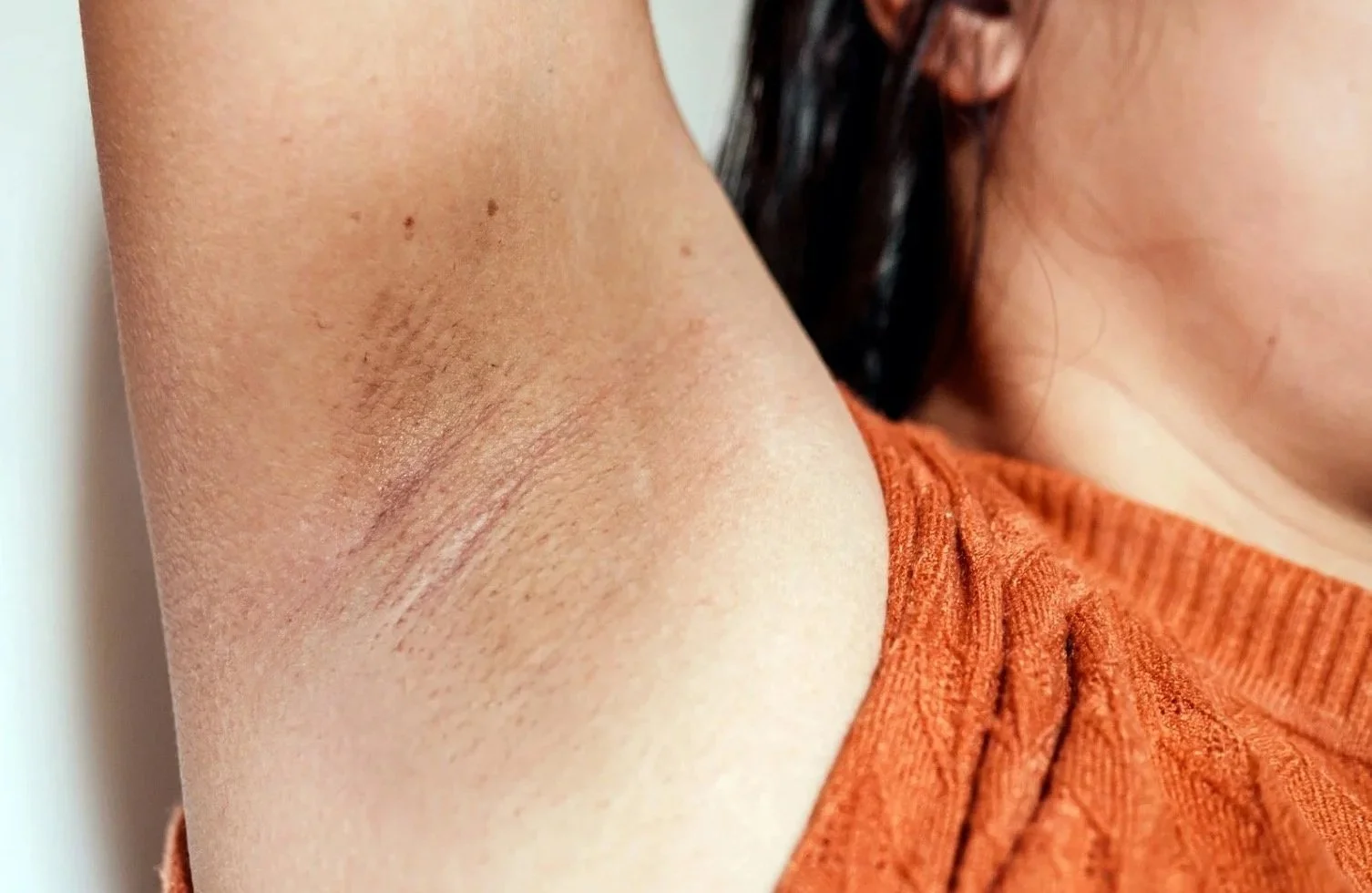
Other Causes of Dark Underarm Skin
Not every darkened underarm is acanthosis nigricans.
Common alternatives include:
Friction
Repeated rubbing from clothing or skin can cause irritation and pigmentation changes.
Shaving
Frequent shaving may irritate the skin and contribute to darkening, particularly if there are ingrown hairs.
Deodorants and fragrances
Some ingredients can trigger irritation or allergic contact dermatitis.
Post-inflammatory hyperpigmentation
Skin can remain darker after inflammation or an injury.
Fungal or other infections
Some infections can cause discoloration, scaling, itching, or irritation.
Hormonal conditions
Certain endocrine disorders can affect pigmentation.
This is why visual inspection alone isn't enough for diagnosis.
What If the Skin Is Itchy or Burning?
Itching changes the picture.
If underarm discoloration is accompanied by:
-
Persistent itching
-
Burning
-
Scaling
-
Cracking
-
Redness
-
Moist patches
-
Unusual odor
an inflammatory condition or infection may be involved.
Don't automatically assume that the problem is related to blood sugar.
A dermatologist or primary-care clinician can distinguish between common causes.
What If the Growths Suddenly Appear?
A sudden increase in skin growths deserves attention.
Most skin tags develop gradually, but a rapid or unusual change in the number or appearance of lesions should be evaluated.
This doesn't mean something serious is necessarily happening.
It simply means that new patterns are worth checking rather than guessing about online.
Don't Try to Cut Them Off at Home
One of the biggest mistakes people make with skin tags is attempting to remove them themselves.
Cutting, tying, burning, or applying unverified chemicals can result in:
-
Bleeding
-
Infection
-
Scarring
-
Skin damage
-
Misdiagnosis of another type of lesion
If removal is desired, a healthcare professional can determine whether the lesion is actually a skin tag and choose an appropriate method.
Why Some Skin Growths Need Professional Evaluation
Not every raised skin lesion is a skin tag.
Other possibilities include:
-
Warts
-
Moles
-
Cysts
-
Benign tumors
-
Irritated lesions
-
Other dermatological conditions
Rarely, a lesion that looks harmless can represent something requiring further investigation.
Seek medical advice if a growth:
-
Changes rapidly
-
Bleeds without obvious trauma
-
Develops unusual colors
-
Becomes painful
-
Ulcerates
-
Grows quickly
-
Has an irregular appearance
The Neck Can Show Similar Changes
Acanthosis nigricans often becomes noticeable first around the neck.
Some people mistake it for dirt and scrub aggressively, believing they simply haven't washed the area well enough.
But the characteristic thickened texture isn't something that can simply be scrubbed away.
Repeated scrubbing can actually irritate the skin and make pigmentation more noticeable.
If the skin around your neck becomes progressively darker and thicker despite normal hygiene, it's worth discussing with a healthcare professional.
Your Skin Can Sometimes Reflect Metabolic Health
The skin isn't an isolated organ.
It responds to:
-
Hormones
-
Blood flow
-
Nutrition
-
Inflammation
-
Immune activity
-
Metabolic changes
That's why certain dermatological findings can occasionally provide clues about what's happening elsewhere in the body.
But the relationship works in both directions.
A skin change can have an internal cause—or it can simply be a local skin problem.
The goal is to identify which explanation fits.
What Other Symptoms Should You Watch For?
If you're concerned about insulin resistance or diabetes, pay attention to symptoms such as:
Increased thirst
Feeling unusually thirsty throughout the day.
Frequent urination
Especially if this represents a noticeable change from your normal routine.
Unusual fatigue
Feeling persistently exhausted despite adequate rest.
Blurred vision
Temporary or persistent changes in vision can occur with elevated blood glucose.
Slow-healing wounds
Cuts and injuries that seem to take unusually long to heal deserve attention.
Unexplained weight changes
Significant changes without an obvious reason should be discussed with a healthcare professional.
None of these symptoms alone proves diabetes.
Testing is what provides the answer.
Why Early Detection Matters
Conditions such as prediabetes and type 2 diabetes can develop gradually.
Some people have few noticeable symptoms for a long time.
That means opportunities to identify metabolic problems can sometimes come from routine healthcare visits or laboratory testing rather than dramatic symptoms.
If a doctor sees signs that could be associated with insulin resistance, they may recommend blood tests.
Common tests include:
-
Fasting blood glucose
-
HbA1c
-
Sometimes an oral glucose tolerance test
The appropriate test depends on the individual's circumstances.
HbA1c Can Provide a Longer-Term Picture
HbA1c is commonly used to assess average blood glucose levels over roughly the previous two to three months.
Unlike a single glucose measurement, it provides a broader picture of blood sugar exposure.
If someone has skin findings that raise questions about metabolic health, an HbA1c test may be one of the tests a clinician considers.
Again, the decision depends on medical history and risk factors.
Can Skin Changes Improve?
When acanthosis nigricans is related to an underlying metabolic or hormonal condition, addressing that condition may improve the skin over time.
The exact course varies.
Management may involve:
-
Improving dietary quality
-
Increasing physical activity
-
Managing body weight when appropriate
-
Treating diabetes or prediabetes
-
Addressing hormonal conditions
-
Reviewing medications with a clinician
The skin isn't necessarily going to change overnight.
Underlying improvements can take time.
Don't Chase "Skin Detox" Remedies
Social media is full of claims that lemon juice, baking soda, scrubs, essential oils, or other household remedies can remove dark underarm skin.
These approaches can be risky.
Strong acids or abrasive substances can cause irritation and chemical burns.
If the discoloration is caused by an underlying condition, treating the surface alone doesn't address the reason it developed.
A safer approach is to determine the cause first.
Gentle Skin Care Is Usually Better
For underarm skin, consider:
-
Gentle cleansing
-
Avoiding harsh scrubs
-
Using fragrance-free products if irritation occurs
-
Wearing breathable clothing
-
Avoiding excessive friction
-
Using shaving techniques that minimize irritation
If a product consistently causes burning or redness, stop using it.
What About Deodorant?
Deodorants and antiperspirants are generally safe for most people.
However, some individuals develop irritation or allergic reactions to particular ingredients.
If darkening began after switching products, consider whether there is a connection.
A dermatologist can help identify contact dermatitis or other skin conditions when symptoms persist.
Sweating Does Not Mean Your Body Is "Full of Toxins"
Another common misconception is that underarm sweating or odor means toxins are leaving the body.
Sweat primarily helps regulate body temperature.
Body odor is largely produced when skin bacteria interact with components of sweat and other skin secretions.
Sweating is normal.
Persistent unusual odor accompanied by rash, pain, or other changes may warrant evaluation, but it isn't evidence that the body needs a "detox."
What About Hormonal Conditions?
Acanthosis nigricans can sometimes be associated with hormonal disorders.
For example, certain endocrine conditions can affect insulin sensitivity or hormone levels.
If a person develops significant skin changes alongside symptoms such as:
-
Menstrual irregularities
-
Excessive hair growth
-
Unexplained weight changes
-
Severe fatigue
-
Changes in blood pressure
a healthcare professional may consider whether hormonal evaluation is appropriate.
Medications Can Sometimes Play a Role
Certain medications have been associated with acanthosis nigricans or changes in pigmentation.
Examples can include some hormonal treatments and medications that influence metabolism.
This doesn't mean anyone should stop medication because of a skin change.
Instead, discuss the change with the prescribing clinician.
Rare Causes Exist, But Don't Jump to the Worst Conclusion
There are rare forms of acanthosis nigricans associated with underlying malignancy.
These cases are uncommon.
A sudden, extensive, rapidly developing skin change—particularly in unusual locations or accompanied by other concerning symptoms—deserves medical evaluation.
But it would be inappropriate to look at a photograph like the one shown and conclude that it represents cancer.
Most skin changes have much more common explanations.
Why Internet Diagnoses Can Be Misleading
A photograph can show what something looks like.
It usually cannot show:
-
How long it has been present
-
Whether it itches
-
Whether it hurts
-
How quickly it changed
-
Medical history
-
Medication use
-
Blood glucose
-
Hormone levels
-
Family history
Those details can completely change the diagnosis.
That's why online images are useful for education but poor substitutes for medical examination.
A Simple Checklist for New Skin Changes
If you notice something similar, ask yourself:
When did it start?
Days, months, or years?
Is it spreading?
Is the affected area becoming larger?
Is the texture changing?
Is the skin becoming thicker or velvety?
Are there new growths?
Are more bumps appearing?
Are there other symptoms?
Thirst, fatigue, weight changes, itching, pain, or unusual odor?
Are you taking new medications?
Recent medication changes can sometimes matter.
Does it run in your family?
Some skin and metabolic conditions have genetic components.
These details can help a clinician understand what's happening.
When Should You See a Doctor?
Consider scheduling an appointment if you notice:
-
New widespread darkening of the skin
-
Thickened or velvety patches
-
Numerous new skin tags
-
Rapidly changing skin growths
-
Persistent itching or irritation
-
Unexplained changes in pigmentation
-
Other symptoms suggesting metabolic or hormonal changes
You don't need to wait until the condition becomes severe.
Sometimes the best time to investigate a change is when it is still subtle.
What a Doctor May Do
Depending on the appearance and your medical history, a clinician may:
-
Examine the affected skin.
-
Ask when the changes started.
-
Review medications.
-
Ask about family history.
-
Check blood pressure and other vital signs.
-
Consider blood glucose or HbA1c testing.
-
Evaluate for hormonal conditions if appropriate.
-
Refer you to a dermatologist if the diagnosis is uncertain.
The evaluation is usually based on the whole person rather than one visual symptom.
The Bigger Lesson: Pay Attention Without Panicking
It's easy to fall into one of two extremes.
The first is ignoring every change:
"It's probably nothing."
The second is assuming every unusual mark means a serious disease.
Neither approach is ideal.
A better strategy is:
Notice it.
Monitor it.
Look for accompanying symptoms.
Get it evaluated when appropriate.
That gives you useful information without unnecessary fear.
Your Skin Can Be a Clue, Not a Diagnosis
The changes visible in the image may resemble conditions such as skin tags or acanthosis nigricans, but only an in-person examination can determine what the lesions actually are.
If the appearance is new, widespread, or changing, it may be worth mentioning during your next medical appointment.
And if the skin changes occur alongside symptoms such as excessive thirst, frequent urination, unexplained fatigue, or significant weight changes, discussing blood sugar testing with a healthcare professional may be particularly reasonable.
The Bottom Line
The body sometimes communicates through subtle changes rather than dramatic symptoms.
Darkened, thickened skin around the underarms or neck and the appearance of multiple small skin growths can have many causes. In some people, these findings may be associated with insulin resistance or other metabolic or hormonal conditions. In others, they may simply reflect friction, genetics, aging, or a common benign skin condition.
The key is not to diagnose yourself from a photograph.
Instead, use unusual changes as a reason to pay closer attention to your overall health.
A skin change doesn't automatically mean something is wrong but a persistent or rapidly changing skin change shouldn't automatically be ignored either.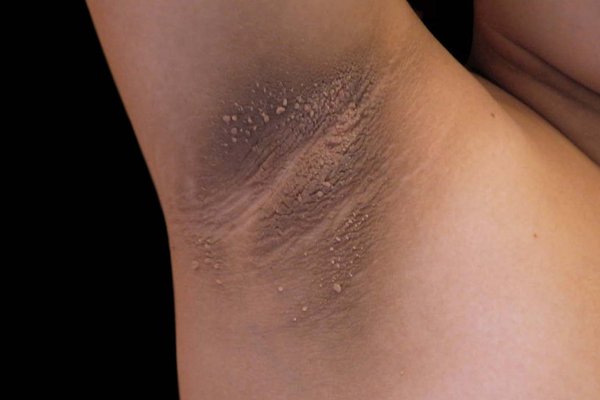
Final Thoughts
Your body doesn't always send a dramatic warning.
Sometimes the first clue is something you notice while getting dressed.
A darker patch around your neck.
A cluster of small bumps beneath your arm.
Skin that suddenly feels thicker or different.
A change that wasn't there a year ago.
These signs don't tell the entire story, but they can be worth investigating.
The healthiest response isn't fear.
It's awareness.
Notice the change. Don't try to diagnose it from social media. Avoid harsh home remedies. And when something is new, persistent, or accompanied by other symptoms, let a qualified healthcare professional take a closer look.
Because sometimes the smallest changes really can be useful clues and catching a potential problem early is always better than waiting for it to become impossible to ignore.