A bitter taste does not automatically mean a vegetable is dangerous. Many perfectly healthy vegetables are naturally bitter because they contain protective plant compounds. But in a few situations, an unusually bitter taste can be an important warning sign—especially when the bitterness is unexpected, extremely strong, or accompanied by other changes in the food.
Vegetables are often praised for being rich in vitamins, minerals, fiber, and beneficial plant compounds. Most are perfectly safe when properly grown, stored, and prepared.
Still, plants naturally produce chemicals to protect themselves from insects, disease, and environmental stress. Some of these compounds can be toxic when present at high levels.
That is why the phrase “natural toxin” deserves some context.
It does not mean that ordinary vegetables are secretly poisonous.
It means that certain plants can contain naturally occurring chemicals that may cause illness under particular circumstances.
One of the most useful clues can sometimes be your senses—especially an unexpected change in taste.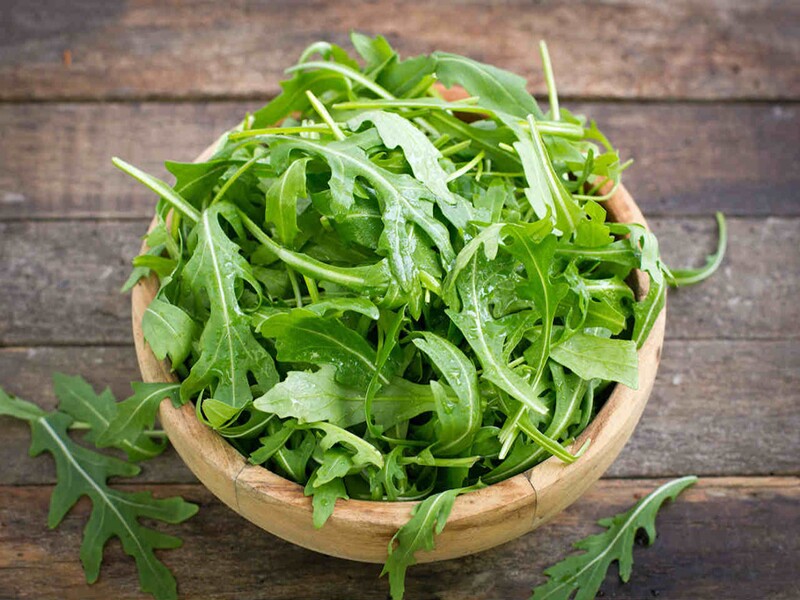
Bitterness Does Not Automatically Mean Toxicity
The first thing to understand is that bitter does not equal poisonous.
Many nutritious vegetables naturally taste bitter.
Examples include kale, broccoli, Brussels sprouts, mustard greens, arugula, radicchio, and bitter melon.
Their bitterness can come from naturally occurring compounds such as glucosinolates and other phytochemicals. These compounds are part of the plant's normal chemistry and are not, by themselves, a reason to avoid these foods.
The more important question is whether the bitterness is normal for that particular vegetable.
A bitter melon is supposed to be bitter.
A slightly bitter leafy green may be completely normal.
But if a vegetable that normally has a mild flavor suddenly tastes intensely and unusually bitter, caution is sensible.
1. Extremely Bitter Zucchini, Squash, and Other Cucurbits
One of the most important examples involves members of the Cucurbitaceae family, which includes zucchini, squash, pumpkins, cucumbers, and related plants.
These plants can sometimes contain compounds called cucurbitacins.
Cucurbitacins contribute to an intensely bitter flavor and can be toxic at sufficiently high concentrations.
Most commercially grown varieties have been selected to contain very low levels, so ordinary zucchini and squash are generally safe.
The concern arises when a normally mild vegetable has an unexpectedly strong, unpleasant bitterness.
Eating a large amount of highly bitter cucurbit can cause gastrointestinal symptoms such as:
-
Nausea
-
Vomiting
-
Abdominal pain
-
Diarrhea
-
Severe stomach discomfort
The safest response to an unusually bitter zucchini, cucumber, squash, or similar cucurbit is simple:
Do not keep eating it just because cooking may soften the taste.
Cooking does not necessarily make a potentially problematic cucurbitacins-containing food safe.
Why Can This Happen?
Cucurbitacins are naturally produced by the plant.
Certain environmental stresses, genetics, and accidental cross-pollination can influence their levels. Homegrown vegetables can therefore occasionally present a different situation from standardized commercial varieties.
That does not mean home gardening is dangerous.
It simply means an extreme departure from the vegetable's normal taste should not be ignored.
2. Green or Sprouted Potatoes Deserve Attention
Potatoes are another food people should handle thoughtfully.
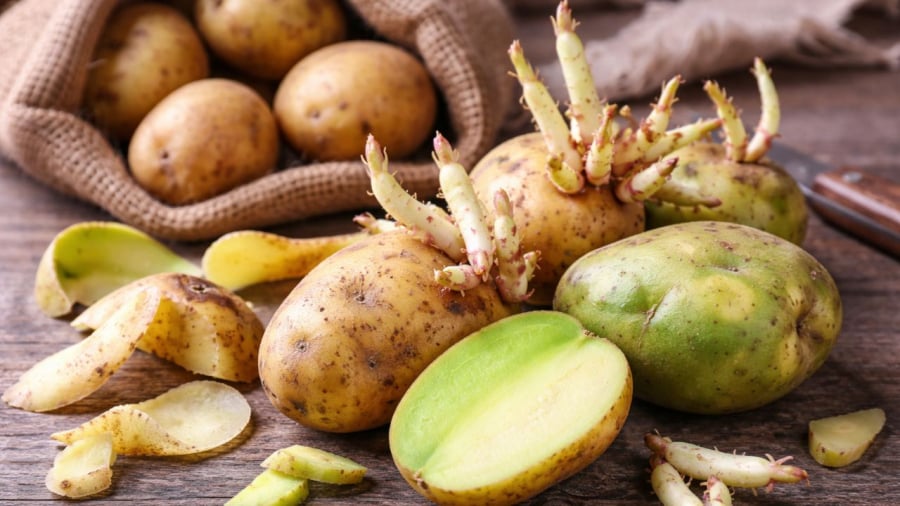
Potatoes naturally contain glycoalkaloids, primarily solanine and chaconine.
These compounds tend to be concentrated more heavily in the skin and in areas around sprouts, especially when potatoes are exposed to light and begin turning green.
A green potato does not automatically mean it will make you sick, but green coloration, sprouting, and a distinctly bitter taste can indicate elevated glycoalkaloid levels.
Symptoms of significant glycoalkaloid poisoning can include:
-
Nausea
-
Vomiting
-
Abdominal pain
-
Diarrhea
-
Headache
-
Dizziness
-
Confusion in more severe cases
What should you do with green potatoes?
Small areas of greening can sometimes be removed generously along with sprouts and surrounding tissue, but heavily green, badly sprouted, shriveled, or strongly bitter potatoes are better discarded.
Do not rely on cooking alone to eliminate the problem.
Proper storage also matters.
Potatoes should generally be kept in a cool, dark, dry place rather than exposed to direct light.
3. Bitter Cassava Can Be a Special Concern
Cassava, also called yuca or manioc, is an important staple food in many parts of the world.
But cassava requires proper preparation because some varieties contain cyanogenic glycosides, which can release hydrogen cyanide when the plant tissue is processed.
The amount varies between varieties.
“Bitter cassava” generally contains higher levels of these compounds than sweet varieties, although the distinction is not simply something consumers should judge by taste alone.
Symptoms of cyanide poisoning can include:
-
Headache
-
Dizziness
-
Nausea
-
Vomiting
-
Confusion
-
Breathing difficulties
-
Weakness
-
Loss of consciousness in severe poisoning
Proper traditional processing methods can substantially reduce cyanogenic compounds. Depending on the type of cassava, preparation can involve peeling, soaking, grating, fermenting, drying, and thorough cooking.
The important lesson is that cassava should be prepared according to established food-safety practices rather than simply cooked casually like an ordinary potato.
4. Some Bitter Greens Are Actually Nutritious
It is easy to become overly concerned about bitterness after learning that some toxic compounds can taste bitter.
But many bitter vegetables are completely normal and nutritious.
Leafy greens such as:
-
Kale
-
Mustard greens
-
Collard greens
-
Arugula
-
Watercress
-
Radicchio
can naturally have a sharp, bitter, or peppery taste.
Many of these plants contain glucosinolates and other phytochemicals that have been studied for their potential biological effects.
Their bitterness is part of the plant's natural character.
There is no reason to discard every bitter green simply because it tastes bitter.
The important distinction is between expected bitterness and an unusual change in the food.
5. Bitter Melon Is Supposed to Be Bitter
Bitter melon is a particularly useful example because its name already gives away the answer.
Bitter melon, also known as bitter gourd, naturally has a strong bitter flavor.
It is widely eaten in various cuisines and contains fiber, vitamin C, and other plant compounds.
Its bitterness is not an indication that the vegetable is poisonous.
However, this does not mean that consuming enormous quantities or concentrated bitter-melon products is automatically safe for everyone.
Bitter melon may influence blood glucose, which can be relevant for people taking diabetes medications.
Pregnant individuals should also discuss concentrated bitter-melon products with a healthcare professional because safety can differ depending on the form and amount consumed.
The key lesson is simple:
Normal bitterness is different from unexpected bitterness.
6. Don't Assume Every Bitter Food Is Toxic
Taste alone is not a reliable toxin detector.
Some toxic substances have little obvious taste, while many perfectly safe foods are naturally bitter.
That means you should not use bitterness as a universal test for food safety.
Instead, think about the entire picture.
Ask:
Is this vegetable normally bitter?
Has its taste changed dramatically?
Does it look unusually green, damaged, sprouted, or diseased?
Does it have an unusual smell or texture?
Was it properly stored and prepared?
These questions are often more useful than simply asking whether something tastes bitter.
Why Cooking Doesn't Always Solve the Problem
A common assumption is that heating a questionable vegetable will destroy any harmful compounds.
Unfortunately, this is not universally true.
Some natural toxins are reduced by certain processing methods, while others can remain relatively stable under ordinary cooking conditions.
For example, simply cooking an extremely bitter zucchini does not guarantee that cucurbitacins have been eliminated.
Similarly, cooking a green or sprouted potato does not reliably remove all glycoalkaloids.
That is why starting with safe raw ingredients is more important than relying on cooking as a rescue step.
What About Vegetables From Your Own Garden?
Homegrown vegetables can be wonderful, but unusual plants deserve careful attention.
If a zucchini or squash grown in your garden tastes dramatically more bitter than expected, do not assume that it is simply a stronger variety.
Occasionally, plant genetics or cross-pollination can contribute to unexpectedly high cucurbitacin levels.
This is particularly relevant when saving seeds from homegrown cucurbits over multiple generations.
Again, this does not mean you need to stop growing squash.
It simply means:
If a normally mild cucurbit is intensely bitter, don't eat it.

Unusual Taste Can Be a Useful Warning Sign
Taste is not a laboratory test, but it can sometimes tell you that something has changed.
Imagine cutting into a zucchini that you have eaten many times before.
Instead of the familiar mild flavor, it is intensely bitter—so bitter that you immediately want to spit it out.
That is exactly the kind of situation in which the sensible response is to stop.
There is no nutritional advantage to finishing suspicious food.
Throwing away one vegetable is far better than risking gastrointestinal illness.
What Symptoms Could Follow Exposure to a Natural Toxin?
Symptoms depend on the specific compound, amount consumed, and individual factors.
Possible symptoms from certain naturally toxic plant foods can include:
Nausea and vomiting
Abdominal cramps
Diarrhea
Dizziness
Headache
Weakness
Confusion
Difficulty breathing
Not every episode of nausea after eating vegetables means poisoning.
Foodborne infections, intolerance, allergies, medication effects, and many other conditions can cause similar symptoms.
But if several people become sick after eating the same unusual food, or symptoms are severe or rapidly worsening, medical advice should be sought promptly.
When Should You Seek Urgent Medical Help?
Severe symptoms should never be managed solely with internet advice.
Seek urgent medical attention after suspected toxic-food exposure when there is:
-
Difficulty breathing
-
Loss of consciousness
-
Severe confusion
-
Seizures
-
Persistent vomiting
-
Severe abdominal pain
-
Significant weakness
-
Signs of serious dehydration
If you suspect a poisoning, contact your local poison control service or emergency medical system as appropriate.
Do not induce vomiting unless instructed by a medical professional or poison-control specialist.
How to Reduce the Risk at Home
A few simple habits can make food preparation safer.
Buy vegetables from reliable sources.
Store produce appropriately.
Keep potatoes away from light.
Discard vegetables that are moldy, severely damaged, or otherwise clearly spoiled.
Follow recommended preparation methods for foods such as cassava.
Most importantly, pay attention to major changes in appearance, smell, taste, and texture.
You do not need to become afraid of vegetables.
You simply need to recognize that not every plant should be treated exactly the same way.
The Difference Between Natural Toxins and Pesticide Residues
Another common misconception is that “natural toxin” means a vegetable has been contaminated by chemicals.
It does not.
Natural toxins are compounds produced by the plant itself.
They are different from pesticide residues, heavy metals, microbes, or other contaminants that may enter food from the environment or during production.
This distinction matters because the safety issue and the appropriate response can be completely different.
A bitter squash may be concerning because of naturally occurring cucurbitacins.
A contaminated vegetable may pose a different risk entirely.
Don't Let Fear Turn Healthy Eating Into a Problem
It would be easy to read about natural toxins and conclude that vegetables are dangerous.
That would be the wrong message.
Vegetables remain an important part of a balanced diet.
They provide fiber, vitamins, minerals, and thousands of naturally occurring plant compounds.
The goal is not to fear every bitter flavor.
The goal is to understand that some plants have specific safety considerations, while many others are perfectly safe even when they taste naturally bitter.
Food safety is about informed habits—not fear.
The Bottom Line
Some vegetables can contain naturally occurring compounds that become a concern under particular circumstances. Extremely bitter zucchini, squash, cucumbers, and related cucurbits can sometimes contain elevated cucurbitacins, while green or heavily sprouted potatoes may contain increased levels of glycoalkaloids. Cassava also requires proper preparation because of naturally occurring cyanogenic compounds.
But bitterness by itself does not mean a vegetable is poisonous.
Many healthy vegetables are naturally bitter, including bitter melon and numerous leafy greens.
The most useful rule is simple:
Know what the food is normally supposed to taste like. If a normally mild vegetable suddenly becomes intensely and unusually bitter, stop eating it rather than trying to cook away the problem.
And when a food has specific preparation requirements—such as cassava—follow established food-safety practices.
A healthy diet does not require fear of natural foods. It requires knowing the difference between normal plant bitterness and an unusual warning sign.