Potatoes are one of the world's most popular vegetables, but almost everyone has discovered a forgotten potato in the pantry that has started to sprout. At that point, many people wonder: Is it still safe to eat, or should it be thrown away?
The answer isn't always straightforward. A potato with one or two tiny sprouts may sometimes still be usable if handled properly. However, potatoes that have multiple sprouts, large green areas, or a soft, shriveled texture may contain higher levels of naturally occurring toxins and are generally best discarded.
Understanding why potatoes sprout, what changes occur inside them, and how to recognize unsafe potatoes can help reduce the risk of foodborne illness while minimizing unnecessary food waste.
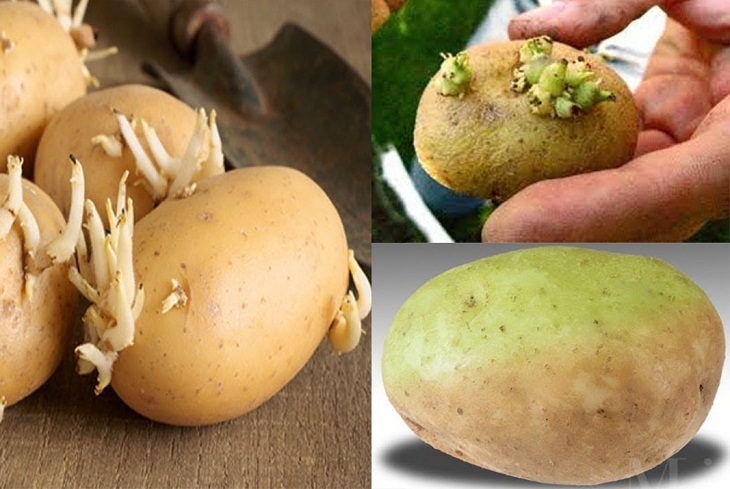
Why Do Potatoes Sprout?
Potatoes are living plant organs known as tubers.
Even after harvest, they remain alive and eventually begin preparing to grow into a new plant.
When exposed to conditions such as:
-
Warm temperatures
-
Light
-
Moisture
-
Long storage periods
they begin developing sprouts from their "eyes."
Sprouting itself is a natural process and does not automatically mean the potato has become dangerous. However, it often signals that chemical changes are occurring inside the potato.
What Happens When Potatoes Sprout?
As sprouts develop, the potato uses its stored nutrients to support new growth.
During this process:
-
The potato gradually loses moisture.
-
It becomes softer and wrinkled.
-
Starch begins converting into sugars.
-
Levels of certain natural defense compounds may increase.
One of the biggest concerns involves compounds called glycoalkaloids.
What Are Glycoalkaloids?
Potatoes naturally produce protective compounds known as glycoalkaloids, primarily:
-
Solanine
-
Chaconine
These substances help protect the plant from insects, fungi, and other threats.
Healthy potatoes normally contain only small amounts that are not considered harmful when eaten as part of a normal diet.
However, glycoalkaloid levels can increase when potatoes are:
-
Sprouting
-
Exposed to light
-
Turning green
-
Damaged
-
Stored improperly
Unlike bacteria, these compounds cannot be destroyed by normal cooking temperatures.
Why Are Green Potatoes a Concern?
Many people assume the green color itself is poisonous.
Actually, the green color comes from chlorophyll, which is harmless.
However, chlorophyll develops under the same conditions that stimulate increased glycoalkaloid production.
In other words:
-
Green does not equal poison.
-
But green often signals a greater chance that glycoalkaloid levels have increased.
For this reason, food safety experts recommend avoiding potatoes with extensive green discoloration.
Can You Eat a Potato with Small Sprouts?
Sometimes, yes—but only under certain conditions.
A potato may still be usable if it:
-
Is still firm.
-
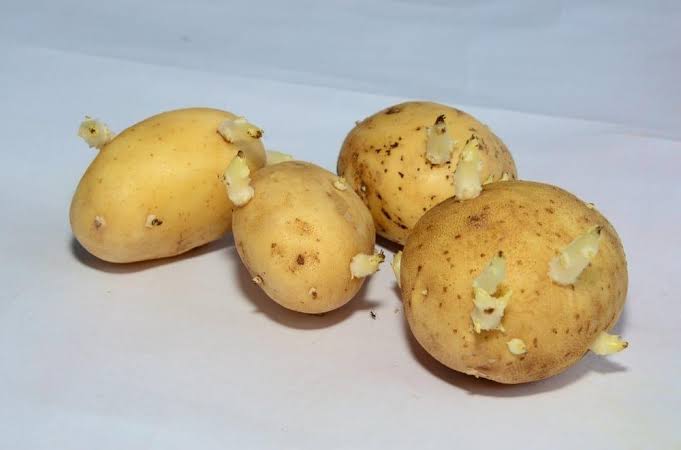
Has only one or two small sprouts.
-
Has little or no green discoloration.
-
Has no bitter taste.
-
Shows no mold or signs of spoilage.
If you decide to use it:
-
Remove the sprouts completely.
-
Cut away the "eyes" deeply.
-
Remove any green portions generously.
-
Peel the potato if appropriate.
Even then, this approach may not eliminate all glycoalkaloids, so some food safety authorities recommend discarding sprouted potatoes altogether if there is significant sprouting or greening.
When Should You Throw a Potato Away?
A potato should generally be discarded if it has:
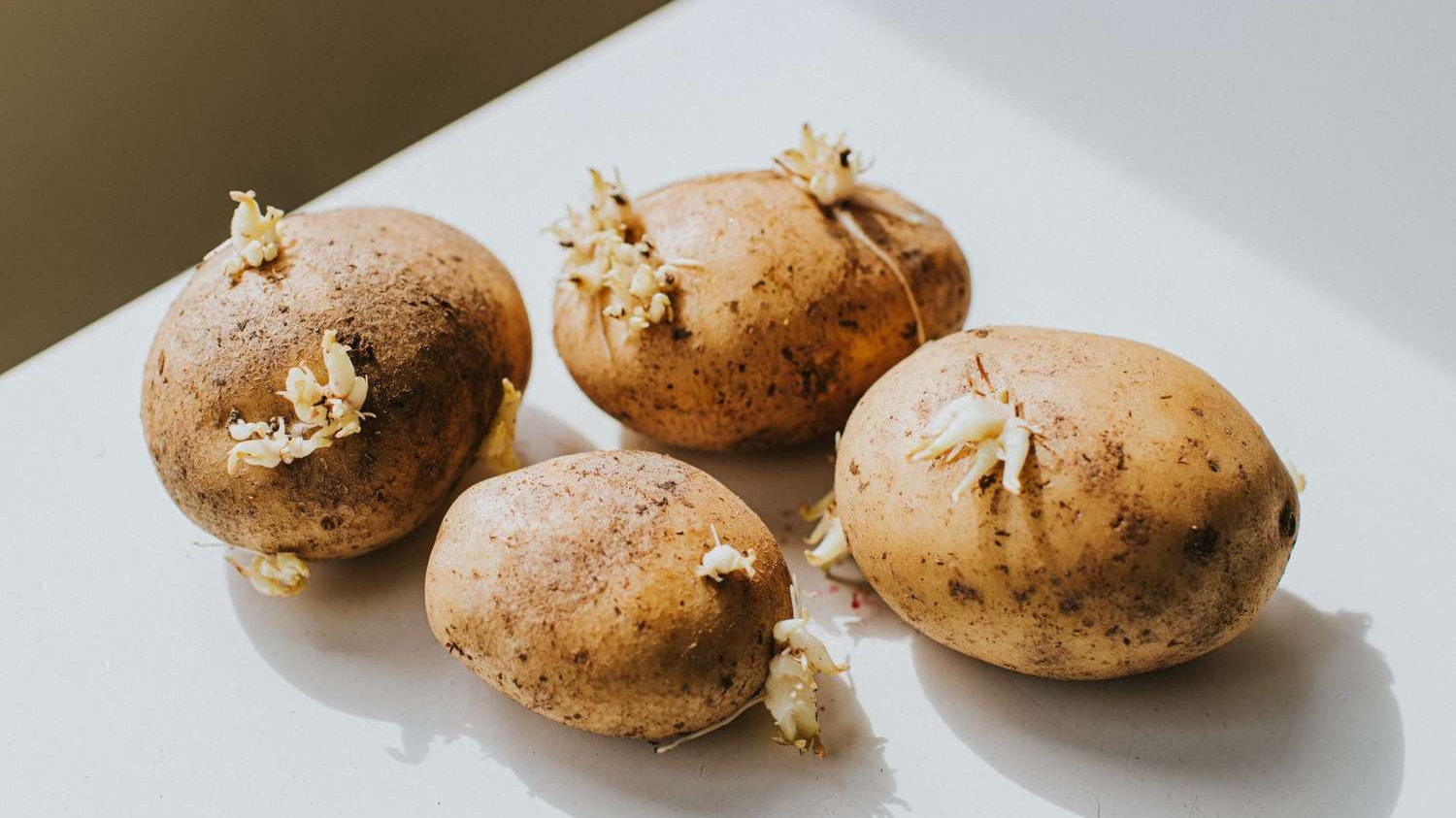
Numerous Long Sprouts
Large or multiple sprouts suggest the potato has been growing for some time.
This often coincides with greater nutrient loss and potentially higher glycoalkaloid levels.
Large Green Areas
Extensive greening suggests prolonged light exposure and a greater likelihood of elevated glycoalkaloids.
Soft or Wrinkled Texture
A potato that feels:
-
Mushy
-
Rubbery
-
Shriveled
-
Lightweight
has lost much of its moisture and quality.
Mold
Visible mold indicates spoilage.
Moldy potatoes should not be eaten.
Rotten Smell
A foul or unusual odor indicates decomposition.
Discard the potato immediately.
Bitter Taste
Bitterness may indicate increased glycoalkaloids.
If a cooked potato tastes unusually bitter, stop eating it.
Can Cooking Remove the Toxins?
Unfortunately, no.
Boiling, baking, roasting, microwaving, or frying does not reliably destroy glycoalkaloids because these compounds are relatively heat-stable at normal cooking temperatures.
Peeling and removing sprouts can reduce some glycoalkaloids because they are concentrated near the skin, sprouts, and eyes, but cooking alone is not considered an effective way to eliminate them.
What Symptoms Can Glycoalkaloids Cause?
Consuming potatoes with high glycoalkaloid levels may cause symptoms within several hours.
Possible symptoms include:
-
Nausea
-
Vomiting
-
Diarrhea
-
Abdominal pain
-
Headache
-
Dizziness
In more severe cases—which are uncommon but possible after consuming large amounts—people may experience:
-
Confusion
-
Fever
-
Drowsiness
-
Changes in heart rate
-
Neurological symptoms
Anyone experiencing severe or persistent symptoms after eating potatoes should seek prompt medical attention.
Who Should Be Especially Careful?
Certain groups may be more vulnerable to foodborne illness or the effects of naturally occurring toxins, including:
-
Young children
-
Older adults
-
Pregnant individuals
-
People with weakened immune systems
These individuals should be especially cautious about eating potatoes that are heavily sprouted, green, or otherwise deteriorated.
How to Store Potatoes Properly
Proper storage helps reduce sprouting and preserve quality.
For best results:
-
Store potatoes in a cool, dark, dry place.
-
Keep them away from direct sunlight.
-
Ensure good air circulation.
-
Avoid sealing them in airtight plastic bags.
-
Do not wash potatoes before storage.
-
Check stored potatoes regularly and remove any that begin to spoil.
Should Potatoes Be Refrigerated?
Refrigeration is generally not recommended for raw potatoes in most home kitchens.
Very cold temperatures can convert some starch into sugar, potentially affecting taste and texture. When these sugar-rich potatoes are cooked at high temperatures, they may also produce higher amounts of acrylamide, a compound that forms in certain starchy foods during frying, roasting, or baking.
Instead, a cool, dark pantry or cellar is usually the preferred storage location.
Can You Plant Sprouted Potatoes?
Yes.
If the potatoes have not been treated to prevent sprouting, they may be planted in a garden.
However, potatoes intended for planting are generally sold as certified seed potatoes because they are selected to reduce the risk of spreading plant diseases.
Common Myths About Sprouted Potatoes
Myth 1: All Sprouted Potatoes Are Poisonous
False.
A small sprout does not automatically make a potato unsafe, but it does warrant careful inspection. Firm potatoes with minimal sprouting and no significant greening may sometimes be usable after removing the sprouts and affected areas, depending on food safety guidance and personal judgment.
Myth 2: Cooking Makes Sprouted Potatoes Safe
False.
Normal cooking methods do not reliably destroy glycoalkaloids.
Myth 3: Green Color Is the Toxin
False.
The green color comes from chlorophyll, which is harmless.
However, greening often occurs alongside increased glycoalkaloid production.
Myth 4: If It Smells Fine, It's Safe
False.
Some potatoes with elevated glycoalkaloid levels may look or smell relatively normal.
A potato should be evaluated based on several factors, including sprouting, greening, firmness, and overall condition.
Frequently Asked Questions
Can I simply cut off the sprouts?
If the potato is still firm and has only a few small sprouts with no extensive greening or spoilage, removing the sprouts and affected areas may reduce some risk. However, if the potato is heavily sprouted, soft, green, or bitter, it is safest to discard it.
Are sweet potatoes the same?
No.
Sweet potatoes belong to a different plant family and do not produce the same glycoalkaloids as regular potatoes. They can still spoil, however, and should be discarded if moldy, rotten, or severely deteriorated.
Can animals eat sprouted potatoes?
Many animals are also susceptible to glycoalkaloid toxicity. Pet owners should avoid feeding dogs, cats, livestock, or other animals sprouted or green potatoes unless specifically advised by a veterinarian.
Final Thoughts
Sprouting is a natural part of a potato's life cycle, but it can also signal changes that affect both quality and safety. As potatoes sprout, they may develop higher concentrations of naturally occurring glycoalkaloids - particularly around the sprouts, eyes, skin, and any green areas. While a firm potato with only a few small sprouts and no significant greening may sometimes be usable after carefully removing the sprouts and affected tissue, potatoes that are heavily sprouted, extensively green, soft, moldy, rotten, or unusually bitter are best thrown away.
Proper storage in a cool, dark, dry place can help delay sprouting and preserve quality. When in doubt, it's safer to discard a questionable potato than risk exposure to potentially harmful levels of natural toxins.