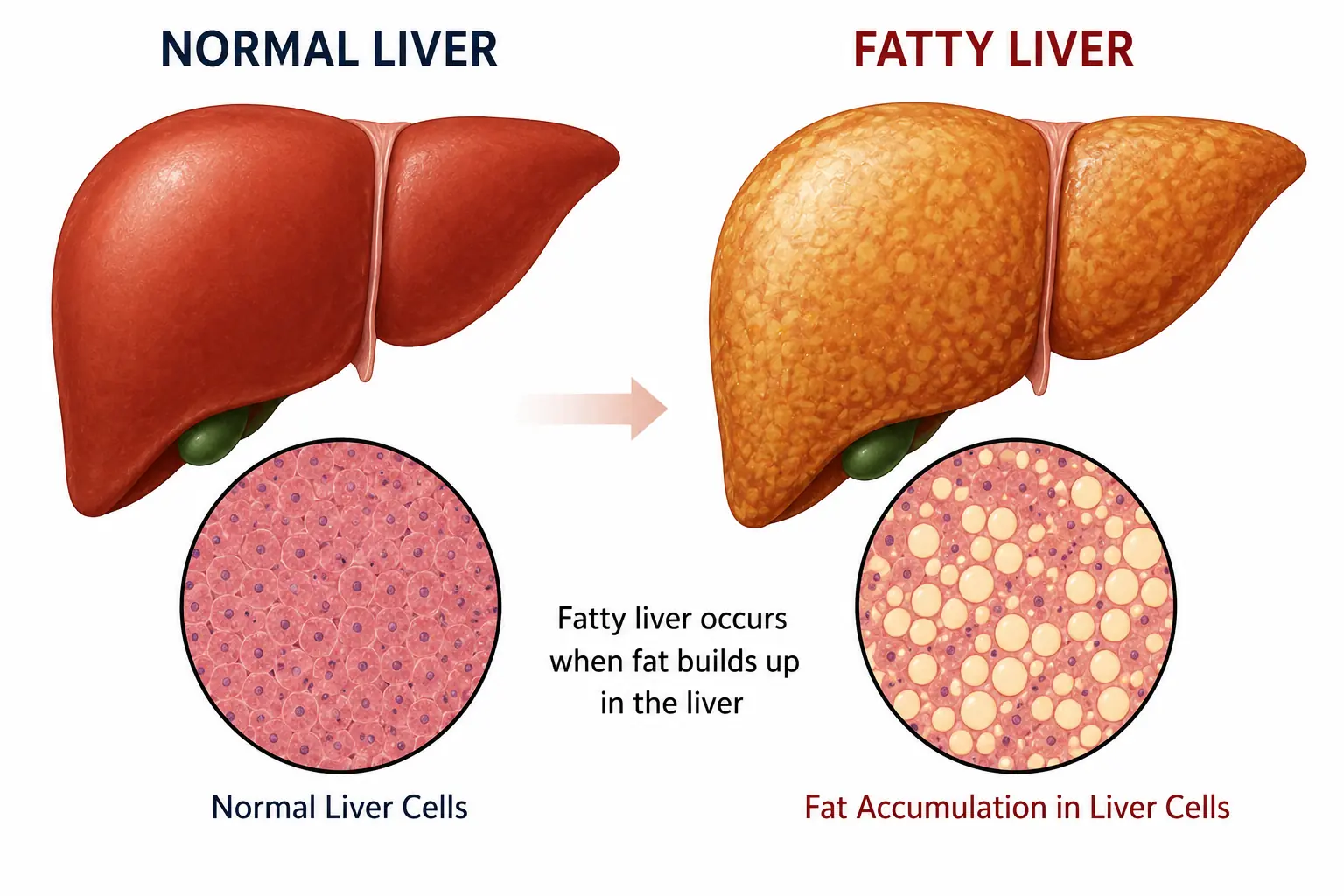
Steatotic liver disease (SLD), formerly called fatty liver disease, happens when too much fat builds up in your liver. It’s one of the most common types of liver disease. Many people don’t know they have it at first. It often doesn’t cause symptoms in the early stages.
Over time, extra fat in your liver can lead to inflammation and damage. In some people, this damage gets worse and causes scarring. Severe scarring can affect how well your liver works and lead to serious health problems.
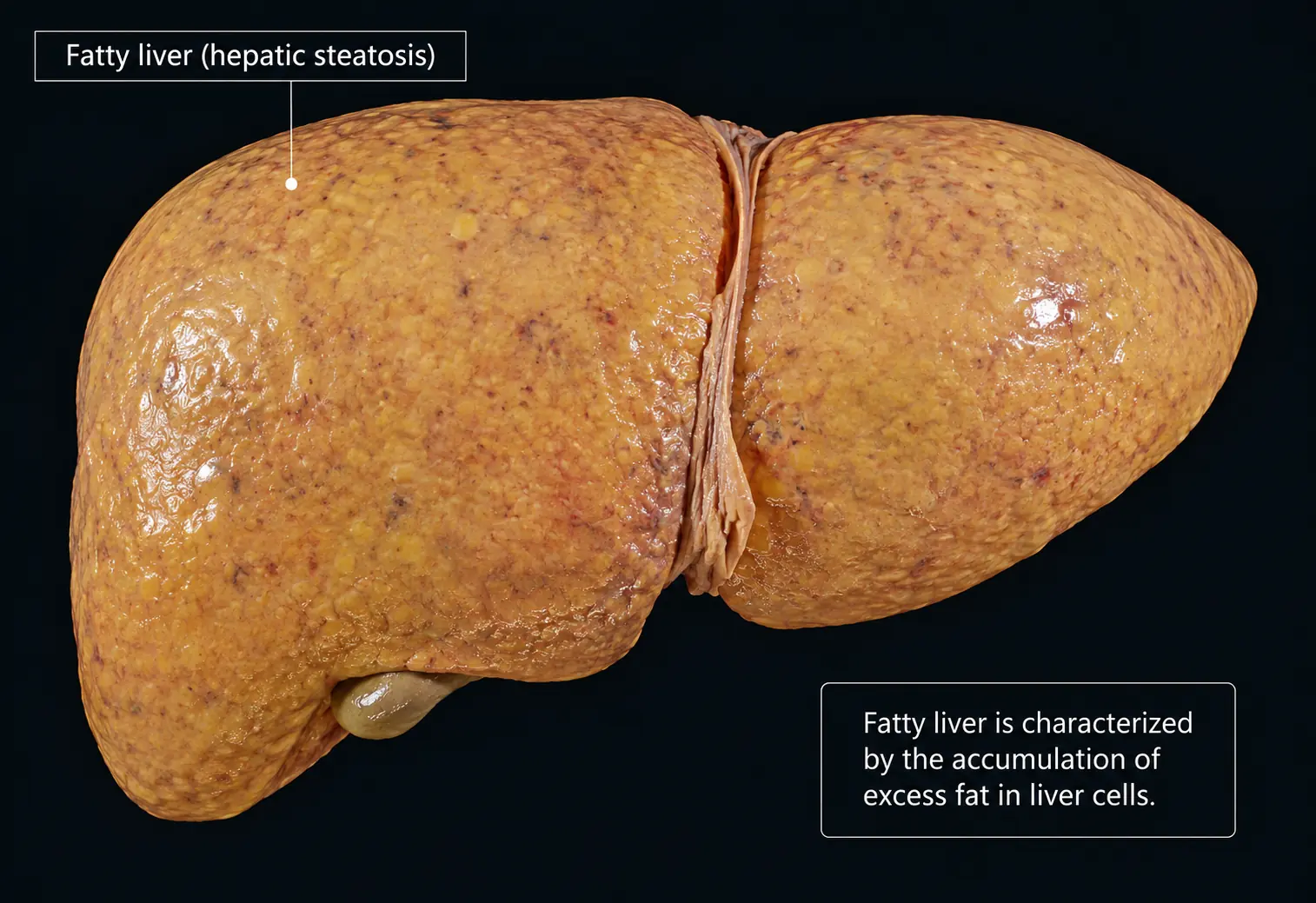 Many conditions cause steatosis of the liver. Steatosis is often reversible, especially in the early stages and before cirrhosis develops. Treatment often focuses on managing underlying conditions. Your healthcare provider may also recommend making changes to your daily habits.
Types of steatotic liver disease
“Steatotic liver disease” is an umbrella term. It includes several types:
Metabolic dysfunction-associated steatotic liver disease (MASLD): This is the most common type. It’s linked to obesity, Type 2 diabetes and abnormal lipid tests.
Metabolic dysfunction-associated steatohepatitis (MASH): MASH is a more severe form of MASLD. It involves serious inflammation and liver damage.
Metabolic dysfunction and alcohol-associated liver disease (MetALD): MetALD is a combination of metabolic risk factors and alcohol use.
Alcohol-associated liver disease (ALD): Heavy alcohol use causes this type.
While each type has different causes, they all involve fat buildup in the liver.
Symptoms and Causes
Fatty liver disease symptoms
Early on, steatotic (fatty) liver disease often doesn’t cause symptoms. When symptoms do occur, they may include:
Fatigue (feeling very tired)
Pain in the upper right side of your belly
Weakness
Unexplained weight loss
As the disease gets worse, symptoms may include:
Yellowing of your skin or the whites of your eyes (jaundice)
Swelling in your belly (ascites)
Swelling in your legs
Confusion or trouble thinking clearly
What causes fatty liver disease?
The main cause of steatotic (fatty) liver disease is fat buildup in your liver. This can happen for different reasons, depending on the type.
Common causes include:
Metabolic conditions, like obesity and Type 2 diabetes
High levels of fats in your blood (hyperlipidemia)
Heavy alcohol use
Certain medications
Some genetic conditions
Risk factors
You may be more likely to develop steatotic liver disease if you:
Have high cholesterol or triglycerides
Have high blood pressure
Live a low-activity lifestyle
Drink alcohol regularly
How to prevent steatotic liver disease
The best way to prevent steatotic liver disease is to maintain your overall health. You can do this by:
Following a balanced, healthy eating plan
Getting regular physical activity
Maintaining a weight that’s healthy for you
Limiting your alcohol consumption
Taking medications as prescribed
If you have risk factors, like Type 2 diabetes or obesity, regular checkups can help catch problems early.
Complications of steatotic liver disease
Without treatment, damage can gradually build up in your liver. The stages of steatotic (fatty) liver disease are:
 Hepatitis
Fibrosis
Cirrhosis
Liver failure
Steatotic liver disease is also linked to a higher risk of heart disease, liver cancer and other health conditions.
Diagnosis and Tests
How doctors diagnose steatotic liver disease
Healthcare providers often find steatotic liver disease during routine tests for other conditions.
To diagnose it, your provider will do a physical exam. They’ll check for signs of inflammation, like an enlarged liver. They’ll also ask about your medical history.
Tests your provider may use to diagnose the condition include:
Blood tests to check liver enzymes
Imaging tests, like ultrasound, CT scan or MRI
Elastography to measure liver stiffness
Liver biopsy
These tests help confirm fat buildup in your liver and check for inflammation or scarring.
 Management and Treatment
Can steatotic (fatty) liver disease be reversed?
In many cases, treatment can help reverse or improve the condition during its early stages. It often depends on the type. In 2024 and 2025, the U.S. Food and Drug Administration (FDA) approved new medications to improve scarring and inflammation in the liver.
Fatty liver disease treatment focuses on:
Gradually losing weight if needed
Following a healthy eating plan, like the Mediterranean diet
Getting regular physical activity of at least 30 minutes a day
Managing conditions like diabetes and abnormal lipids
Avoiding or limiting alcohol
In some cases, providers may recommend medication to help manage certain health conditions. Severe cases may require a liver transplant.
Recovery
Recovery depends on how early your provider finds and treats the condition. Early-stage steatotic liver disease can sometimes improve within months. More advanced disease may require long-term management.
Outlook / Prognosis
Can you die from steatotic liver disease?
Many people with steatotic liver disease live long, healthy lives. In some cases, making changes in your daily life can reduce fat in your liver and prevent further damage. When caught early, you can often reverse or manage the disease.
Without treatment, the disease can lead to severe scarring or cirrhosis and liver failure. But treatment can still help manage symptoms and slow progression.
Taking steps to improve your overall health can make a meaningful difference over time.