Have you ever looked closely at a bath towel and wondered about the horizontal decorative strip woven into the fabric near one or both ends?
It may look like nothing more than a stylish design detail. Some towels have a simple stripe, while others feature elaborate geometric patterns or raised bands.
But that strip isn't necessarily there just to make the towel look more attractive.
In traditional towel construction, this area—often called a dobby border or dobby stripe—can serve several practical purposes related to the towel's structure, durability, appearance, and manufacturing.
So why do manufacturers put it there?
The answer is actually more interesting than you might expect.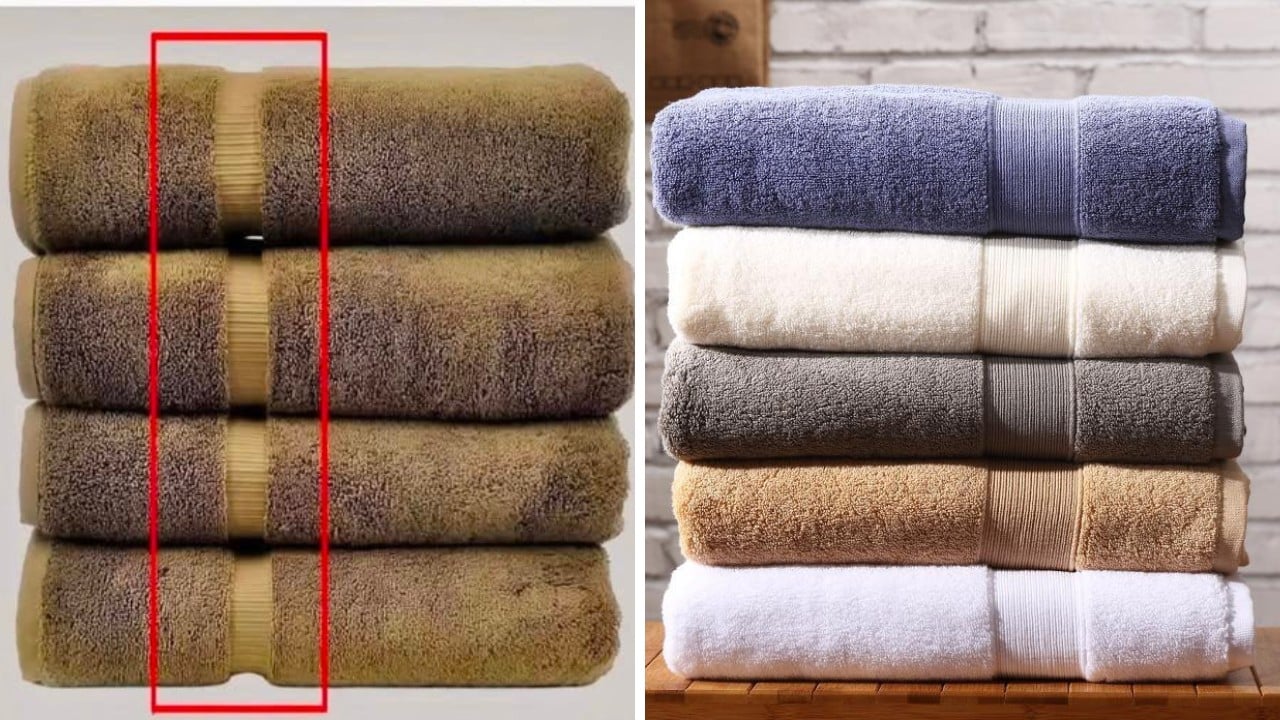
What Is the Decorative Strip on a Towel?
The decorative strip is usually a section where the weave pattern changes.
The main body of a bath towel is typically made from terry cloth, which has thousands of small loops designed to absorb water.
The decorative band, by contrast, often uses a flatter or more tightly woven structure.
This creates a visible transition between the highly absorbent terry portion and the flatter border.
Depending on the manufacturer, the strip may be made using a dobby weave, jacquard technique, or another decorative weaving method.
It can appear as:
-
Simple horizontal lines
-
Geometric patterns
-
Raised textures
-
Repeating motifs
-
Contrasting woven designs
The exact construction varies from towel to towel.
1. It Adds Structure to the Towel
One of the most practical functions of the border is that it provides a more stable woven section at the end of the towel.
Terry cloth is made with loops that give the towel its softness and absorbency.
Those loops are useful—but they can also be more vulnerable to snagging or pulling.
The flatter woven band creates a firmer transition near the edge.
This can help the towel maintain its shape and give the manufacturer a controlled area for finishing the end of the fabric.
In other words, the decorative stripe isn't necessarily an independent "feature" added after the towel is made.
It can be part of the towel's actual construction.
2. It Helps Create a Clean Transition
Look closely at a good-quality bath towel.
You'll usually notice that the terry loops don't simply continue all the way to the edge.
Instead, there is often a flatter section before the hem.
That transition creates a cleaner visual and structural boundary between the main absorbent area and the finished edge.
Without a defined transition, the ends of a terry towel could look less uniform.
The woven band gives manufacturers an opportunity to create a neat, controlled finish.
3. It Can Help With Durability
The decorative band can also contribute to the towel's durability, although this shouldn't be exaggerated.
A towel experiences a lot of mechanical stress.
Think about what happens every time you:
-
Pull it off a hook
-
Wrap it around your body
-
Twist it
-
Fold it
-
Wash it
-
Dry it
-
Grab it by the edge
The edges are particularly important because they need to remain intact despite repeated handling.
The flatter woven area provides a relatively firm structure near the end of the towel.
However, the hem and stitching are generally more directly responsible for preventing unraveling than the decorative stripe itself.
So it would be inaccurate to say that the stripe alone keeps the towel from falling apart.
Rather, it is one component of the overall construction.
4. It Gives the Towel a More Finished Appearance
There's also a straightforward aesthetic reason.
Let's be honest: a completely plain rectangle of terry cloth isn't particularly exciting.
The decorative band gives manufacturers a way to add visual detail without changing the entire towel.
A simple stripe can make a towel look more polished.
A more elaborate woven pattern can make it appear more luxurious.
This is especially common in hotel towels, spa towels, and higher-end home textiles.
The design can create a visual frame around the towel while leaving most of the surface dedicated to absorbent terry loops.
5. It Can Make Towels Easier to Identify
Decorative borders can also help distinguish one towel collection from another.
Hotels, spas, gyms, and households often use towels with particular patterns or borders to create a consistent appearance.
For manufacturers, the band can become part of a recognizable product design.
Different patterns can indicate different sizes or collections.
For example, a manufacturer might use related designs across:
-
Hand towels
-
Face towels
-
Bath towels
-
Bath sheets
This creates a coordinated appearance when the towels are displayed together.
6. Why Isn't the Whole Towel Made From the Same Terry Cloth?
This is where the construction becomes particularly interesting.
The terry loops are what make a towel highly absorbent.
When water contacts the loops, they provide a large surface area that can hold moisture.
But you don't necessarily need—or want—those loops everywhere.
A flatter border can be easier to weave, finish, decorate, fold, and reinforce.
The result is a towel that combines function and visual design.
The main body does the heavy lifting when it comes to absorbing water.
The border provides a transition and finished edge.
7. The Border Isn't the Most Absorbent Part
This is an important detail that many people don't realize.
If you are drying your body, the terry portion is generally the part you want to use.
The decorative band usually has fewer exposed loops and a flatter surface.
That means it may absorb less water than the main body.
So if you've ever wondered why the decorative strip sometimes feels noticeably different from the rest of the towel, that's intentional.
It's constructed differently.
The difference in texture isn't necessarily a sign of poor quality.
It's a consequence of the weaving pattern.
8. Why Do Some Towels Have More Than One Stripe?
Different towels use different border designs.
Some have one narrow band.
Others have several lines or a wider patterned area.
This can be influenced by:
-
Design preferences
-
Manufacturing techniques
-
Towel size
-
Brand identity
-
Intended market
-
Weaving equipment
A wider border provides more space for decorative patterns.
A narrow band creates a more minimalist appearance.
There isn't one universal standard dictating exactly how wide the strip should be.
9. Does the Strip Make the Towel Better?
Not necessarily.
A decorative border does not automatically mean that a towel is higher quality.
When judging a towel, more important factors include:
Fiber quality: Cotton type and fiber characteristics can influence softness, absorbency, and durability.
GSM: Grams per square meter gives an indication of fabric weight. Higher GSM often means a heavier, denser towel, although heavier doesn't automatically mean better.
Construction: Stitching, loop density, and finishing affect how well the towel holds up.
Absorbency: A towel should actually absorb water efficiently rather than simply feel plush.
Durability: A good towel should withstand repeated washing without excessive shedding, fraying, or loss of shape.
The decorative stripe is primarily one element of the overall design and construction.
10. Why Do Hotel Towels Often Have These Bands?
If you've stayed in hotels, you've probably noticed that many towels have a relatively simple decorative border.
There are several practical reasons this design is popular.
First, it creates a clean and consistent appearance.
Second, it gives the towel a recognizable finish.
Third, the flatter border can make the towel easier to fold neatly.
Hotels also need towels that can withstand frequent commercial laundering.
The overall construction therefore has to balance softness, absorbency, appearance, and durability.
The border can be part of that design strategy.
11. Is the Decorative Strip Meant to Help You Fold the Towel?
You may have heard the claim that the stripe tells you exactly where to fold a towel.
There's some logic behind this idea, but it shouldn't be treated as a universal rule.
Because the border provides a visible reference point, it can certainly make folding easier.
You can use it as a visual guide to create neat, consistent folds.
Hotels and households may find this useful when organizing linen closets.
But manufacturers don't necessarily design every decorative band specifically as a folding line.
Its primary role is generally related to weave structure and decoration, rather than serving as an official folding instruction.
12. Why Does the Strip Sometimes Feel Stiffer?
This is completely normal.
The main body of the towel contains soft loops.
The decorative band is often flatter and more densely woven.
As a result, it may feel:
-
Firmer
-
Smoother
-
Thinner
-
Less fluffy
-
Slightly rougher than the terry area
This doesn't necessarily mean the towel is damaged.
In fact, the contrast is part of what gives the towel its characteristic appearance.
13. Should You Avoid Drying Your Body With the Stripe?
There's no health reason you need to avoid it.
However, because the terry section is generally more absorbent, you'll probably find it more effective for drying yourself.
The border is simply less efficient at absorbing large amounts of water.
Think of it as the towel's structural and decorative zone, rather than its primary drying zone.
14. What Happens If the Border Starts Unraveling?
If you notice loose threads around the decorative strip, don't immediately pull them.
Pulling a loose thread can sometimes cause more of the weave to unravel.
Instead, carefully trim a loose thread with clean scissors if appropriate.
If the actual seam or hem is coming apart, that is a different issue.
A damaged hem can eventually cause the towel to unravel more extensively.
In that case, repairing the seam may extend the towel's useful life.
15. How Should You Wash Towels to Protect Them?
Even a well-constructed towel can deteriorate if it's washed incorrectly.
To keep towels in good condition:
Don't Overload the Washing Machine
Towels need enough room to move through the wash cycle.
Overloading can prevent proper cleaning and increase mechanical stress.
Avoid Excessive Fabric Softener
Fabric softeners can coat towel fibers and reduce their absorbency over time.
Your towel may feel softer but actually become less effective at absorbing water.
Don't Use Excessive Detergent
More detergent isn't necessarily better.
Excess detergent can remain in fibers and contribute to buildup.
Dry Thoroughly
Damp towels left sitting for long periods can develop unpleasant odors.
Allow them to dry completely between uses.
Don't Pull Loose Threads
If you see a loose thread, trim it carefully rather than pulling it.
Are Expensive Towels Always Better?
Not necessarily.
Price can reflect branding, design, materials, manufacturing standards, and marketing.
A very expensive towel may feel luxurious, but a moderately priced towel can also perform extremely well.
When shopping, consider:
-
Fiber composition
-
Weight
-
Loop construction
-
Stitching quality
-
Absorbency
-
Durability
-
Washing instructions
A towel that looks beautiful but doesn't absorb water well isn't particularly useful.
The Bigger Picture: Form Meets Function
The decorative strip is a great example of how everyday objects often contain design decisions that serve multiple purposes.
At first glance, it looks like decoration.
But underneath that simple stripe is a combination of:
Weaving → structure → finishing → durability → visual design.
That's what makes textiles interesting.
Manufacturers don't simply choose patterns because they look good.
They also have to consider how the fabric behaves during production, use, washing, drying, folding, and repeated handling.
The result is a product that quietly combines engineering and aesthetics.
So, What Is That Stripe Really For?
The answer isn't just one thing.
The decorative band on a bath towel can serve several functions depending on how the towel is constructed.
It can provide a transition between the terry loops and the finished edge, contribute to the overall structure, offer a controlled area for decorative weaving, and give the towel a more polished appearance.
It can also make folding and identifying different towel designs easier.
But the exact purpose varies between manufacturers and towel constructions.
So the next time you grab a bath towel, take a closer look.
That seemingly unnecessary strip isn't necessarily just there to make the towel look fancy.
It's part of the textile design—and it helps turn a simple piece of fabric into a functional, durable household product.
And perhaps the most surprising thing is that something you've probably seen hundreds of times can have a lot more thought behind it than you ever realized.