Every morning at 7:40, Julian Cross sat at the same diner table, keeping a seat open for the sister he lost three years ago. But when a exhausted stranger accidentally sits in her place, a quiet habit turns into an unexpected chance at healing.
THE BIKER AND THE EMPTY CHAIR
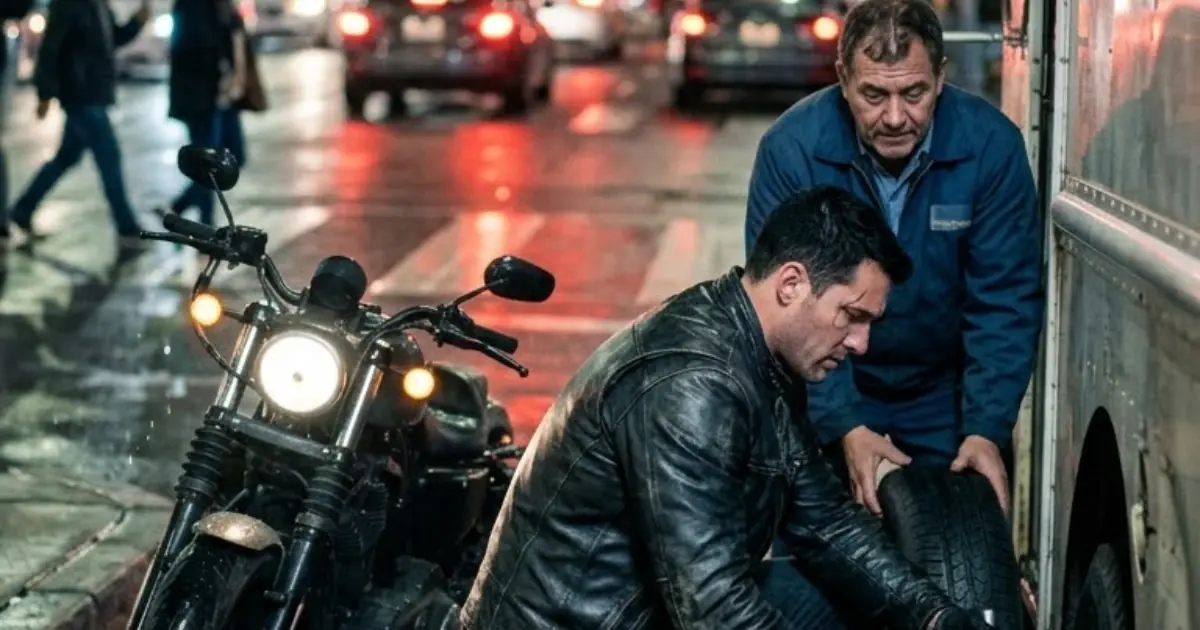
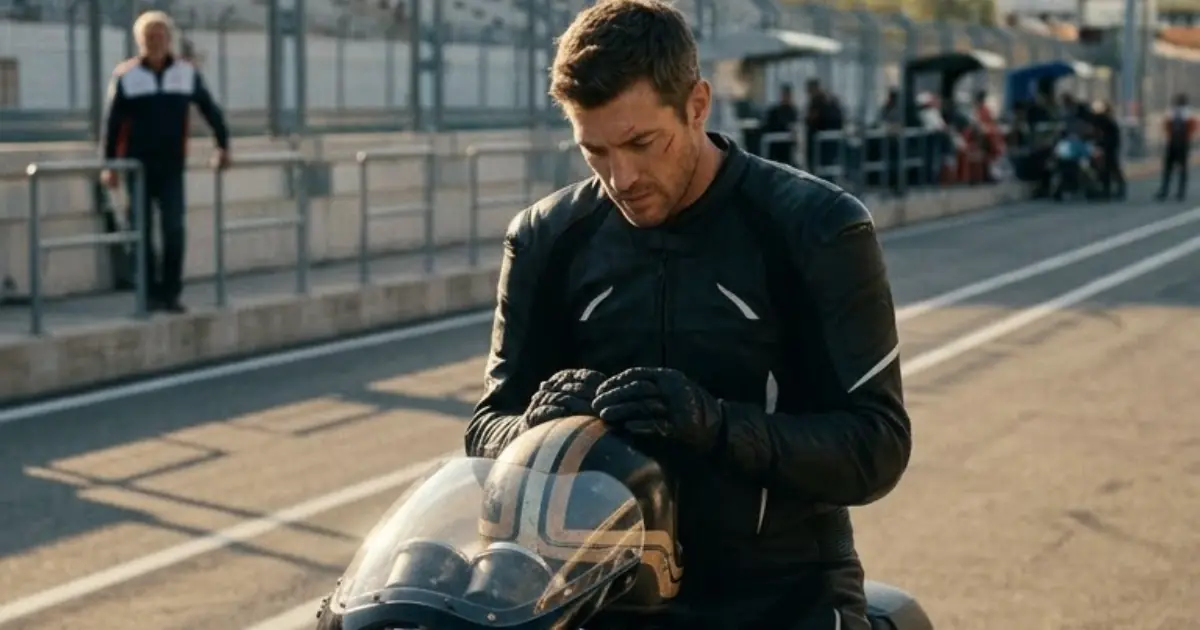
Every morning at exactly 7:40, Julian Cross parked his motorcycle outside a small roadside diner on the edge of the city. He was thirty-four, tall, broad-shouldered, muscular, with short dark hair, a sharp jawline, and a thin scar above his right eyebrow. His matte-black motorcycle, worn leather jacket, heavy boots, and permanently serious expression made him look like the last person anyone would expect to see inside a quiet family diner. Yet Julian had been coming there for almost three years. He always ordered the same thing: black coffee and eggs on toast. He always sat at the same table near the window. And he always left before eight-thirty.
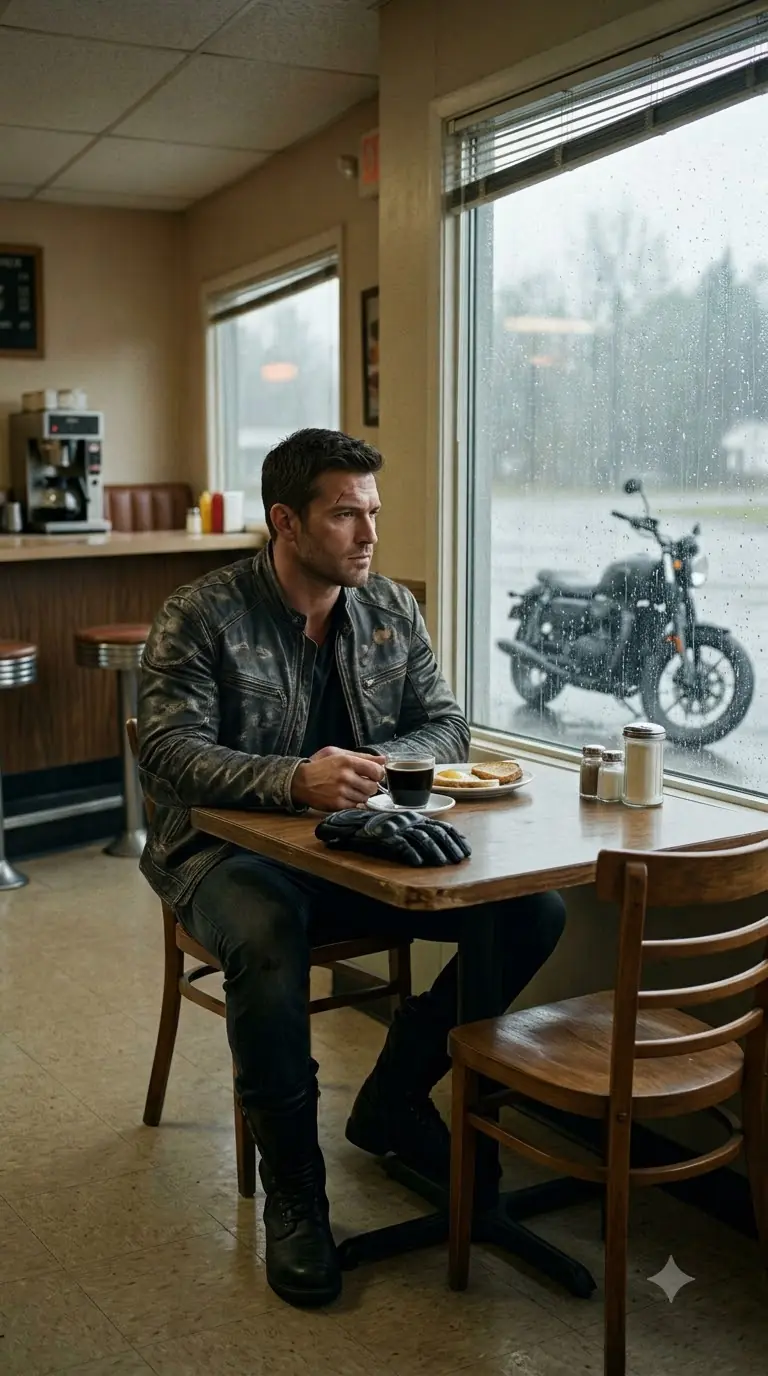
The waitress, Nora, had stopped asking questions.
She knew he preferred silence.
What she didn't know was that Julian wasn't coming there for the food.
He was coming because of the empty chair across from him.
Three years earlier, his younger sister Lily had worked at the diner. She had been twenty-six, cheerful, stubborn, and constantly complained that Julian looked like he belonged in a prison documentary. They had argued often, mostly because Julian believed she was too trusting and Lily believed he was too suspicious of everyone.
One morning, they had planned to meet at the diner.
Lily never arrived.
She had been killed in a highway accident on her way there.
Julian had never forgiven himself for their last conversation.
The last thing he had said to her was, “Stop worrying about everyone else and learn to take care of yourself.”
He had never heard her answer.
Since then, he had returned to the diner every morning on the anniversary of her death.
Eventually, every morning became a habit.
And the empty chair became part of his routine.
Then one rainy Tuesday, Julian arrived at the diner and found someone sitting in it.
A woman.
She looked around thirty, with shoulder-length dark hair, a tired face, and a navy coat still wet from the rain. She had a laptop open in front of her and several sheets of paper scattered across the table.
Julian stopped beside the table.
“That seat's taken.”
The woman looked up.
“Sorry?”
Julian pointed toward the chair.
She glanced at it.
“By who?”
Julian didn't answer.
After a moment, she stood up.
“I'm sorry.”
Julian shook his head.
“It's fine.”
He sat down.
The woman moved to another table.
Julian ordered his coffee.
But something felt different.
He couldn't concentrate.
He kept noticing the woman's papers.
They were covered with handwritten notes and hospital documents.
Eventually, he asked, “You okay?”
The woman looked surprised.
“I'm fine.”
Julian glanced at the papers.
“You don't look fine.”
She gave a tired smile.
“That's because I'm not.”
Her name was Emma.
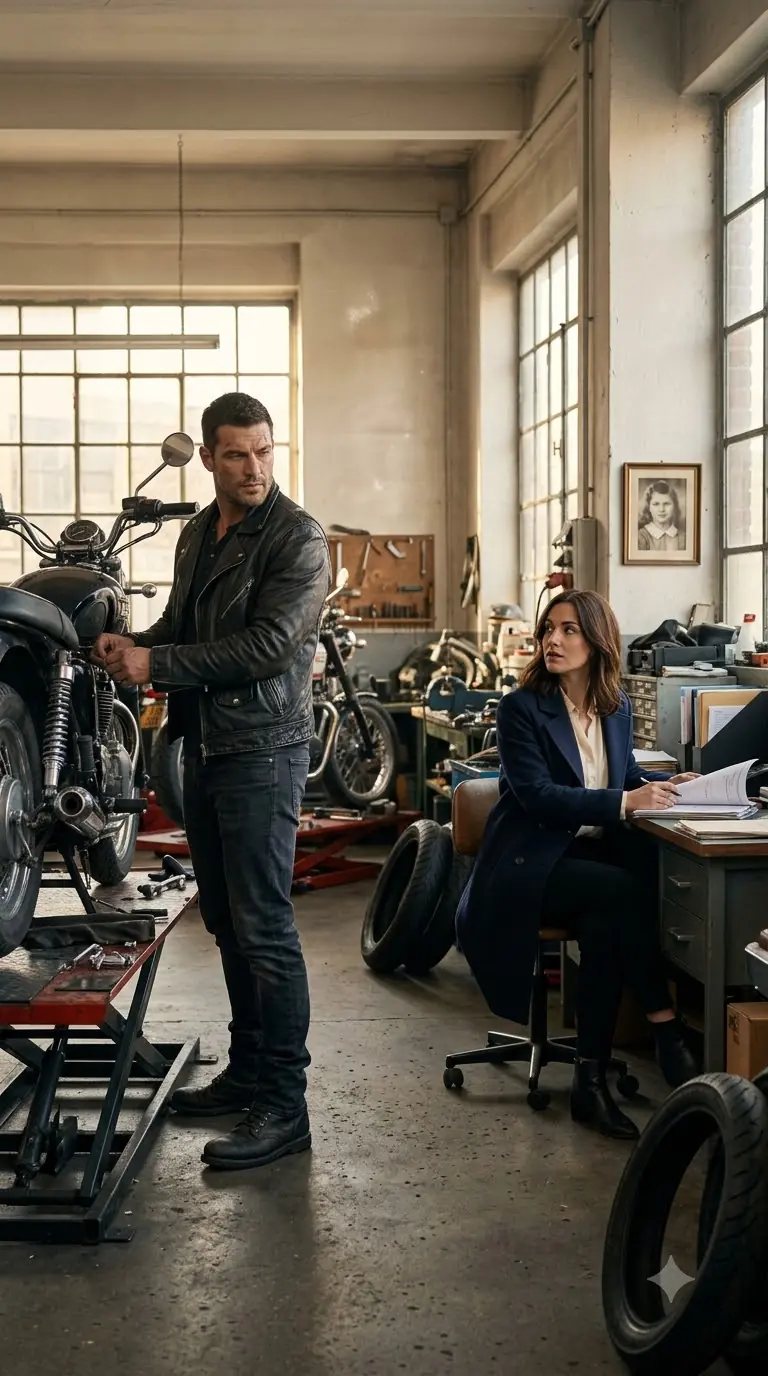
She had moved to the city two weeks earlier to take care of her father, who had been diagnosed with a serious illness. She had been trying to find additional work because the medical bills were becoming impossible to manage.
Julian listened.
He didn't offer sympathy.
He didn't tell her everything would be okay.
He simply asked, “How much do you need?”
Emma stared at him.
“What?”
“For the bills.”
She immediately shook her head.
“No.”
“I wasn't offering money.”
She looked confused.
Julian pointed at her laptop.
“You said you need work.”
Emma nodded.
“My workshop needs someone to handle bookings and customer calls.”
“You own a motorcycle shop?”
“Yes.”
“And you're hiring?”
“Maybe.”
Emma studied him.
“You don't even know me.”
Julian took a sip of coffee.
“Neither did Lily.”
Emma didn't understand.
Julian didn't explain.
The next morning, Emma showed up at his workshop.
She wasn't expecting much.
Instead, she found a small but successful motorcycle repair business with four employees and a waiting list of customers.
Julian gave her a desk.
“Try it for a week.”
Emma looked around.
“That's it?”
“That's it.”
“You're not going to interview me?”
“No.”
“Why?”
Julian looked at her.
“Because you showed up.”
She smiled.
“That's a terrible hiring process.”
“It works.”
The week became a month.
Emma turned out to be excellent at the job.
She organized the workshop's chaotic appointment system, built a proper customer database, and somehow convinced Julian to finally create a social media page for the business.
The workshop started making more money.
But something else changed too.
Julian started talking.
Not much.
But enough.
He told Emma about Lily.
He told her why he sat at the diner every morning.
And eventually, he told her the truth about the empty chair.
“I thought if I kept sitting there,” he said one morning, “I'd eventually stop feeling guilty.”
Emma looked at him.
“Did it work?”
Julian shook his head.
“No.”
“What do you feel now?”
He looked at the empty chair.
“Less guilty.”
Emma smiled.
“Maybe that's because you finally did something with the memory instead of just carrying it.”
Julian didn't respond.
But he thought about it all day.
A few months later, the diner closed.
The owner had decided to retire.
Julian stood outside the building after the final breakfast service, staring through the window at the empty tables.
Emma stood beside him.
“You're sad.”
Julian nodded.
“It was the last place I saw her.”
Emma looked through the window.
“Then maybe you don't need the place anymore.”
Julian looked at her.
“What do you mean?”
“You've been coming here because you thought this was where your memories lived.”
She pointed toward the workshop across the street.
“But they're not there.”
Julian said nothing.
“They're with you.”
The following morning, Julian didn't go to the diner.
Instead, he arrived at his workshop early.
He opened the garage door.
Sunlight poured across the concrete floor.
On the wall was a photograph of Lily that Emma had framed and placed there months earlier.
Julian looked at it.
For the first time in three years, he smiled.
Then he picked up his helmet.
He had spent years returning to the place where his sister had never arrived.
Now, finally, he understood.
He wasn't waiting for Lily anymore.
He was simply afraid to leave her behind.
And leaving her behind had never been what she wanted.
She had wanted him to live.
So Julian started his motorcycle.
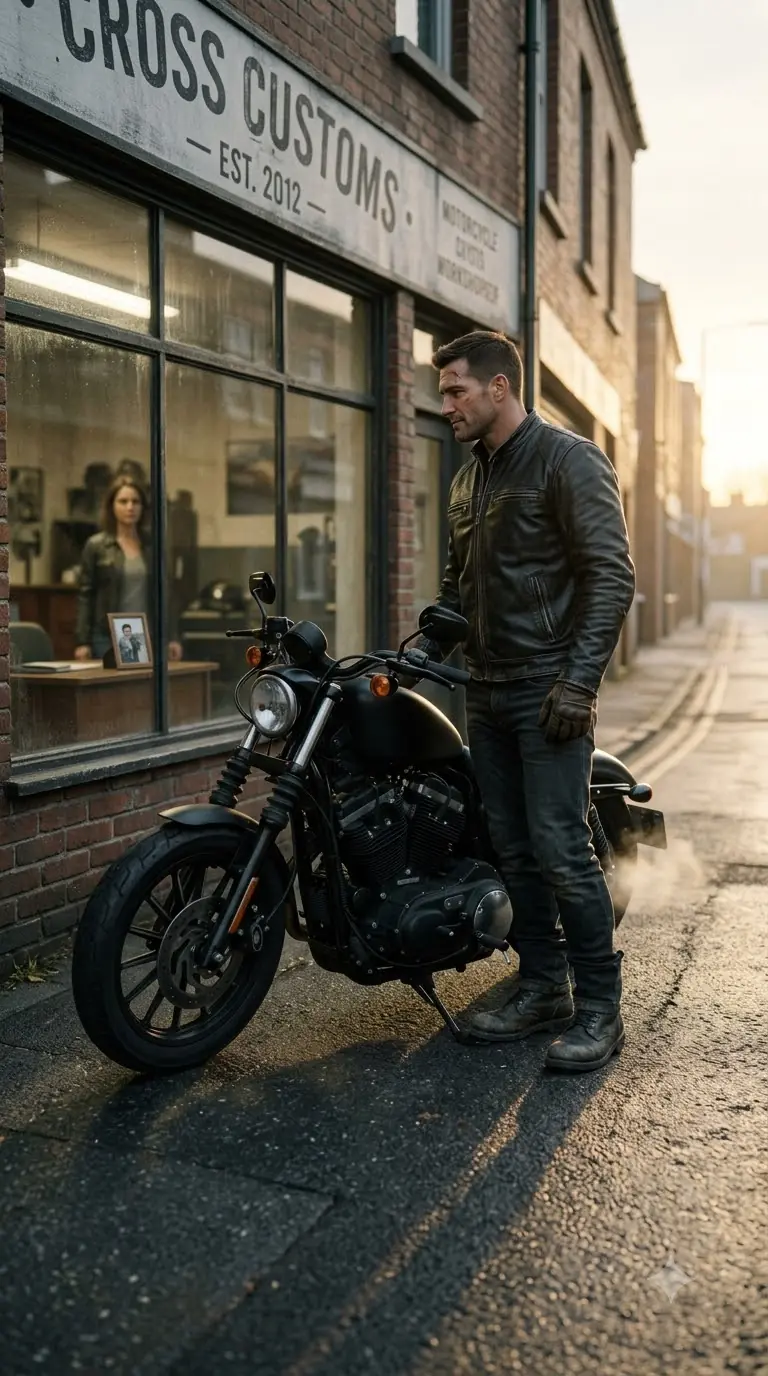
The engine roared through the quiet morning.
And for the first time in three years, he rode somewhere without looking back.