Chapter 1: What Happens When You Sleep Beside Someone Who Has Scabies?
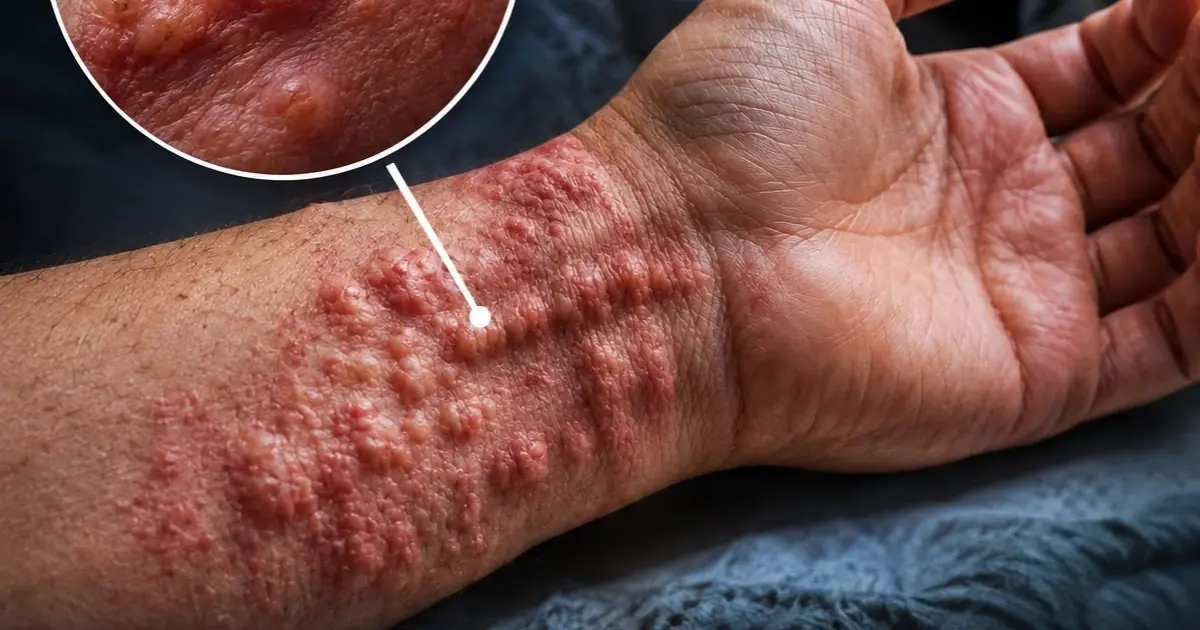
Imagine going to bed beside someone you trust. Nothing seems unusual. There is no obvious sign of illness, no fever, and perhaps not even a visible rash.
A few weeks later, however, you begin noticing tiny bumps on your wrists and fingers. At first, they look like mosquito bites. Then the itching becomes more persistent, particularly when you lie down at night.
You scratch the affected areas, but the discomfort continues.
What could be happening?
One possible explanation is scabies, a contagious skin infestation caused by a microscopic mite known as Sarcoptes scabiei var. hominis.
Although the condition is often associated with close physical contact, many people do not realize how easily it can spread between household members and intimate partners.
1. What exactly is scabies?
Scabies is not caused by bacteria, a virus, or an ordinary allergic reaction.
It develops when tiny human itch mites enter the outermost layer of the skin.
The female mite burrows into the superficial skin layer, where it can lay eggs. The body's immune system reacts to the mites, their eggs, and their waste products.
This immune response produces the characteristic itching and rash.
The mites are extremely small and cannot normally be seen with the naked eye.
That is why someone may have scabies without ever seeing the organism responsible for the symptoms.
The condition can affect people of any age, background, or income level.
It is not proof of poor personal hygiene, and regularly bathing does not guarantee protection.
The World Health Organization recognizes scabies as an important public health condition because it affects communities worldwide and can spread rapidly where close physical contact is common.
World Health Organization+1
2. Why can sleeping beside an infected person spread it?
Scabies is primarily transmitted through prolonged, direct skin-to-skin contact.
Sharing a bed with someone who has an untreated infestation can provide an opportunity for the mites to move from one person's skin to another.
This is particularly relevant for couples who sleep closely together throughout the night.
Other situations that may allow transmission include:
-
Prolonged cuddling.
-
Sexual contact.
-
Holding hands for extended periods.
-
Close physical care.
-
Living in the same household with an infected person.
A brief handshake or quick hug is generally unlikely to transmit ordinary scabies.
The important factor is the duration and nature of skin contact.
This explains why intimate partners and household members are often affected around the same time.
3. Why might you not notice anything immediately?
One of the most confusing aspects of scabies is the delay between exposure and the appearance of symptoms.
Someone experiencing scabies for the first time may not develop noticeable itching or a rash for approximately three to six weeks.
During this period, the person may already carry the mites and can potentially transmit them to others.
People who have previously had scabies may develop symptoms much faster, sometimes within one to four days after reinfestation.
This delayed reaction can make it difficult to identify exactly when or from whom the infestation was acquired.
For example, someone may begin experiencing symptoms several weeks after sharing a bed with an infected partner.
By that time, other household members may also have been exposed.
4. What happens to the skin?
As the immune system reacts to the mites, small itchy bumps may develop.
They can resemble:
-
Tiny red pimples.
-
Small raised blisters.
-
Mosquito bites.
-
Irritated patches.
-
Clusters of itchy spots.
Sometimes, thin, crooked lines called burrows can also appear.
These represent tracks created by mites moving through the superficial skin layer.
The wrist is one of the common areas affected.
Other frequent locations include the spaces between the fingers, elbows, armpits, waist, buttocks, and genital area.
The distribution can vary between individuals.
5. Why does the itching become worse at night?
Intense nighttime itching is one of the most recognizable symptoms of scabies.
People may notice that their skin feels relatively manageable during the day but becomes extremely uncomfortable when they lie down.
The itching is caused by the body's immune response to the infestation.
It is not simply because the mites become dramatically more active at night.
Warmth, reduced distractions, and increased awareness of skin sensations may also make nighttime discomfort feel more noticeable.
Some individuals scratch unconsciously while sleeping.
Repeated scratching can damage the skin and create small open sores, increasing the risk of secondary bacterial infections.
The important point is that sleeping beside someone with scabies does not guarantee infection, but prolonged skin contact creates a genuine transmission risk.
Recognizing the early signs and seeking appropriate treatment can prevent the condition from spreading further.
Chapter 2: The Warning Signs That May Appear on Your Body
Scabies can be difficult to recognize during its early stages because the first symptoms often resemble other common skin conditions.
A few small bumps may initially look harmless. Someone might assume they have been bitten by insects, developed an allergy, or reacted to a new laundry detergent.
However, when itching becomes persistent and spreads to characteristic areas of the body, scabies should be considered.
1. Small, itchy bumps around the wrists
The wrists are among the common locations where scabies symptoms appear.
The rash may consist of numerous tiny raised bumps, sometimes surrounded by redness.
Some lesions look like small pimples, while others resemble tiny blisters.
The affected skin may become irritated after repeated scratching.
The photograph accompanying this article shows a clustered rash around the wrist. This location is compatible with scabies, but the appearance alone cannot confirm the condition.
Other skin problems, including eczema, contact dermatitis, and insect bites, can produce similar changes.
2. Itching between the fingers
Another characteristic location is the skin between the fingers.
People may notice small bumps, thin lines, or irritated patches around the finger webs.
These areas deserve attention because they are among the typical locations affected by scabies.
Sometimes, the burrows are extremely difficult to see.
A person may experience considerable itching even when the visible skin changes appear relatively minor.
This is one reason why the absence of obvious burrows does not automatically rule out the infestation.
3. Small lines beneath the skin
One of the more distinctive features of scabies is the presence of tiny burrows.
These may appear as thin, slightly raised, crooked lines.
They can be pale, grayish, or similar in color to the surrounding skin.
A tiny dark spot may sometimes be visible at one end.
The lines represent tunnels created by female mites as they move through the outer skin layer.
However, burrows are not always visible.
Scratching, inflammation, and secondary infections can make them difficult to identify.
4. The rash may spread beyond the wrists
Although the hands and wrists are common locations, scabies can affect several other parts of the body.
In adults, frequently affected areas include:
-
Between the fingers.
-
Wrists and elbows.
-
Armpits.
-
Around the waist.
-
Buttocks.
-
Genital region.
-
Areas around the nipples.
-
Shoulder blades.
In infants and very young children, the rash may also involve the head, neck, palms, and soles.
The distribution is important because doctors consider the location of lesions when evaluating possible scabies.
5. Nighttime itching that interrupts sleep
For many people, the most frustrating symptom is itching that becomes particularly intense at night.
Someone may fall asleep normally but wake up scratching their arms, hands, or legs.
Repeated interruptions can lead to poor sleep, irritability, and difficulty concentrating the following day.
Some people also develop anxiety because they cannot understand why their skin continues to itch.
If several people living in the same household begin experiencing similar symptoms, a shared exposure should be considered.
Scabies is one possible explanation, although other causes of itching and rashes are also possible.
6. Skin damage caused by scratching
Repeated scratching can create additional problems.
The skin may become:
-
Red and inflamed.
-
Thickened.
-
Cracked.
-
Bleeding.
-
Covered with small scabs.
Damaged skin can become infected with bacteria naturally present on the skin.
This may lead to conditions such as impetigo or deeper skin infections.
Increasing pain, warmth, swelling, pus, or fever should prompt medical assessment.
7. Why some people have very different symptoms
Not everyone develops the same appearance.
The number of mites, individual immune responses, previous exposure, and underlying health conditions can influence how scabies presents.
People with weakened immune systems may develop a more severe form called crusted scabies.
This condition can produce extensive scaling and thick crusts containing large numbers of mites.
Unlike ordinary scabies, crusted scabies may cause relatively little itching despite the heavy infestation.
It is particularly contagious and requires prompt medical management.
The CDC identifies nighttime itching and a pimple-like rash as the main symptoms of ordinary scabies, with the wrists and finger webs among the most commonly affected areas.
Recognizing these signs does not mean you should diagnose yourself.
The most useful approach is to consider the combination of symptoms, affected areas, and possible exposure to someone with an infestation.
Chapter 3: How Doctors Diagnose Scabies and Distinguish It From Other Skin Conditions
An itchy rash does not automatically mean someone has scabies.
Several common skin conditions can produce similar symptoms, and choosing the wrong treatment may delay recovery.
This is why professional evaluation is important, particularly when the rash continues to spread or other household members develop itching.
1. A medical examination comes first
When someone visits a doctor with suspected scabies, the healthcare professional usually begins by asking about the symptoms.
Important questions may include:
-
When did the itching begin?
-
Is it worse at night?
-
Are the wrists or spaces between the fingers affected?
-
Does anyone else in the household have similar symptoms?
-
Has the person recently shared a bed with someone experiencing unexplained itching?
-
Has there been previous scabies exposure?
The doctor also examines the distribution and appearance of the rash.
A combination of typical symptoms, characteristic locations, and a history of close contact may strongly suggest scabies.
2. Dermoscopy can help identify mites
Doctors may use a special magnifying instrument called a dermatoscope.
This device provides a closer view of the skin.
In experienced hands, dermoscopy can help identify characteristic features of scabies, including structures associated with mites and their burrows.
It is particularly useful when the lesions are small or difficult to distinguish with the naked eye.
3. Skin scraping may confirm the diagnosis
In some cases, a healthcare professional may gently scrape a small amount of material from an affected area.
The sample is examined under a microscope.
The purpose is to identify mites, eggs, or mite fecal material.
Finding these structures provides strong confirmation of scabies.
However, a negative scraping does not always exclude the condition.
There may be very few mites on the skin, making them difficult to collect.
Doctors therefore interpret laboratory findings alongside the clinical examination.
4. How is scabies different from eczema?
Eczema is a group of inflammatory skin conditions that can cause itching, redness, dryness, and irritated patches.
Some forms produce small blisters, particularly on the hands and fingers.