Every so often, a simple household tip captures widespread attention online. One such idea is the "door handle towel trick"—the practice of hanging a towel on a door handle before going to bed or during the day. Social media posts often describe it as a clever life hack with a variety of surprising benefits.
But what is this trick actually used for? Is it backed by evidence, or is it simply a practical habit that works in certain situations?
The truth is that hanging a towel on a door handle is not a universal solution or a scientifically proven method for improving safety, security, or health. Instead, people use it for a variety of practical reasons depending on their needs and environment.
Here's what you should know.
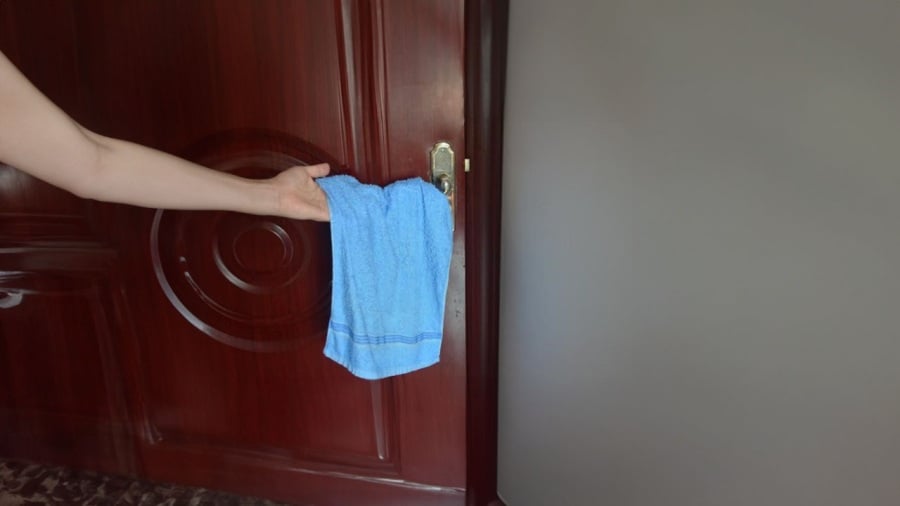
What Is the Door Handle Towel Trick?
The "door handle towel trick" simply involves placing or hanging a towel over a door handle or doorknob.
There isn't one single purpose behind this habit. Instead, people have adopted it for different reasons, including:
-
Reducing noise
-
Protecting walls or furniture
-
Serving as a reminder
-
Blocking small drafts
-
Marking a room
-
Drying towels overnight
Its usefulness depends entirely on how and why it is being used.
1. A Convenient Reminder
One of the simplest reasons people hang a towel on a door handle is as a visual reminder.
For example, someone may hang a towel on the handle to remember to:
-
Take medication
-
Bring an important document
-
Pack gym clothes
-
Lock the door
-
Turn off an appliance
-
Feed a pet before leaving
Because the towel is placed somewhere people naturally look when entering or leaving a room, it can serve as an effective reminder.
2. Protecting Walls from Door Handles
In some homes, door handles can bump into walls when a door swings open.
Placing a folded towel between the handle and the wall can temporarily reduce impact and help prevent:
-
Small dents
-
Paint damage
-
Scuff marks
However, permanent wall-mounted door stoppers generally provide a more reliable long-term solution.
3. Reducing Noise
Doors may rattle or make noise because of airflow, vibrations, or movement within the home.
A towel wrapped around or placed near the handle may help dampen some of these sounds in certain situations.
While this may reduce minor noise, it will not solve mechanical problems such as loose hinges or poorly aligned doors.
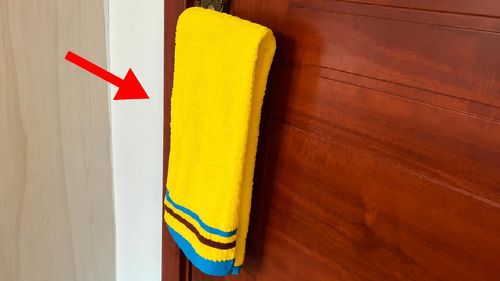
4. Helping Towels Dry
Many people simply use a door handle as a convenient place to hang a damp towel after showering.
Good airflow can help towels dry more quickly, although drying efficiency depends on:
-
Room ventilation
-
Humidity
-
Air circulation
-
Towel thickness
If towels remain damp for extended periods, they may develop unpleasant odors or encourage mold growth.
5. Blocking Small Drafts
Some people place a towel near the bottom or side of a door to reduce small drafts of air entering a room.
Although a towel may help reduce minor airflow, it is not a replacement for proper weatherstripping or insulation.
For homes with significant air leaks, repairing door seals is usually much more effective.
6. Reducing Light Around a Door
If light enters through gaps around a bedroom door, a towel may help block a small amount of it when positioned appropriately.
This can be useful for:
-
Daytime sleeping
-
Shift workers
-
Movie rooms
The effect is usually modest and depends on the size of the gaps around the door.
7. Identifying an Occupied Room
In shared homes, offices, or vacation rentals, a towel hanging on a door handle may serve as an informal signal that someone is using the room.
This simple visual cue can help reduce unnecessary interruptions.
8. Temporary Protection During Painting or Moving
When moving furniture or painting walls, wrapping a towel around a door handle may help reduce accidental scratches or bumps.
It can also provide a softer surface if furniture brushes against the handle while being moved.
Does the Door Handle Towel Trick Improve Home Security?
Some online posts claim that hanging a towel on a door handle makes your home safer or prevents break-ins.
There is no reliable evidence that simply hanging a towel on a door handle increases home security.
If home security is a concern, more effective measures include:
-
Locking doors and windows
-
Installing quality deadbolts
-
Using outdoor lighting
-
Maintaining security cameras where appropriate
-
Following local home security recommendations
A towel should never be considered a substitute for proven security measures.
Can a Towel Help During a Fire?
You may have heard advice about placing a wet towel near the bottom of a door during a fire.
This recommendation applies only in specific emergency situations, such as when you are trapped in a room waiting for rescue and smoke is entering through gaps around the door.
Even then, emergency response organizations emphasize that your first priority should be to leave the building safely if an escape route is available.
A towel is not a substitute for smoke alarms, fire-resistant construction, or an emergency evacuation plan.
Common Myths About the Door Handle Towel Trick
Myth: Hanging a towel on the door handle protects your home from burglars.
Fact: There is no evidence that this practice deters crime or improves home security.
Myth: Everyone should hang a towel on the door handle every night.
Fact: Whether the trick is useful depends on your personal needs and living situation.
Myth: A towel can solve all problems with noisy doors.
Fact: While it may reduce minor noise temporarily, it cannot fix damaged hinges, warped doors, or poor installation.
Myth: A towel is the best way to block drafts.
Fact: Proper weatherstripping, door sweeps, and insulation are usually more effective long-term solutions.
Myth: The trick has proven health benefits.
Fact: There is no scientific evidence that hanging a towel on a door handle directly improves health or sleep quality.
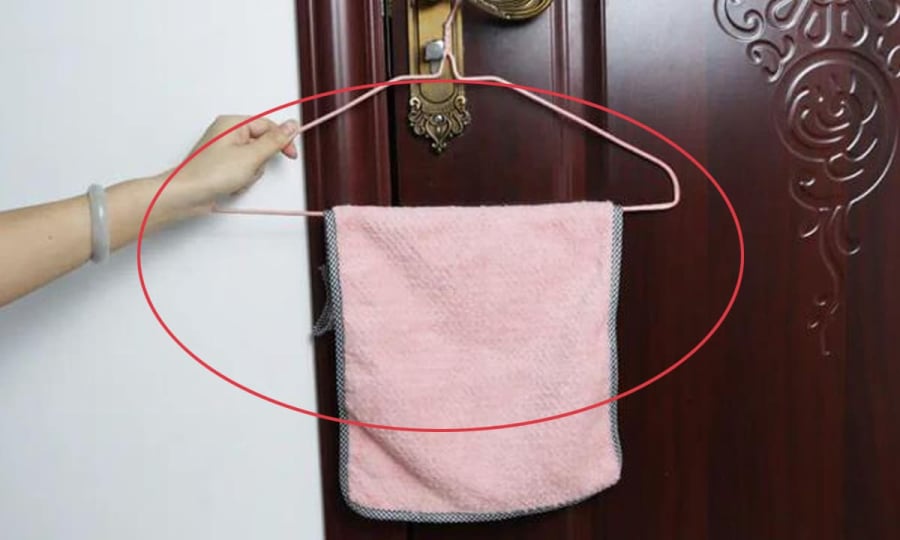
Simple Alternatives Depending on Your Goal
If you're considering this trick, it may help to think about your objective.
If your goal is:
-
Reduce drafts: Install weatherstripping or a door sweep.
-
Protect walls: Use a doorstop or wall protector.
-
Reduce noise: Tighten hinges or adjust the door latch.
-
Improve reminders: Use sticky notes, smartphone reminders, or digital calendars.
-
Increase security: Invest in reliable locks and other evidence-based home security measures.
These options are generally more effective than relying on a towel alone.
Safety Considerations
While hanging a towel on a door handle is generally harmless, keep a few practical points in mind:
-
Avoid placing towels where they could create a tripping hazard.
-
Do not block emergency exits.
-
Dry damp towels completely to reduce the risk of mold or unpleasant odors.
-
Keep towels away from heaters, stoves, or other heat sources that could pose a fire risk.
Simple household habits are safest when they don't interfere with emergency access or create new hazards.
The Bottom Line
The "door handle towel trick" is best understood as a collection of practical household uses rather than a scientifically proven life hack. People may hang a towel on a door handle to create a visual reminder, reduce minor noise, protect walls, dry a towel, block small drafts, or temporarily mark an occupied room. In certain emergency situations, a towel may also have a limited role, but it should never replace evidence-based safety practices or emergency procedures.
Like many popular household tips, the value of this trick depends on the specific situation. While it can be a simple and inexpensive solution for everyday tasks, it is important to recognize its limitations and choose more reliable methods when addressing issues such as home security, fire safety, or major household repairs.