Chapter 1: An Unusual Lump in the Mouth: Understanding the First Warning Signs
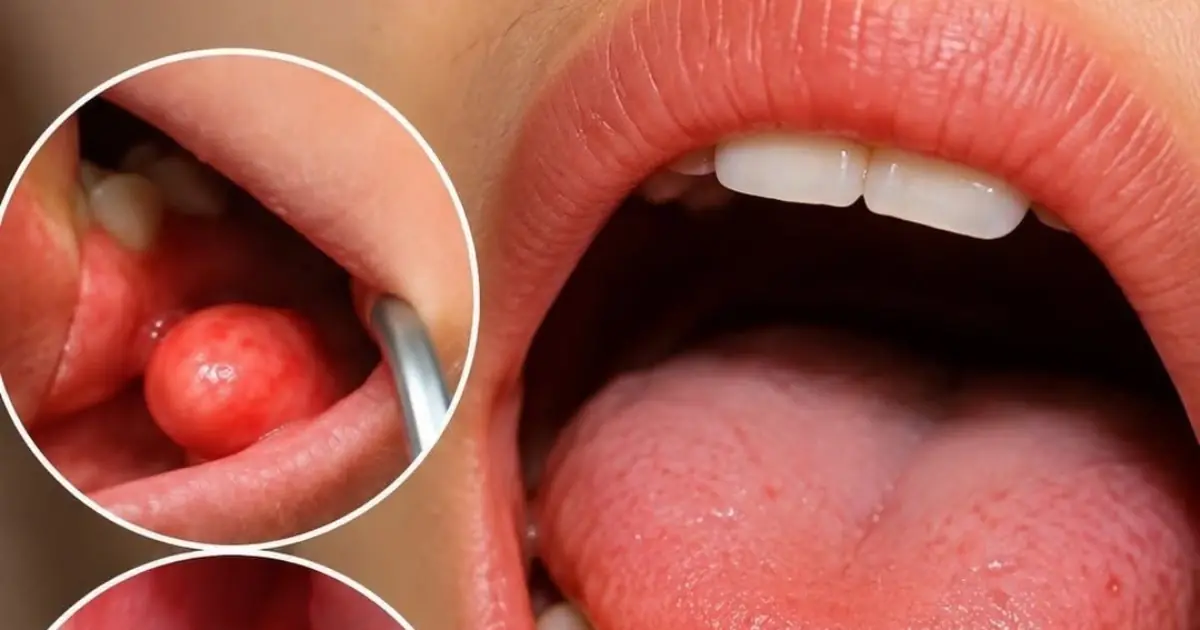
The mouth is made up of many different types of tissue, including the tongue, gums, inner cheeks, lips, salivary glands, and the delicate lining beneath the tongue. Because these structures perform important functions every day, even a relatively small change can become noticeable.
A round swelling inside the mouth may initially appear harmless. Some people discover it while brushing their teeth, eating, or examining their tongue in the mirror. Others notice it because the area begins rubbing against their teeth or interfering with normal movement.
The appearance shown in the photograph includes a smooth, rounded swelling near the tongue. Such an appearance can occur with several different conditions. However, a photograph alone cannot determine whether the swelling is a cyst, an inflamed gland, an infection, or another type of growth.
One possible explanation is an oral mucocele.
An oral mucocele is a mucus-filled cyst that develops when saliva becomes trapped in surrounding tissue. It commonly occurs after minor trauma, such as accidentally biting the inside of the lip or cheek. Although these cysts are most frequently found on the lower lip, they can also develop beneath the tongue or elsewhere inside the mouth.
Mucoceles often appear as smooth, soft, rounded bumps. Their color may be transparent, bluish, pink, or similar to the surrounding tissue. Many are painless, although their presence can become uncomfortable when eating or speaking.
Most oral mucoceles are benign, and some disappear without medical treatment. Nevertheless, a recurring or persistent swelling should be examined rather than repeatedly ignored.
Mucous Cyst: Symptoms, Causes & Treatment+1
Another possible condition is a ranula.
A ranula is a type of mucus-filled cyst that develops in the floor of the mouth, usually beneath the tongue. It occurs when saliva leaks from a salivary gland into nearby tissue and gradually accumulates.
A ranula may appear as a soft, rounded swelling. Some have a bluish or translucent appearance, while deeper lesions may look similar to normal oral tissue.
Small ranulas may cause few noticeable symptoms. Larger ones can push the tongue upward or interfere with everyday activities.
People may experience difficulty chewing, swallowing, speaking, or moving their tongue comfortably.
The location of a swelling is therefore important. A lump beneath the tongue is not necessarily the same condition as a lump on the tongue's surface or inside the cheek.
A dental professional or oral specialist can assess its position, appearance, size, and consistency to determine what further investigation may be necessary.
Cleveland Clinic+1
There are also other possible explanations for unusual oral growths.
Irritation from sharp teeth, dental appliances, accidental injuries, and repeated biting can cause localized tissue changes. Infections may produce painful swelling, while salivary gland disorders can cause discomfort that becomes more noticeable during meals.
Some growths develop gradually and remain painless for a long time.
This is one reason why people should not assume that a painless lump is automatically harmless.
Likewise, a red or swollen appearance does not automatically indicate a serious disease.
The correct diagnosis depends on a professional examination and, when necessary, additional testing.
The most useful first step is to pay attention to changes.
When did the lump first appear? Has it become larger? Does it hurt when touched? Does it interfere with eating? Has the surrounding tissue changed color?
These observations can help a healthcare professional understand the problem.
It is also useful to remember whether there has been recent dental treatment, accidental biting, or an injury inside the mouth.
Although these details may seem minor, they can help explain why a swelling developed.
The central message is simple: an unusual lump inside the mouth deserves attention, but its appearance alone should never be used to make a diagnosis.
Chapter 2: Five Changes Inside the Mouth That Deserve Attention
Not every mouth lump produces the same symptoms. Some remain small and painless, while others gradually become more noticeable.
Understanding the different changes can help people recognize when they should arrange a dental or medical appointment.
1. A rounded swelling that gradually becomes larger
A small bump may initially seem insignificant.
However, if it becomes noticeably larger over several days or weeks, it should be examined.
A mucocele can change in size as mucus accumulates or escapes from the affected area. A ranula may also enlarge when saliva continues leaking into surrounding tissue.
The swelling may feel soft, smooth, or fluid-filled.
If it becomes large enough to affect normal tongue movement, chewing, or swallowing, professional assessment is particularly important.
2. Persistent redness or unusual discoloration
Changes in the color of oral tissue can have several explanations.
An irritated area may become red after repeated friction or accidental injury. Some mucus-filled cysts can appear translucent or bluish.