The courtroom had been handling an ordinary legal matter. Then, within minutes, a young lawyer was standing before the judge with his hands folded, asking for mercy — while police were being called into the courtroom.

It was supposed to be a routine hearing.
The Andhra Pradesh High Court was considering a petition involving a Look-Out Circular and the impounding of a litigant’s passport.
Nothing about the case initially suggested that the hearing would become a dramatic confrontation.
Then the exchange between the judge and a young lawyer took an unexpected turn.
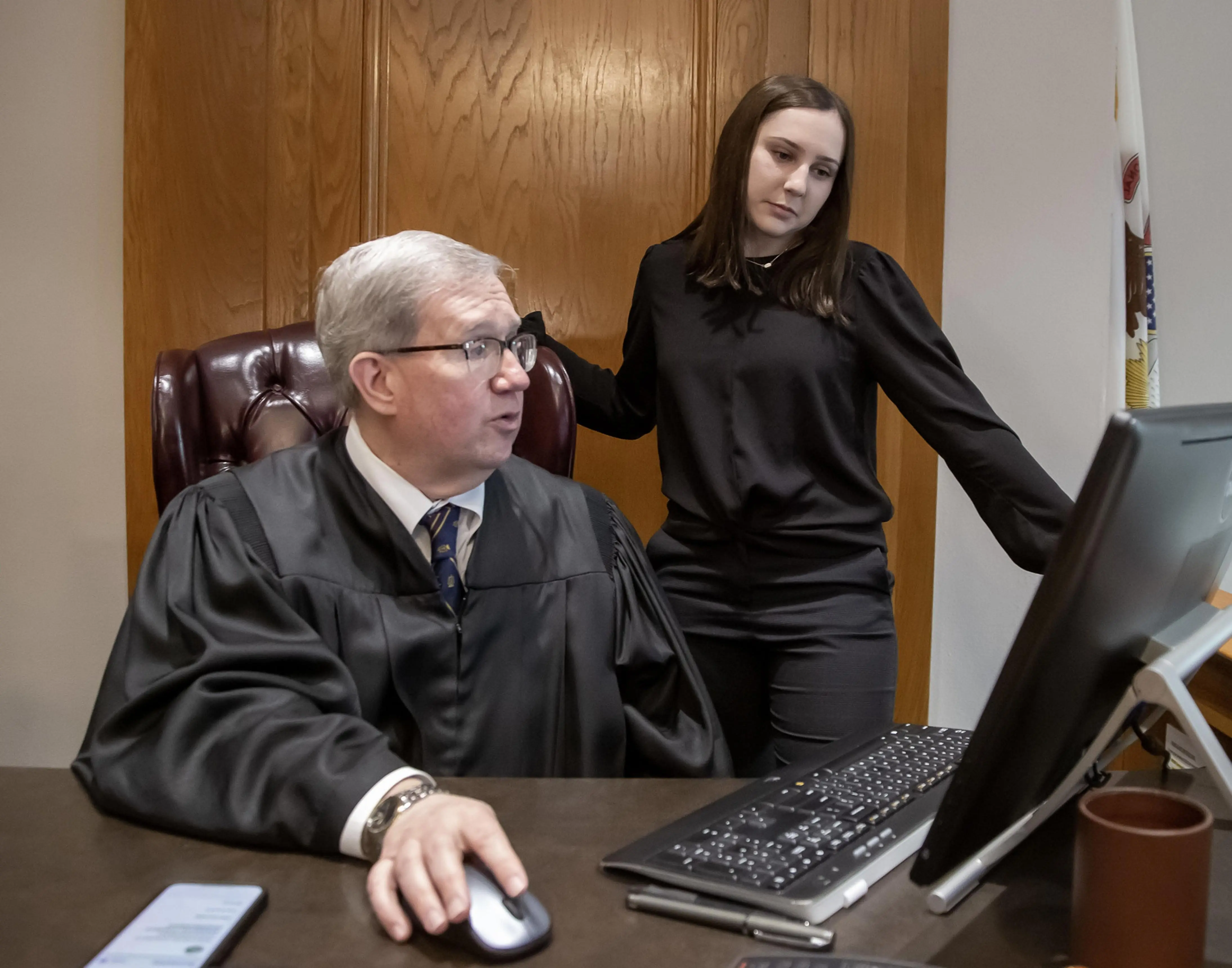
Justice Tarlada Rajasekhar Rao questioned the advocate over his conduct during the proceedings. The judge expressed frustration with what he considered a lack of diligence and began reprimanding the lawyer in open court.
The atmosphere changed almost instantly.
The lawyer appeared distressed.
He tried to explain himself.
Then he folded his hands.
“Sorry. I am begging for your grace, your lordship,” the lawyer pleaded.

But the confrontation did not end there.
The judge questioned the lawyer's conduct and described him as having behaved “indolently.” He also told him that if he was unhappy with the court's decision, he could pursue the appropriate legal remedies.
Then came the moment that shocked everyone watching the footage.
The judge called for the police.
The court directed that the young advocate be taken into custody for 24 hours.

Police personnel were reportedly summoned to the courtroom as the lawyer continued asking for leniency.
For anyone watching the viral footage, the scene was difficult to ignore.
A young lawyer who had entered the courtroom to argue a case was now facing the possibility of being taken away by police — all while standing before the judge and asking for mercy.
But the story did not end when the courtroom confrontation was over.
The incident quickly spread across social media, triggering a much larger debate within India's legal community.
Was the punishment proportionate?
How much authority should a judge exercise over an advocate appearing before the court?
And where should the line be drawn between maintaining courtroom discipline and protecting the dignity of lawyers?
The Andhra Pradesh High Court Bar Association intervened, and the custody direction was subsequently withdrawn.
The controversy then reached India's wider legal institutions.
The Bar Council of India wrote to Chief Justice of India Surya Kant, describing the incident as deeply disturbing and seeking intervention. The Supreme Court later took cognisance of the matter.
During the proceedings, the Supreme Court emphasized that members of the judiciary should exercise patience and compassion, particularly toward young lawyers.
What began as a disagreement during an ordinary hearing had suddenly become a national conversation about the relationship between judges and lawyers.
And perhaps the most striking image from the entire episode remains the simplest one:
A young lawyer standing in a courtroom, his hands folded, asking the judge for mercy.
Minutes earlier, he had been there to argue a case.
Now, the police had been called.
And everyone in the courtroom was watching to see what would happen next.