For many people, especially those who grew up several decades ago, Brazil nuts are more than just another type of nut.
They can bring back memories of holiday gatherings, family celebrations, old-fashioned snack bowls, and afternoons spent around a table with relatives. Before packaged snacks became such a dominant part of everyday life, a simple bowl of mixed nuts could be enough to keep everyone reaching for one more.
And among the walnuts, almonds, pecans, and hazelnuts, Brazil nuts were hard to miss.
They were larger. Their shells were tougher. Their shape was unmistakable. And opening one often required a little more effort than simply picking up a handful of almonds.
For generations, that small act of cracking open a Brazil nut became part of the experience itself.
But there is much more to these unusual nuts than nostalgia.
Brazil nuts are among the most distinctive foods to come from the Amazon rainforest, and they contain an exceptionally high concentration of selenium, an essential trace mineral involved in several important functions throughout the body.
That combination of childhood memories, family traditions, rainforest history, and remarkable nutrition makes the Brazil nut a surprisingly fascinating food.
The Nut Many People Remember From Childhood
Ask someone who grew up in the mid-20th century about Brazil nuts, and there is a good chance they remember seeing them in a bowl during special occasions.
They often appeared alongside other nuts during:
-
Christmas gatherings
-
New Year's celebrations
-
Family parties
-
Holiday dinners
-
Weddings and anniversaries
-
Visits from relatives
-
Weekend get-togethers
A bowl of mixed nuts could sit on a coffee table for hours while people talked, watched television, played cards, or simply enjoyed each other's company.
The Brazil nut often stood out immediately.
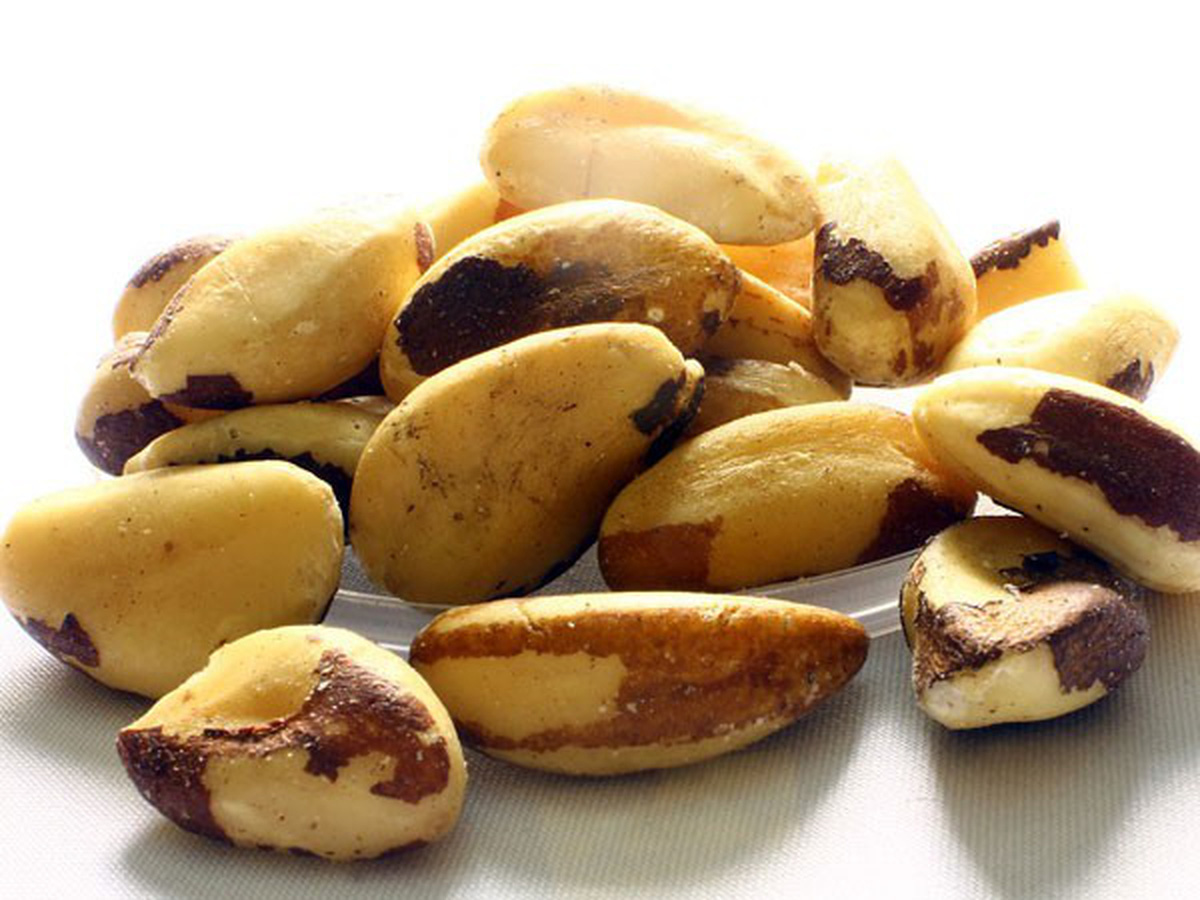
Its large, angular shape made it look different from almost everything else in the bowl.
And because the shell could be difficult to crack, getting to the nut sometimes became part of the ritual.
Cracking Nuts Was Sometimes a Family Activity
Today, many nuts are sold already shelled and ready to eat.
But older generations often remember a different experience.
Nuts came in their shells, and opening them required patience.
Someone might bring out a nutcracker, place a Brazil nut inside, and carefully apply pressure until the shell finally gave way.
Children would watch and wait for their turn.
Sometimes the shell would crack perfectly.
Other times, it would splinter into several pieces.
Those seemingly insignificant moments could become part of family memories.
There was no rush.
People were simply sitting together, talking and sharing food.
In that sense, the Brazil nut wasn't merely something to eat.
It was part of the social experience.
Why Brazil Nuts Look So Different
Brazil nuts are immediately recognizable because of their unusual size and shape.
They have a long, somewhat triangular appearance and are generally much larger than common nuts such as almonds or hazelnuts.
The edible seed is protected by a hard outer shell.
But their unusual appearance isn't simply a result of cultivation or processing.
It reflects the biology of the tree that produces them.
Brazil nuts come from the Brazil nut tree, a towering rainforest tree scientifically known as Bertholletia excelsa.
These trees can grow extremely tall and can live for many decades, with some reaching ages measured in centuries.
They are among the remarkable long-lived trees of the Amazon rainforest.
A Food That Comes From the Amazon
Despite their name, Brazil nuts aren't exclusively associated with modern Brazil.
They are native to the Amazon rainforest and are harvested in several South American countries, including Brazil, Bolivia, and Peru.
The trees grow naturally in the rainforest rather than being a typical crop planted and harvested in conventional agricultural fields.
This makes the Brazil nut particularly interesting from an ecological and cultural perspective.
The nuts are collected from the forest, often after large fruits fall naturally from the trees.
Inside those fruits are the familiar seeds that eventually become the Brazil nuts sold around the world.
The Giant Pods Behind the Nut
The Brazil nut tree produces large, woody fruits that can resemble heavy, rounded capsules.
When mature, these fruits fall from the tree to the forest floor.
Each fruit can contain numerous individual seeds arranged inside.
Once collected, the hard outer fruit is opened and the seeds are removed.
This process connects a simple snack sitting in a kitchen cupboard to a much larger natural system deep within the Amazon.
What looks like an ordinary nut on a supermarket shelf has actually gone through an extraordinary journey—from a massive rainforest tree to a fallen fruit, then through harvesting, processing, transportation, and finally onto someone's table.
Brazil Nuts Have a Remarkable Relationship With the Rainforest
The Brazil nut tree is not just another source of food.
It is part of a complex rainforest ecosystem.
The trees depend on ecological relationships involving pollinators and other organisms.
This is one reason Brazil nuts are often discussed in conversations about sustainable forest products.
Instead of requiring the forest to be cleared for conventional agriculture, wild Brazil nut harvesting can provide an economic incentive for communities to preserve standing rainforest.
In other words, the nut can have value not only as food but also as part of a broader forest-based economy.
The Nutrient That Makes Brazil Nuts Famous
While Brazil nuts have an interesting cultural and ecological history, their nutritional profile is what has attracted considerable attention.
The standout nutrient is selenium.
Selenium is a trace mineral, meaning the body needs it in relatively small amounts.
But "small amount" doesn't mean "unimportant."
Selenium contributes to several essential biological processes, including:
-
Normal thyroid hormone metabolism
-
Immune system function
-
Protection of cells from oxidative damage
-
Reproductive health
-
Normal metabolism
The body needs selenium to produce certain proteins called selenoproteins, which participate in important cellular functions.
Why Just a Few Brazil Nuts Can Be Enough
This is where Brazil nuts differ from many other foods.
Their selenium concentration can be extraordinarily high, although the exact amount can vary considerably from nut to nut depending on factors such as the soil and growing environment.
That means one Brazil nut may provide a substantial amount of the daily selenium requirement.
In some cases, a few nuts can provide far more selenium than a person needs for the day.
And that leads to one of the most important things to remember about Brazil nuts:
You don't need to eat a large handful to benefit from them.

More Selenium Isn't Necessarily Better
Selenium is essential, but excessive selenium intake over time can cause selenosis, or selenium toxicity.
Potential signs of excessive intake can include:
-
Nausea
-
Diarrhea
-
Fatigue
-
Hair loss
-
Brittle or abnormal nails
-
A metallic taste
-
Garlic-like breath odor
-
Neurological symptoms in more severe cases
This is one reason Brazil nuts are best viewed as a small-portion food rather than something to eat by the handful every day.
The exact selenium content varies, so there isn't a perfectly reliable rule that every Brazil nut contains the same amount.
For many healthy adults, eating a small number occasionally or regularly is generally more sensible than consuming large quantities.
What About the "One to Three Nuts a Day" Rule?
You may have heard that people should eat exactly one, two, or three Brazil nuts every day.
The reality is more nuanced.
Because selenium concentrations vary so much between individual Brazil nuts, there isn't a universal number that guarantees a particular selenium intake.
For someone who eats Brazil nuts frequently, small portions are generally the safer approach.
There is also no nutritional requirement to eat Brazil nuts every day.
You can obtain selenium from other foods as well, including:
-
Seafood
-
Meat
-
Poultry
-
Eggs
-
Dairy products
-
Certain grains
-
Other foods depending on the diet and growing region
So Brazil nuts can be a convenient source, but they aren't the only source.
Brazil Nuts Offer More Than Selenium
Selenium gets most of the attention, but Brazil nuts also provide other nutrients.
They contain:
-
Protein
-
Healthy unsaturated fats
-
Fiber
-
Magnesium
-
Copper
-
Phosphorus
-
Vitamin E and other micronutrients
Their fat content is one reason they can be satisfying despite their relatively small size.
Like other nuts, Brazil nuts can fit into a balanced eating pattern when eaten in reasonable portions.
Healthy Fats Make Them a Satisfying Snack
Brazil nuts contain predominantly unsaturated fats, including monounsaturated and polyunsaturated fatty acids.
Dietary fats are important for:
-
Cell structure
-
Hormone production
-
Absorption of fat-soluble vitamins
-
Energy
-
Supporting normal physiological functions
However, nuts are also calorie-dense.
That doesn't make them unhealthy.
It simply means that portion size matters, particularly if someone is monitoring total calorie intake.
A Little Nut Can Go a Long Way
One of the interesting things about Brazil nuts is how concentrated they are.
You don't need a large bowl to get their nutritional value.
A small serving can provide meaningful amounts of nutrients while also adding texture and flavor to meals.
They can be eaten:
-
On their own
-
Chopped over yogurt
-
Added to oatmeal
-
Mixed into salads
-
Combined with other nuts
-
Chopped into homemade granola
-
Used as a topping for fruit
The key is moderation.
Brazil Nuts and Thyroid Health
Selenium has a particularly important connection with thyroid function.
The thyroid gland relies on selenium-containing enzymes involved in thyroid hormone metabolism and antioxidant defense.
This has led to considerable interest in selenium and thyroid health.
However, this doesn't mean that eating large quantities of Brazil nuts will automatically improve thyroid function.
People with thyroid disorders should not use Brazil nuts as a substitute for prescribed treatment.
If you're taking thyroid medication or managing a thyroid condition, dietary changes should be discussed with your healthcare professional when appropriate.
Brazil Nuts and the Immune System
Selenium is also involved in normal immune function.
Adequate selenium helps support the body's antioxidant systems and immune responses.
But once again, there is an important distinction between meeting a nutrient requirement and taking excessive amounts.
If your selenium intake is already adequate, eating dramatically more doesn't necessarily translate into dramatically better immunity.
Nutrition generally works best when the body receives enough—not when one nutrient is consumed in extreme amounts.
The Nostalgia Behind the Nut
Perhaps the most fascinating part of Brazil nuts isn't nutritional at all.
It's emotional.
Food memories can be incredibly powerful.
A particular smell, flavor, or texture can instantly transport someone back to childhood.
For older adults, the sight of Brazil nuts in a bowl may bring back memories of:
-
Grandparents
-
Parents
-
Holiday dinners
-
Childhood homes
-
Family conversations
-
Old kitchens
-
Winter celebrations
-
Relatives who are no longer around
A food doesn't have to be expensive or exotic to become meaningful.
Sometimes it's the ordinary things that become the strongest reminders of where we came from.
Every Family Had Its Own Food Traditions
Different households developed their own ways of serving nuts.
Some families carefully separated different varieties.
Others mixed everything together.
Some people preferred almonds.
Others searched the bowl for cashews or walnuts.
And there were always people who immediately reached for the biggest Brazil nut.
These small preferences became part of family identity.
Children learned what their parents liked.
Grandparents passed along traditions.
And eventually, the same foods appeared on another generation's holiday table.
That's how seemingly ordinary foods become cultural memories.
Why Older Generations May Remember Them So Clearly
Modern snack culture has changed dramatically.
Today, people have access to an enormous variety of packaged foods at almost any hour.
But decades ago, a bowl of nuts could feel special precisely because it wasn't something everyone ate constantly.
The food was associated with a particular occasion.
That scarcity or ritual can make memories stronger.
The Brazil nut wasn't necessarily special because it was eaten every day.
It was special because it appeared when people gathered.
A Simple Food With a Remarkable Story
Think about what happens when you hold a Brazil nut.
It looks simple.
But behind it is an enormous chain of events:
A towering rainforest tree grows for decades.
A large fruit develops.
The fruit eventually falls to the forest floor.
People collect it.
The hard shell is opened.
The seeds are processed.
The nuts travel thousands of miles.
Eventually, one appears in a bowl on a family's table.
And someone cracks it open.
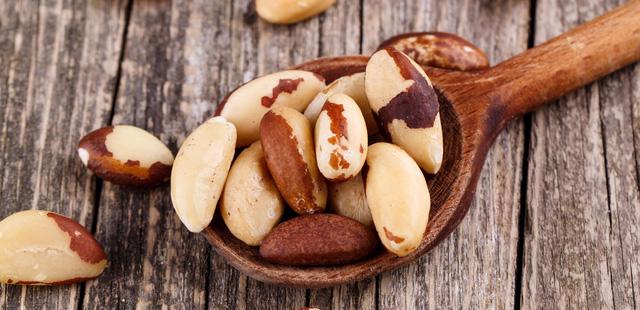
That tiny moment connects modern life to one of the world's most extraordinary ecosystems.
So, Should You Eat Brazil Nuts?
For most healthy people, Brazil nuts can be a nutritious addition to a balanced diet.
But because selenium levels can be exceptionally high and variable, moderation is particularly important.
You don't need a large handful every day.
If you already consume selenium from meat, seafood, eggs, dairy, grains, supplements, or other foods, your total intake matters.
And if you take selenium supplements, be particularly cautious about adding large amounts of Brazil nuts on top of them.
People with specific medical conditions or dietary restrictions should ask a healthcare professional or registered dietitian for individualized advice.
The Best Way to Think About Brazil Nuts
Don't think of Brazil nuts as a miracle food.
And don't think of them as something dangerous that must be avoided.
Think of them as what they really are:
An unusually nutrient-dense food that works best in small amounts.
Their nutritional value is real.
Their selenium content is impressive.
Their role in Amazonian ecosystems is fascinating.
And their place in family traditions gives them something that nutrition labels can never fully capture.
A Small Nut With a Big Legacy
Brazil nuts have traveled a remarkable distance—not just geographically, but culturally.
They come from ancient rainforest trees and end up in modern kitchens.
They can be part of a holiday tradition, a childhood memory, a family ritual, or simply a nutritious snack.
For older generations, they may bring back the sound of a nutcracker opening a stubborn shell while family members talked nearby.
For younger generations, they may simply be an unfamiliar nut sitting in a mixed snack bowl.
But once you understand where Brazil nuts come from and how much selenium they contain, they become much more interesting.
They aren't just another item in the nut aisle.
They are a reminder of the relationship between food, family, nature, and generations.
And perhaps that's why something as small as a Brazil nut can carry such a surprisingly big story.
The Bottom Line
Brazil nuts are packed with nutrients, particularly selenium, which plays important roles in thyroid function, immune health, and cellular protection.
But because their selenium content can be extremely high and varies from nut to nut, eating large amounts regularly isn't necessary and may increase the risk of excessive selenium intake.
A small portion can be enough.
And beyond nutrition, Brazil nuts have something even harder to measure: memories.
For many families, they represent holiday tables, shared conversations, childhood traditions, and generations sitting together with a simple bowl of nuts between them.
Sometimes the foods we remember most aren't the most complicated ones.
They're the ones that were there when the people we loved were gathered around the table.