An engine that has ingested a bird may continue operating, but it may also experience vibration, unusual noise, reduced power or other abnormal indications. In a serious case, the engine may need to be shut down according to the aircraft's procedures.
For passengers, the experience can be frightening. They may hear a bang, feel a change in engine noise or notice a vibration. Some might see a flash or other unusual visual effect near the wing. These signs do not necessarily mean that the aircraft is about to crash, but they can indicate that the flight crew needs to assess a possible problem.
Modern commercial aircraft are designed with the ability to continue flying after certain failures. Multi-engine aircraft, for example, are generally capable of operating with one engine inoperative under specified conditions. That does not mean an engine failure is insignificant. It means that the aircraft and its crew have procedures designed to manage such situations.
The decision to continue, divert or land depends on the aircraft type, its condition, the phase of flight, the weather, available airports and the applicable operating procedures.
Why the windshield matters
Another serious concern is a bird striking the cockpit windshield.
The windshield is designed to protect the flight crew from the outside environment, but a sufficiently powerful impact can still cause damage. Even when the structure remains intact, a strike may leave the glass obscured or make it harder for pilots to see clearly.
Visibility is essential in aviation. Pilots rely on instruments, external references and communication with air traffic control. If a windshield becomes damaged, obstructed or difficult to see through, the crew must assess how the problem affects safe operation.
The cockpit is a controlled working environment. A sudden impact can also create noise, distraction and a brief period of confusion. The crew must remain coordinated, follow procedures and avoid allowing surprise to interfere with essential tasks.
Why a flock is more concerning than one bird
A single bird may cross an aircraft's path and disappear within a fraction of a second. A large flock can create repeated opportunities for impact.
The birds may be spread over a wide area, and their movements may not follow a predictable pattern from the pilot's perspective. Some may change direction suddenly. Others may fly at different heights. If the aircraft passes through the flock, several impacts could occur almost simultaneously.
This is one reason that a flock should not be judged only by how large it looks from a distance. Its position relative to the aircraft, its density, the aircraft's speed and the possibility of engine ingestion all matter.
The Federal Aviation Administration's wildlife-strike information shows that bird strikes are a recurring aviation safety issue, but most reported strikes do not produce serious damage. Its current FAQ reports approximately 344,000 wildlife strikes involving U.S. civil aircraft between 1990 and 2025. It also notes that about 61 percent of bird strikes involving fixed-wing civil aircraft occurred during landing phases, while approximately 36 percent occurred during takeoff and climb. These figures show why airports and flight crews pay particular attention to wildlife near the ground.
Federal Aviation Administration+1
The statistics also help explain why a bird encounter during a routine flight should never be dismissed automatically. A strike may be minor, but the crew cannot know the full extent of any damage simply by hearing an impact.
The aircraft does not need to be visibly falling to be in danger
One common misunderstanding about aviation emergencies is that danger must be immediately visible.
Passengers may expect a dramatic loss of altitude, smoke or a sudden movement before they believe something serious has happened. In reality, an aircraft can remain stable while the crew investigates a problem that requires a precautionary landing.
A bird strike may damage an engine without causing an immediate loss of control. A damaged component may not be visible to passengers. A warning or abnormal instrument indication may be more important than anything people can see from their seats.
The aircraft may still be flying normally, but the crew may decide that the safest option is to land and have the aircraft inspected.
That decision is not a sign of panic. It is a central part of aviation risk management.
Chapter 3: The Cockpit Decision That Could Change the Entire Journey
As the impacts continued in the scenario described in the supplied screenshot, Captain Jason Vance faced a situation that demanded calm judgment.
The first priority was to maintain control of the aircraft.
This may sound obvious, but it is fundamental to how pilots respond to emergencies. A sudden noise, vibration or external threat can attract attention. The crew must resist the temptation to focus entirely on what happened outside and instead establish the aircraft's condition.
The pilots need to know whether the aircraft is responding normally. They must monitor relevant instruments, identify any warnings and determine whether an engine or other system has been affected. They also need to communicate with one another so that important information is not overlooked.
In a two-pilot cockpit, coordination is especially important. One pilot may be flying while the other assists with monitoring, communication and checklists, depending on the aircraft's procedures and the circumstances. Their responsibilities must remain clear.
The crew cannot simply turn away from the instruments to watch the birds.
Assessing the aircraft after the first impact
A bird strike can produce several possible outcomes.
The aircraft may show no abnormal indications. In that case, the crew may still decide to return or land for an inspection, depending on the nature of the encounter and the operator's procedures.
An engine may show signs of damage or abnormal operation. The crew would then follow the appropriate checklist and decide whether the engine can safely remain in operation.
A windshield or other exterior surface may be damaged. The crew would assess whether visibility, structural integrity or another aspect of safe flight has been affected.
There may also be uncertainty. The pilots may hear multiple impacts but have no immediate way to determine exactly which parts of the aircraft were struck. In such a situation, caution becomes especially important.
The crew's decision should not be based on a desire to keep the schedule. Commercial flights operate under strict safety requirements, and arriving on time cannot take priority over the condition of the aircraft.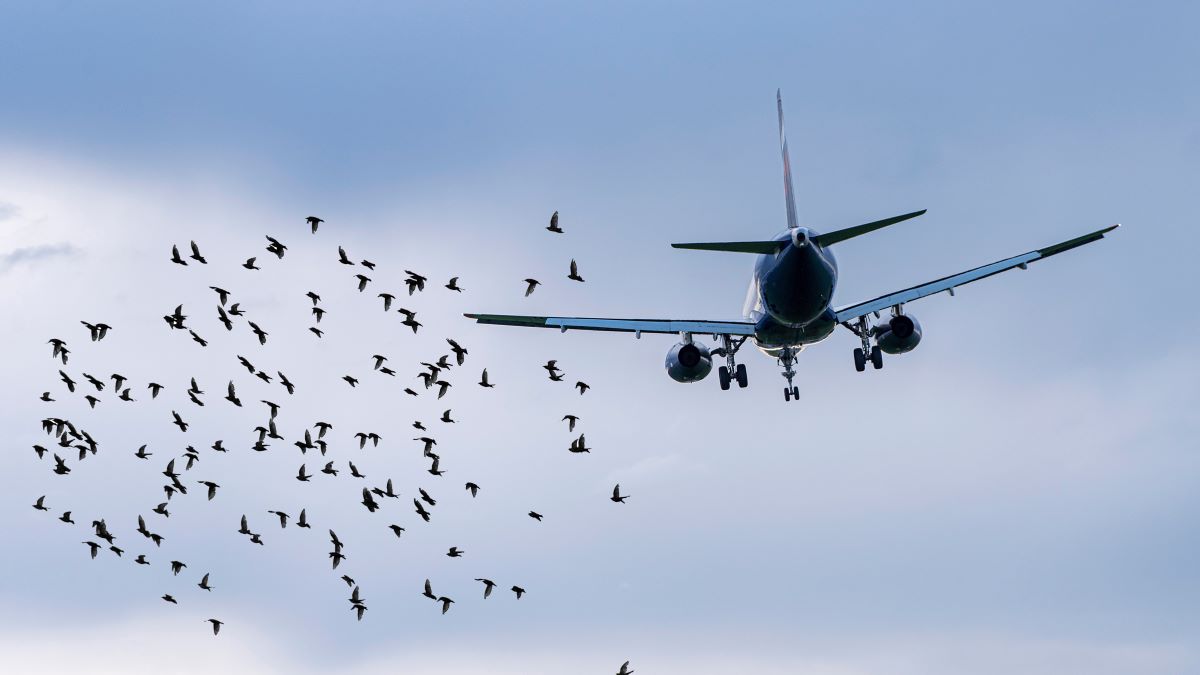
Why an emergency landing may be the safest option
The phrase "emergency landing" can sound terrifying, but it covers a range of situations.
Sometimes an aircraft must land as soon as reasonably possible because of a serious problem. In other cases, the crew may make a precautionary landing because they want the aircraft inspected before continuing. The exact terminology and priority depend on the circumstances and aviation procedures.
A precautionary landing does not necessarily mean that the aircraft is about to fail. It may be a decision made precisely because the aircraft is still controllable and the crew has time to select a suitable airport.
The safest landing location may be the departure airport, a nearby airport or another suitable destination. The choice depends on the aircraft's condition, runway length, weather, airport facilities, emergency support and other operational factors.
A pilot does not necessarily choose the geographically closest runway. The nearest airport may not have the facilities or conditions needed for the aircraft. A slightly farther airport may offer a safer landing environment.
This is why the crew may need to coordinate with air traffic control.
The role of air traffic control
Air traffic controllers help organize the surrounding airspace and support aircraft that need priority handling.
If a crew reports a bird strike and requests to return or divert, controllers can provide information about nearby airports, traffic conditions, runway availability and other relevant details. They may also help clear a route or arrange priority access.
The flight crew remains responsible for operating the aircraft. Air traffic control does not take over the pilots' decision-making, but it provides support that can make the response more orderly.