Have you ever looked in the mirror and noticed that your neck seems different from the way it did a few years ago? Perhaps the skin beneath your chin appears looser, faint horizontal lines have become more noticeable, or the area between your jawline and collarbone no longer looks as firm as it once did.
For many people, these changes happen gradually. They may first become noticeable in photographs, when looking down at a phone, or when comparing the neck with the skin on the face. Even people who maintain a consistent skincare routine may eventually notice that their neck is developing wrinkles, folds, or sagging that seem difficult to explain.
The reason is that the neck ages in several different ways at once.
Skin gradually loses some of its structural support. Collagen and elastin become less abundant and less organized. Fat distribution changes, muscles may become more prominent, and years of sun exposure can accelerate visible damage. Genetics, weight fluctuations, smoking, and everyday habits can also influence how quickly these changes appear.
Although sagging neck skin is a normal part of aging, that does not mean there is nothing you can do about it. Understanding what causes these changes can help you protect the skin, choose realistic treatments, and avoid spending money on products that promise results they cannot deliver.
Here are the real reasons your neck may begin to sag with age, along with practical ways to support healthier-looking skin.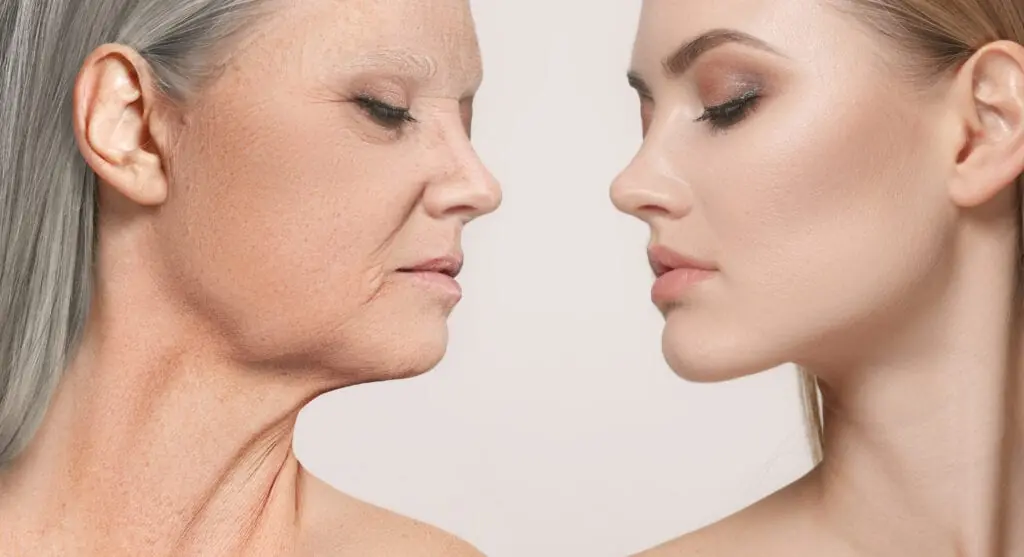
CHAPTER 1: WHY THE NECK OFTEN SHOWS SIGNS OF AGING EARLIER THAN YOU EXPECT
Many people pay close attention to their face but give their neck much less attention.
They may apply moisturizer, sunscreen, and anti-aging products to their cheeks and forehead while stopping at the jawline. Over time, this difference in skincare habits can become noticeable because the neck is also exposed to environmental damage and the natural aging process.
However, the neck does not simply age because people forget to moisturize it. Its anatomy and the way its tissues change over time also play important roles.
The skin gradually loses collagen and elastin
Two important components of youthful-looking skin are collagen and elastin.
Collagen is a structural protein that helps provide firmness and support. It forms part of the framework that gives skin its strength and resilience.
Elastin is responsible for allowing skin to stretch and return toward its original shape. Together, these proteins help skin maintain its structure and respond to everyday movements.
As people age, the body gradually produces less collagen, while existing collagen fibers undergo structural changes. Elastin also becomes less effective at maintaining the skin's ability to recoil.
These changes do not happen overnight. They develop over many years, influenced by genetics, hormones, environmental exposure, and lifestyle.
Eventually, skin may become thinner, less elastic, and more vulnerable to folds and wrinkles.
On the neck, these changes can become particularly visible because the area moves frequently and is exposed to sunlight in many people's daily routines.
The neck experiences constant movement
Think about how often you move your neck throughout the day.
You turn your head while driving, look down at your phone, tilt your head while reading, and move your neck when speaking or eating. These movements are normal and necessary, but they also mean the skin is repeatedly folded and stretched.
Over time, natural skin aging can make these folds more noticeable.
Horizontal neck lines, sometimes called necklace lines, may become visible even in relatively young adults. They can be influenced by natural anatomy, repeated folding, genetics, and skin changes.
The appearance of these lines does not necessarily mean that the skin is severely damaged. Some people develop prominent horizontal creases earlier than others because of their individual skin structure.
The neck has a different appearance and structure from the face
The skin on the neck is not identical to the skin on the cheeks or forehead.
Its thickness, underlying structures, distribution of fat, and patterns of movement differ. The superficial muscles beneath the skin also contribute to how the neck looks as it ages.
One particularly important muscle is the platysma. This thin, broad muscle extends across the front and sides of the neck and is involved in facial and neck movements.
As the skin and supporting tissues change, the platysma may become more noticeable. Vertical bands can develop, particularly when the muscle contracts.
This can contribute to an older-looking neck even when the skin itself is not dramatically loose.
Why the neck may look older than the face
It is possible for someone to have relatively smooth facial skin but noticeable changes around the neck.
There are several explanations.
First, people often apply sunscreen and skincare products to their faces more consistently than to their necks. This can create differences in accumulated sun damage.
Second, the neck has its own anatomical characteristics. Changes in fat distribution, muscle definition, and skin elasticity may create visible sagging that cannot be explained by wrinkles alone.