Chapter 1: The Humble Root Vegetable That Has Become a Topic of Health Interest
At first glance, the brown, rough-skinned vegetable shown in the photograph may not look particularly special. It resembles taro, a traditional root crop consumed by millions of people across Asia, Africa, the Pacific Islands, and other tropical regions.
Known scientifically as Colocasia esculenta, taro has been cultivated for centuries. It is valued for its ability to grow in suitable tropical environments, its versatility in cooking, and its contribution to everyday nutrition.
In many communities, taro is not an occasional delicacy. It is an affordable staple that families can prepare in several different ways.
Some boil it until tender, others steam it, bake it, or incorporate it into soups and traditional dishes.
The vegetable's popularity has recently attracted attention because of claims suggesting that communities eating it regularly experience remarkably low cancer rates.
But what makes this vegetable interesting from a nutritional perspective?
And can eating it every day really explain why a particular village supposedly has almost no cancer cases?
Why taro has remained important for generations
Taro has several characteristics that make it valuable as a traditional food.
First, it provides carbohydrates, which supply energy for daily activities.
Second, it contains dietary fiber, which contributes to digestive health and helps support normal bowel function.
Third, it provides minerals, including potassium, magnesium, and manganese, alongside smaller amounts of other vitamins and minerals.
Unlike some highly refined starch products, whole taro retains its natural food structure and contains fiber.
Its nutritional composition can vary according to the variety, growing conditions, storage, and cooking method.
A review published in the International Journal of Molecular Sciences examined the nutritional composition and potential biological properties of taro corms. Researchers discussed its starch, fiber, minerals, and naturally occurring bioactive compounds.
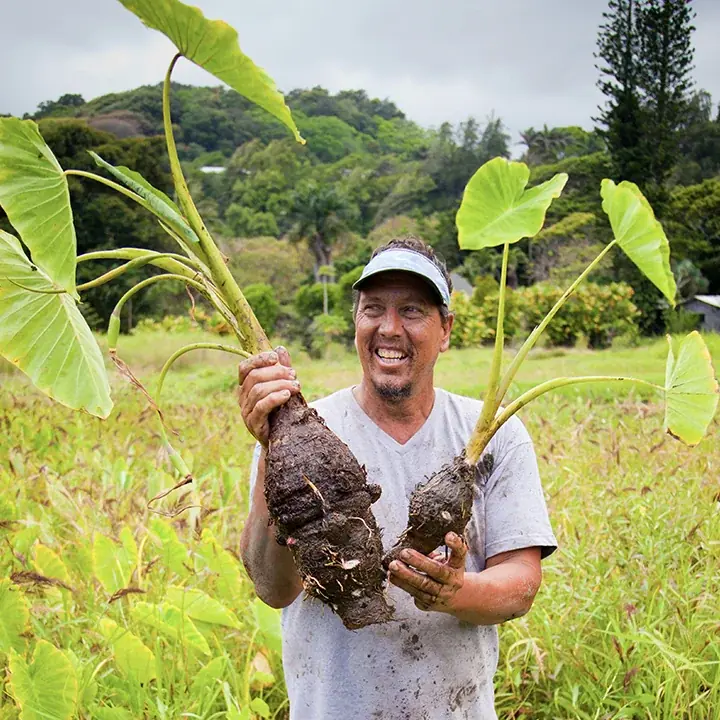
Could a traditional diet influence cancer rates?
The idea that communities following traditional diets may experience different patterns of disease is worth examining.
Diet is one factor that influences long-term health.
People who regularly consume vegetables, fruits, whole grains, beans, and other minimally processed foods may benefit from improved dietary quality.
Such eating patterns can help support healthy body weight and provide fiber and important micronutrients.
However, cancer is a complex group of diseases. Its development involves genetic changes, environmental exposures, aging, lifestyle factors, infections, and other biological processes.
No single food can explain the cancer rate of an entire community.
Even when a population has a lower recorded incidence of a particular cancer, researchers must examine many possible explanations.
These include:
-
Age distribution within the population.
-
Smoking and alcohol consumption.
-
Occupational and environmental exposures.
-
Physical activity.
-
Family history and genetic factors.
-
Access to medical examinations.
-
Accuracy of cancer registration.
-
Differences in screening and diagnosis.
A village with fewer recorded cases does not necessarily have fewer cases because of one specific vegetable.
Reliable population studies must account for these factors before identifying possible explanations.
What makes the cancer claim questionable?
The claim accompanying the photograph does not identify the village, provide cancer statistics, describe the period studied, or cite a scientific investigation.
Without those details, it is impossible to establish whether the reported cancer rate is accurate.
It is equally impossible to demonstrate that taro consumption caused the alleged difference.
The National Cancer Institute explains that laboratory findings about individual dietary compounds do not automatically establish that eating a particular food prevents cancer in humans.
NCI
This distinction is essential.
A food can contain valuable nutrients and still not qualify as a proven cancer-prevention treatment.
The most responsible conclusion is that taro deserves attention as a nutritious traditional food, but the village story should be treated as an unverified claim.
Chapter 2: What Happens Inside Your Body When You Eat Taro Regularly?
Although taro cannot be described as a miracle food, its nutritional composition offers several reasons to include it in a balanced diet.
The most important components are its carbohydrates, dietary fiber, resistant starch, and minerals.
Understanding how these nutrients work helps explain why traditional root vegetables remain important in many diets.
1. Dietary fiber supports digestive health
One of taro's nutritional advantages is its dietary fiber.
Fiber helps maintain normal bowel movements and contributes to digestive health.
It also supports the activity of beneficial microorganisms living in the digestive tract.
Some types of fiber and resistant starch reach the large intestine, where gut bacteria ferment them.
This process produces short-chain fatty acids, compounds involved in maintaining the intestinal environment.
A healthy digestive system depends on several factors, including adequate fiber intake, hydration, physical activity, and dietary variety.
Eating taro can contribute to fiber intake, but it should not be the only source.
Other useful choices include:
-
Oats.
-
Beans.
-
Lentils.
-
Apples.
-
Bananas.
-
Leafy vegetables.
-
Whole-grain bread.
-
Seeds and nuts.
The World Cancer Research Fund recommends making whole grains, vegetables, fruits, and legumes important parts of everyday eating. It also identifies dietary fiber as beneficial in relation to colorectal cancer risk.
World Cancer Research Fund+1
2. Resistant starch may help support gut bacteria
Another interesting feature of taro is its starch composition.
Some of its starch is resistant starch, meaning it is not completely digested in the small intestine.