The Search for 18-Year-Old Twins Carolina and Luiza Ends in Tragedy: A Heartbreaking Story That Has Left Many Questions Unanswered
Two young women, two smiling faces, and a story that has left readers searching for answers. The photograph of Carolina and Luiza shows what appears to be an ordinary moment between twin sisters, yet the headline accompanying it describes a disappearance that allegedly ended in tragedy. For anyone who has ever waited anxiously for a loved one to come home, the story is difficult to read without feeling a deep sense of sadness.
According to the online account, the search for the 18-year-old twins Carolina and Luiza came to a heartbreaking end after they reportedly disappeared. The story has circulated alongside images of the sisters and photographs showing search personnel near a wooded area. The contrast between the smiling faces and the scene of the search has made the report especially emotional.
But behind the dramatic headline lies an important question: what is actually known about the case, and which details remain unconfirmed?
The available material does not provide a complete, independently verified account of the sisters' disappearance. Some versions of the story contain conflicting details, and the photographs have not been conclusively established as images from the alleged case. That uncertainty matters—not because the subject is unimportant, but because a story involving missing people and reported deaths deserves the greatest possible care.
This article examines the account as it has been presented, the reported search, the emotional experience of families waiting for news, and the questions that should be answered before the story is treated as confirmed. It will also explore why photographs and online headlines can spread so quickly during a tragedy, and how readers can respond with compassion without unknowingly sharing misinformation.
The purpose is not to invent a dramatic ending. It is to understand the story, recognize the human emotions behind a missing-person report, and separate what the supplied account says from what reliable evidence would still need to establish.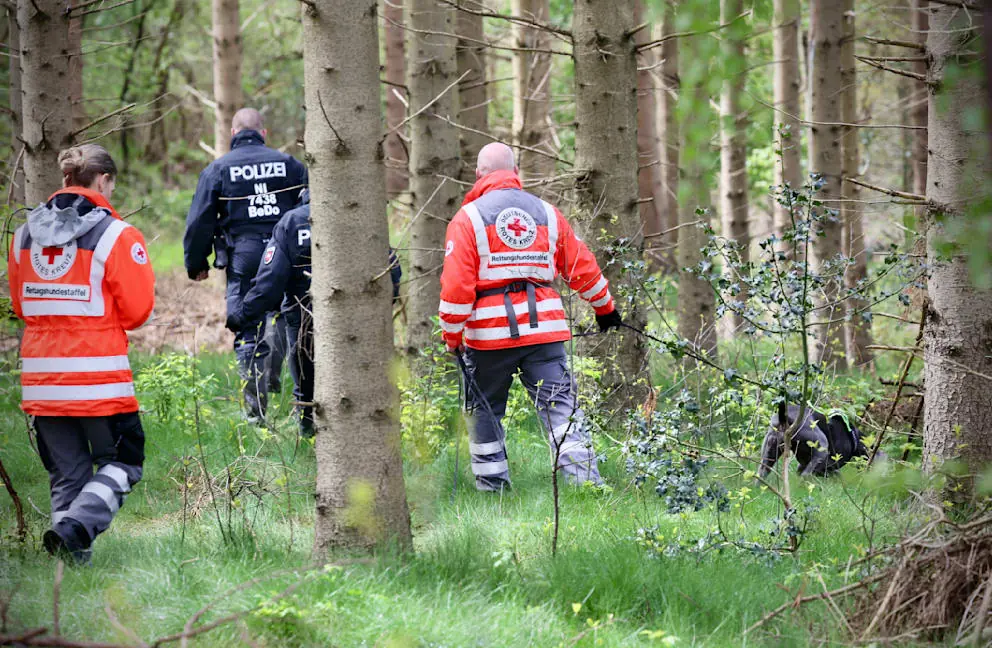
The Reported Disappearance: What the Story Says Happened
The circulating account begins with a familiar but deeply distressing situation: two young women are reportedly missing, and the people who care about them cannot establish where they are.
According to one version of the story, Carolina and Luiza were last seen heading toward a bus stop. They allegedly failed to arrive at their expected destination and did not respond to calls or messages.
The account says their relatives became concerned and contacted authorities.
That is the point at which the narrative describes a search beginning. Family members reportedly provided information about the sisters' routines, while people who knew them were asked whether they had seen them.
The report also claims that the disappearance attracted attention through social media. Photographs were allegedly shared in the hope that someone might recognize the sisters or remember seeing them shortly before they disappeared.
These details are common in missing-person cases, but in this particular story they remain claims made by the circulating account rather than independently established facts.
No verified timeline has been provided showing exactly when the sisters were last seen, who reported them missing, or which authority received the initial report.
Those details would be essential to understanding the case.
A reliable timeline would begin with the last confirmed sighting, followed by the time relatives realized the sisters were missing, the date authorities were contacted, and the actions taken afterward.
It would also distinguish between confirmed sightings and information that investigators were still trying to verify.
Without such a timeline, it is impossible to determine how long the alleged search lasted or whether the different online versions are describing the same event.
The most important point is that the supplied story describes a search and a tragic outcome, but it does not provide the documentation needed to confirm the sequence of events.
The Search That the Photograph Appears to Show
The photograph accompanying the story shows several people gathered near a riverbank and a wooded area. Some appear to be wearing uniforms or high-visibility clothing, while others stand nearby observing the activity.
Small boats can be seen on the water, and the surrounding vegetation suggests that the area may be difficult to access on foot.
The image creates the impression of a coordinated search operation.
However, the original source of the photograph has not been established, and it cannot be confirmed that the people pictured were searching for Carolina and Luiza.
It is important to make that distinction because photographs from unrelated police operations are sometimes reused in online articles.
A real photograph of a search team does not automatically prove that the caption attached to it is accurate.
If the image were confirmed as part of the reported case, it could help readers understand the environment in which the search took place. It might show the kind of terrain investigators had to cover or the resources involved in the operation.