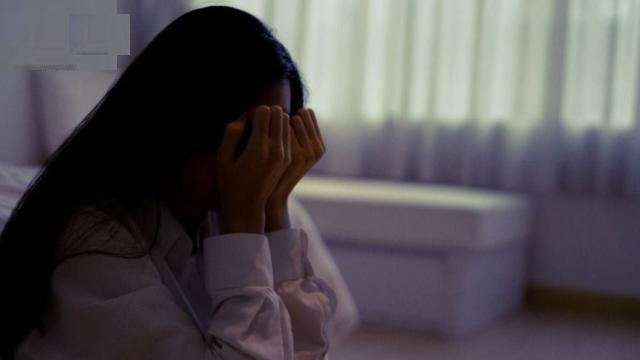
She sat down and covered her face with both hands.
"I'm sorry," she whispered.
I didn't say anything.
"I'm so sorry."
I stared at her.
Then she said the words that shattered whatever remained of the image I had of my marriage.
"Your husband and I were together."
I felt the room tilt.
I had suspected it.
But suspicion and confirmation are two completely different things.
I asked her how long.
She couldn't give me a simple answer.
She said it had been complicated.
Hidden.
She said he had helped her start a business.
He had helped her open a store.
He had bought the apartment.
I looked around.
The beautiful furniture.
The expensive decorations.
The large windows.
The apartment that had apparently been connected to my husband.
All those years I had believed his long working hours were about his career.
Now I wondered how many of those hours had belonged to another life.
A life I knew nothing about.
I felt sick.
I asked her whether she loved him.
She cried harder.
"I don't know what to call what we had anymore."
That answer made me angrier.
"Do you know what I call it?"
She looked at me.
"Betrayal."
She nodded.
"I know."
For the first time, I saw something in her expression that wasn't defensiveness.
It was shame.
She told me that after his death, she couldn't sleep.
She couldn't bear the guilt.
She said that my husband had talked about our children.
He had talked about me.
According to her, he had always told her that his family was his responsibility.
That sentence almost made me laugh.
His responsibility.
What kind of responsibility was that?
He had built a second life while I was raising his children.
He had hidden another woman from me.
He had spent money on her.
And now she was sitting in front of me, crying about guilt.
I wanted to hate her.
Maybe I did.
But then she said something unexpected.
"The money is not payment."
I looked at her.
"What?"
"The $3,000. I'm not paying you because I feel sorry for you."
"Then why?"
She swallowed.
"Because I know what he left behind."
She told me she had started sending the money after his death.
She said she couldn't bring him back.
She couldn't undo what had happened.
She couldn't erase the pain she had contributed to.
But she could help his children.
"I know you don't want anything from me," she said. "But please don't punish the children because of what the adults did."
That sentence stayed with me.
I didn't answer.
I simply left.
The Anger Came Later
I thought meeting her would give me closure.
It didn't.
It gave me more questions.
That night, after the children went to sleep, I sat alone in the living room.
My husband's photograph was on the shelf.
I stared at it.
For years, that photograph had represented the man I loved.
That night, I couldn't look at it the same way.
I hated him.
Not because he was dead.
Because he had left me with a life built on information I didn't have.