Chapter 1: The Sleeping Habit That Many People Overlook
Sleep is one of the most important activities for maintaining good health. Every night, the body enters a period of recovery, allowing the brain to process information, muscles to relax, and various systems to perform essential maintenance. Yet many people pay close attention to how long they sleep without considering another important detail: the position in which they spend those hours.
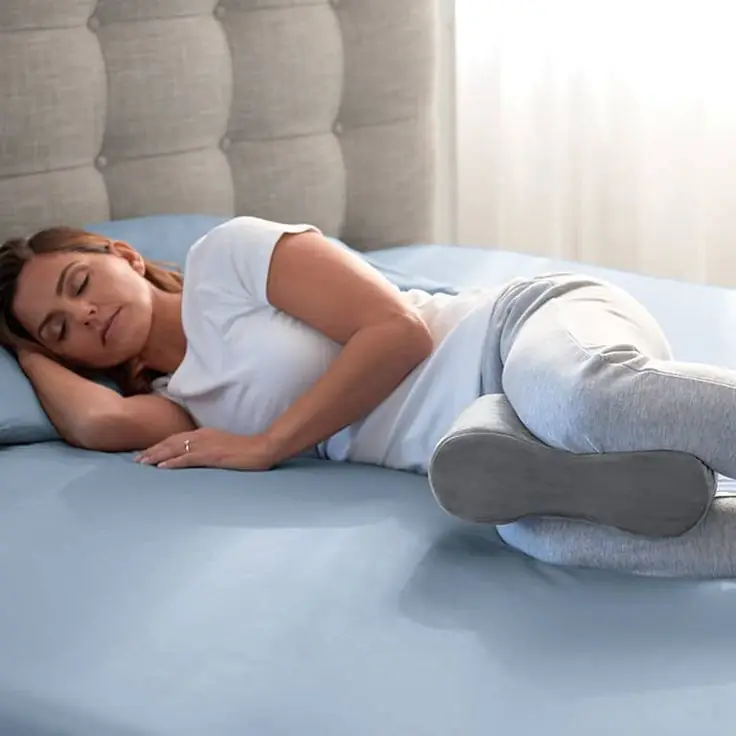
The illustration accompanying this article highlights two different side-sleeping positions. In one, a pillow supports the legs and helps keep the hips and spine aligned. In the other, the legs are positioned without the same support, potentially allowing the pelvis to rotate and placing additional strain on the lower back.
Although the difference may appear small, body alignment can influence how comfortable someone feels throughout the night.
When a person sleeps on their side, the upper leg can naturally fall forward or downward. This movement may cause the pelvis to rotate, creating tension around the lower back, hips, and surrounding muscles. People who already experience back discomfort may notice that this position makes their symptoms worse.
Over time, repeatedly sleeping in an uncomfortable position may contribute to morning stiffness, muscle tension, and interrupted sleep.
However, there is an important distinction between discomfort caused by poor posture and serious damage to internal organs. There is currently no convincing evidence that simply sleeping on one side without a pillow between the knees directly damages the heart or brain.
The real concern is more complicated.
Sleep position can influence several aspects of physical health, particularly breathing, spinal comfort, and the symptoms of certain medical conditions.
For example, people with obstructive sleep apnea may experience more frequent breathing interruptions when sleeping on their backs. In this position, gravity can allow the tongue and surrounding soft tissues to move backward, narrowing the upper airway.
For some individuals, changing to a side-sleeping position can help reduce these interruptions.
This matters because untreated obstructive sleep apnea is associated with increased cardiovascular risks, including high blood pressure, irregular heart rhythms, and stroke.
Therefore, the connection between sleeping position and heart health is not simply about whether someone places a pillow between their knees. It is also about whether their sleeping posture affects their breathing.
Another important consideration is spinal alignment.
The spine has natural curves that help distribute the body's weight and support movement. During sleep, the mattress and pillows should ideally provide enough support to prevent unnecessary twisting or excessive bending.
When the head, shoulders, hips, and legs are positioned comfortably, muscles may experience less strain.
For side sleepers, a pillow between the knees can help maintain a more neutral position. It may prevent the upper leg from dropping forward and reduce rotational stress around the pelvis.
This simple adjustment can be particularly useful for people who wake up with lower-back discomfort.
Nevertheless, there is no single sleeping position that is perfect for everyone. Some people feel better sleeping on their backs, while others are more comfortable on their sides. Medical conditions, pregnancy, injuries, and individual anatomy can all influence the most appropriate position.
The most useful approach is to understand what your body needs rather than following frightening claims about a supposedly deadly sleeping mistake.
Chapter 2: How Sleeping Position Can Affect Your Spine and Circulation
The spine works continuously throughout the day, supporting the head, protecting the spinal cord, and allowing the body to bend, turn, and move.
During sleep, the muscles surrounding the spine have an opportunity to relax. However, an uncomfortable sleeping position may prevent them from resting properly.
This is one reason why some people wake up with stiffness or discomfort even after spending eight hours in bed.
Side sleeping is particularly common among adults. It can be a comfortable position, but the way the legs and hips are arranged may influence pressure on the lower back.
When both knees are stacked naturally, the pelvis is more likely to remain in a comfortable position. If the upper knee falls forward, the pelvis may rotate, creating additional tension.
A supportive pillow placed between the knees can help reduce this movement.
The pillow does not need to be expensive or specially designed. A regular pillow may work if it has an appropriate thickness and remains comfortably positioned throughout the night.