Have you ever noticed a small, hard bump on your hand and wondered where it came from?
Maybe it started as something barely noticeable. A tiny raised spot near a finger. A rough patch on the palm. A firm bump close to a knuckle.
Then, over time, you notice another one.
And another.
Suddenly, you're looking at several unusual bumps across your hands and wondering:
“What is happening to my skin?”
Although the appearance of hard bumps can certainly be unsettling, the good news is that many causes are not dangerous. Some are related to common skin conditions, repeated friction, aging, or changes in the tissues around the joints.
However, certain types of bumps can require medical evaluation, especially when they are rapidly growing, painful, changing in appearance, associated with weakness or numbness, or accompanied by other symptoms.
The important thing is not to panic—but also not to ignore a persistent or unexplained change.
Here are some of the most common possibilities.
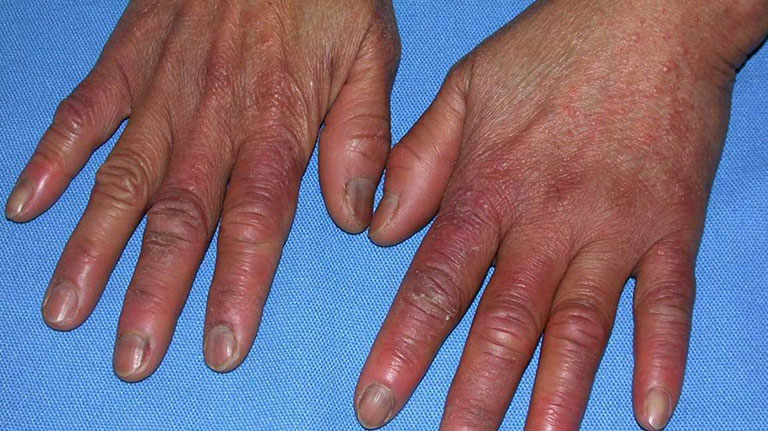
1. Common Warts Can Create Firm, Rough Bumps
One of the first possibilities to consider is a common wart.
Warts are caused by certain types of human papillomavirus (HPV), which infect the outer layer of the skin.
Common warts frequently appear on the hands and fingers.
They can look like:
-
Small, firm bumps
-
Rough or grainy growths
-
Flesh-colored or grayish spots
-
Raised areas with an uneven surface
-
Groups of bumps appearing close together
Sometimes a wart begins as a tiny spot that becomes more noticeable over time.
A wart can also spread from one area of the hand to another, particularly when the skin is repeatedly scratched, picked, or irritated.
Some warts eventually disappear without treatment, while others can persist for months or even years.
If you're unsure whether a bump is a wart, avoid picking or cutting it yourself.
2. Calluses Can Look Like Hard Bumps
Not every hard area on the hand is a growth.
Sometimes it's simply thickened skin.
Calluses develop when the skin is repeatedly exposed to friction or pressure.
For example, people who frequently use:
-
Hand tools
-
Gym equipment
-
Gardening equipment
-
Musical instruments
-
Sports equipment
-
Industrial equipment
may develop areas of thickened skin.
The skin essentially responds to repeated mechanical stress by becoming thicker.
Calluses are usually not dangerous.
They may feel hard, rough, or slightly raised compared with the surrounding skin.
The biggest clue is often their location.
If the bump appears exactly where your hand repeatedly experiences friction or pressure, a callus becomes more likely.
3. Corns Can Appear on Fingers and Hands Too
Corns are another type of thickened skin caused by repeated pressure or friction.
They're more commonly associated with the feet, but they can also develop on the hands.
A corn tends to be more localized than a callus and may form a small, firm area of thickened skin.
They can become uncomfortable when pressure is applied.
If you've recently changed your activities or started using a tool that repeatedly presses against a particular part of your hand, pay attention to whether the bump appears in that exact location.
Reducing the source of friction may help prevent the area from becoming worse.
4. Ganglion Cysts Can Cause Noticeable Lumps
A ganglion cyst is a fluid-filled lump that can develop near a joint or tendon.
Although these cysts are especially common around the wrist, they can also appear near the fingers.
A ganglion cyst may feel:
-
Smooth
-
Firm or rubbery
-
Rounded
-
Slightly movable
-
Larger or smaller depending on the location and activity
Some are painless.
Others can cause discomfort, particularly when the affected joint is moved or pressure is placed on the area.
Ganglion cysts are generally benign, but a healthcare professional can determine whether a lump is actually a cyst or something else.
It's not a good idea to try to smash or puncture a suspected cyst at home.
5. Arthritis Can Cause Hard Bumps Around the Finger Joints
If the bumps are appearing around your finger joints, arthritis becomes another possibility.
Certain forms of arthritis can cause bony enlargements around the joints.
With osteoarthritis, for example, people may develop firm, hard enlargements around the end or middle joints of the fingers.
These can sometimes be associated with:
-
Joint stiffness
-
Pain
-
Reduced flexibility
-
Swelling
-
Changes in finger shape
The bumps may develop gradually over time.
Unlike a soft cyst, a bony enlargement generally feels very hard and may seem like it's part of the joint itself.
If multiple finger joints are becoming enlarged or painful, it is worth having them evaluated rather than assuming they're simply a cosmetic change.
6. Knuckle Pads Can Develop From Repeated Pressure
Some people develop thickened areas of skin over the knuckles known as knuckle pads.
These can appear as firm, skin-colored or slightly thickened areas over the joints.
Repeated friction or pressure may contribute to their development.
They are generally benign.
However, because several different conditions can cause bumps around the knuckles, it's useful to have unusual or persistent lesions examined if their cause isn't obvious.
7. Dyshidrotic Eczema Looks Different
Not every hand bump is hard.
Some conditions initially appear as tiny bumps or blisters.
Dyshidrotic eczema, for example, can cause small, intensely itchy fluid-filled blisters on the sides of the fingers, palms, or feet.
The blisters can eventually dry out and leave the skin cracked, peeling, or irritated.
Unlike a typical wart or callus, the major clue is often itching.
People may describe the sensation as extremely itchy or burning.
Triggers can vary and may include irritation, allergies, stress, sweating, or exposure to certain substances.
If the bumps are itchy rather than simply hard and rough, eczema or another inflammatory skin condition may deserve consideration.
8. Digital Mucous Cysts Can Appear Near Fingernails
Another type of cyst that can occur on the fingers is a digital mucous cyst.
These are often found near the last joint of a finger, close to the nail.
They may appear as small, smooth, translucent or skin-colored bumps.
Sometimes they are associated with osteoarthritis in the nearby joint.
In certain cases, pressure from the cyst can affect the nail and create a groove or indentation.
Although they are usually benign, they should not be punctured at home because doing so can introduce bacteria and cause infection.
9. Dupuytren's Disease Can Cause Firm Changes in the Palm
A less common but important possibility is Dupuytren's disease, a condition involving the connective tissue beneath the skin of the palm.
It can begin with a small, firm nodule in the palm.
Over time, the tissue can thicken and form cords beneath the skin.
In some people, these changes eventually pull one or more fingers toward the palm, making them difficult to straighten.
Early signs can be subtle.
You might notice a small lump or thickened area before significant finger movement problems develop.
If you notice a firm nodule in your palm accompanied by gradually increasing difficulty straightening a finger, medical evaluation is worthwhile.
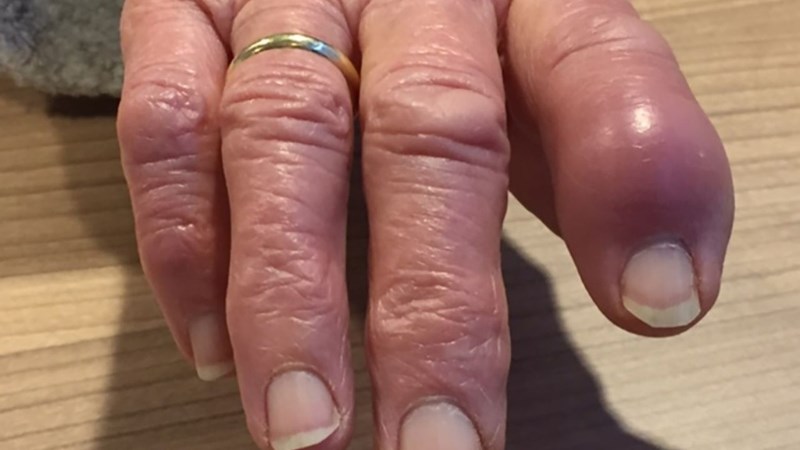
10. Foreign Bodies Can Cause Persistent Bumps
Sometimes the explanation is much simpler.
A tiny splinter or foreign object can become embedded beneath the skin.
Wood, metal, glass, or other materials can occasionally remain in the hand after an injury.
Your body may respond by forming inflammation or scar tissue around the object.
The result can be a firm bump that persists long after the original injury has been forgotten.
You might not even remember exactly when it happened.
This is particularly common in people who work with wood, tools, construction materials, plants, or other objects that can penetrate the skin.
If you suspect a foreign object is embedded deeply, don't aggressively dig into the skin trying to remove it.
11. Scar Tissue Can Feel Hard
Previous injuries can also leave behind firm areas of tissue.
After a cut, puncture, burn, or other injury heals, the body produces collagen as part of the repair process.
Sometimes the resulting scar feels noticeably harder or thicker than the surrounding skin.
A scar may become less noticeable over time, but some remain firm for months or longer.
If the bump appeared exactly where an old injury occurred, scar tissue may be a possible explanation.
12. When a Bump Is Painful, Pay Attention
Pain doesn't automatically mean something serious.
Warts can hurt.
Cysts can become uncomfortable.
Arthritis can cause painful joint changes.
Calluses can become tender when repeatedly pressured.
But new, persistent, or worsening pain is worth paying attention to.
Especially if the pain is accompanied by:
-
Rapid growth
-
Redness
-
Warmth
-
Significant swelling
-
Drainage
-
Bleeding
-
Numbness
-
Weakness
-
Restricted movement
These signs may indicate inflammation, infection, nerve involvement, or another condition requiring medical evaluation.
13. Rapid Growth Is a Reason to Get Checked
Most harmless bumps develop gradually.
That's why a bump that suddenly changes deserves attention.
If you notice that a growth is:
-
Increasing in size quickly
-
Changing color
-
Changing shape
-
Developing an irregular border
-
Bleeding without obvious injury
-
Becoming persistently painful
-
Developing an ulcer or open area
make an appointment with a healthcare professional or dermatologist.
Most unusual skin growths aren't cancer.
But certain skin cancers can resemble harmless bumps in their early stages.
It's better to have a suspicious lesion examined than to spend months guessing what it might be.
14. Don't Try to Remove a Bump Yourself
When people discover an unwanted bump, the temptation can be strong.
They may try to:
-
Cut it off
-
Puncture it
-
Burn it
-
Freeze it with inappropriate products
-
Squeeze it
-
Dig underneath the skin
This can create problems.
Breaking the skin can introduce bacteria and lead to infection.
It can also cause bleeding, scarring, nerve damage, or injury to nearby structures.
And if the bump is something other than a wart or callus, removing it yourself may make proper diagnosis more difficult.
When in doubt, get it examined.
15. Pay Attention to Where the Bumps Appear
The location of a bump can provide important clues.
On the fingertips
Consider warts, cysts, injuries, or thickened skin.
Around the finger joints
Arthritis-related changes, cysts, and other joint-related conditions may be possible.
On the palms
Calluses, Dupuytren's disease, warts, and other conditions can occur.
Near the nails
Digital mucous cysts and other skin conditions may be possibilities.
Along areas exposed to friction
Calluses or thickened skin become more likely.
Location alone cannot provide a diagnosis, but it can help a healthcare professional narrow down the possibilities.
16. Are the Bumps on One Hand or Both?
Another useful clue is whether the changes are symmetrical.
If bumps appear on both hands in similar locations, repeated friction, certain joint conditions, or systemic factors may be worth considering.
If a single unusual bump appears on one hand after an injury, a localized cause may be more likely.
Again, this isn't a diagnostic rule.
It's simply another piece of information.
17. Do the Bumps Change Over Time?
Try to remember when you first noticed the bump.
Was it:
-
There yesterday?
-
Present for several weeks?
-
Slowly getting larger?
-
Staying exactly the same?
-
Appearing and disappearing?
-
Becoming harder?
-
Becoming painful?
Taking a photograph when you first notice an unexplained bump can be surprisingly useful.
If you take another photograph several weeks later, you can compare the two.
This can help you determine whether the lesion is actually changing.
18. Don't Assume Every Bump Is a Sign of a Serious Disease
The word “terrifying” in headlines can make ordinary skin changes sound much more alarming than they actually are.
The reality is that many bumps on the hands are benign.
Warts, calluses, cysts, scars, and arthritis-related changes are all possible explanations.
The purpose of paying attention isn't to scare yourself.
It's to recognize when something is unusual enough to deserve evaluation.
A healthy approach is:
Notice it → observe it → avoid damaging it → seek professional advice if it persists or changes.
When Should You See a Doctor?
Consider getting a bump examined if:
-
You don't know what caused it.
-
It doesn't go away.
-
It continues getting larger.
-
Several new bumps are appearing.
-
It becomes painful.
-
It bleeds.
-
It changes color or shape.
-
It interferes with finger movement.
-
You experience numbness or weakness.
-
The surrounding skin becomes red or warm.
-
There is pus or other drainage.
-
You have a weakened immune system.
-
The lesion looks significantly different from other spots on your skin.
A dermatologist, primary-care physician, or other qualified healthcare professional can examine the lesion and determine whether further testing is necessary.
What a Doctor May Do
Don't be surprised if the evaluation is relatively simple.
A healthcare professional may begin by examining the bump visually and feeling it to determine whether it appears to be:
-
Skin-based
-
Fluid-filled
-
Solid
-
Bony
-
Related to a joint
-
Located beneath the skin
Depending on what they find, they may recommend observation, topical treatment, imaging, removal, or further testing.
Some lesions can be diagnosed clinically.
Others may require additional investigation.
The important thing is that you don't have to figure it out alone.
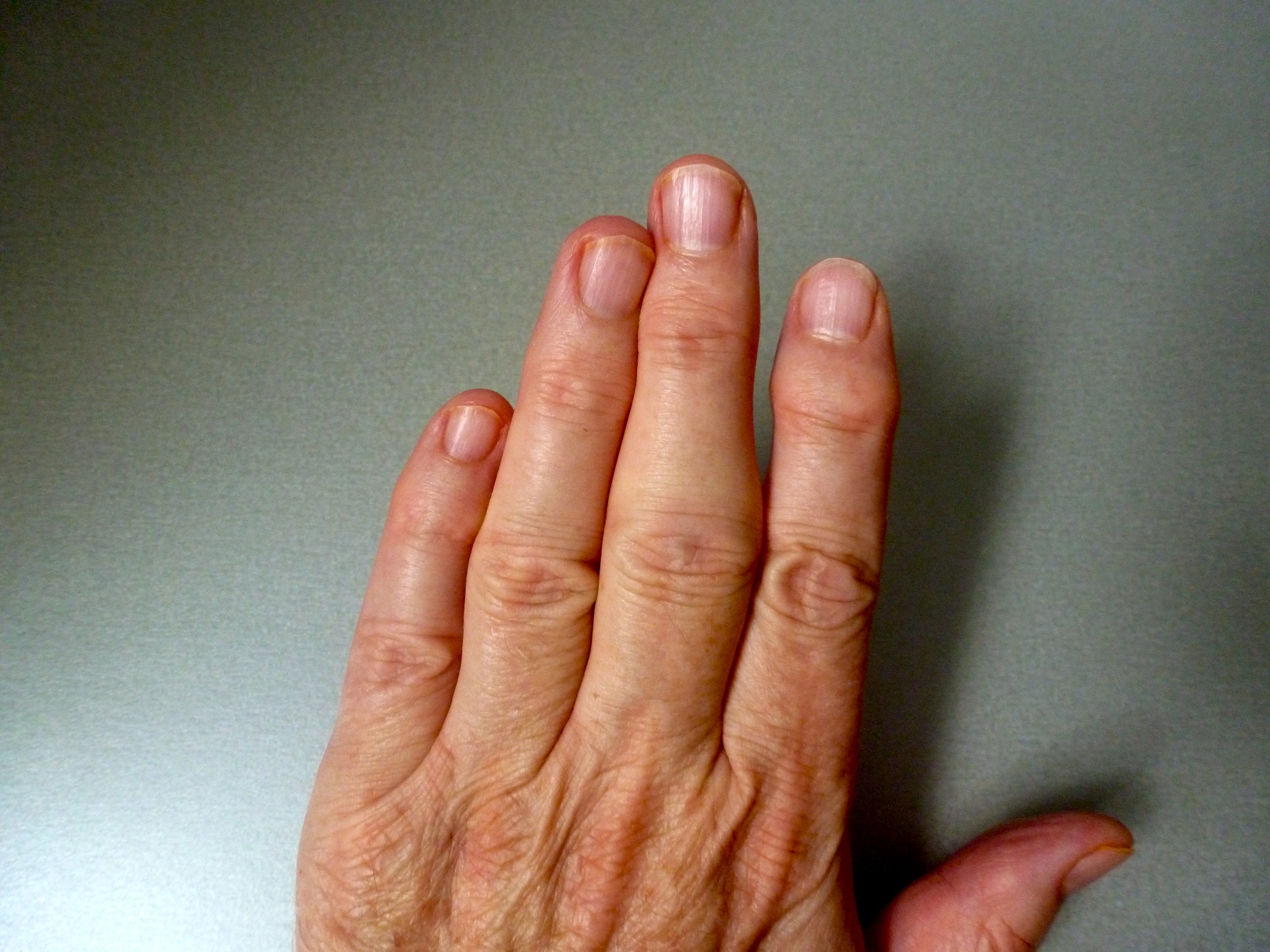
The Bottom Line
Mysterious hard bumps appearing on your hands can certainly be unsettling.
But they don't automatically mean something dangerous is happening.
Common explanations include:
-
Warts
-
Calluses
-
Corns
-
Ganglion cysts
-
Digital mucous cysts
-
Arthritis-related changes
-
Knuckle pads
-
Scar tissue
-
Foreign bodies
-
Dupuytren's disease
The key is to pay attention to the details.
How long has the bump been there?
Is it getting bigger?
Does it hurt?
Is it rough, smooth, or completely hard?
Is it attached to the skin or does it feel like it's coming from a joint?
Are more bumps appearing?
And perhaps most importantly:
Has it changed recently?
If a bump is persistent, rapidly changing, painful, bleeding, infected-looking, or interfering with normal hand function, don't try to diagnose or remove it yourself.
Have it checked.
Because while most hand bumps turn out to be harmless, knowing what you're dealing with is always better than guessing—and early evaluation is especially important when a skin or tissue change doesn't behave like something ordinary.