Leaning backward can signal relaxation.
It can also happen because the person is tired or the chair is uncomfortable.
The safest approach is to look at clusters of behaviors, not one isolated movement.
Your Hands Can Also Change the Impression
Sitting position is only one part of body language.
What your hands are doing can dramatically change how your posture is perceived.
For example, someone sitting upright with open hands may appear relaxed and approachable.
Someone sitting in the same position while tightly gripping their hands may appear tense.
A person resting their hands comfortably on the arms of a chair may look confident.
Someone hiding their hands may appear more withdrawn, although they may simply be cold.
Once again, context matters.
Why We Should Be Careful With Personality Tests Based on Body Language
The idea that body language reveals personality is fascinating.
But it is easy to overinterpret.
People are not simple systems in which one physical behavior produces one guaranteed psychological meaning.
A sitting position can be affected by countless factors:
Comfort: The chair or furniture may determine the posture.
Habit: People often repeat movements without consciously thinking about them.
Health: Back, hip, knee, or foot discomfort can change how someone sits.
Clothing: Tight clothing, skirts, shoes, or uniforms can affect posture.
Temperature: Cold environments may encourage people to curl inward.
Culture: Social norms influence how people use personal space.
Environment: A formal meeting produces different behavior from a relaxed evening at home.
Mood: Temporary emotions can alter posture.
Fatigue: Being tired can make someone lean, slump, or shift frequently.
That is why it is not scientifically sound to look at someone's sitting position and immediately declare:
“This person is definitely shy.”
Or:
“This person is definitely dominant.”
Those statements go far beyond what posture can actually tell us.
The Interesting Part Is How Your Behavior Changes
Rather than asking whether one sitting position reveals your “true personality,” a more useful question is:
How does your sitting style change in different situations?
Maybe you're confident and expansive around close friends but more reserved in professional settings.
Maybe you sit neatly during meetings but immediately curl up on the couch when you're home.
Maybe you barely move when concentrating but become restless when you're bored.
Those differences can reveal something meaningful about comfort, context, and emotional state.
In fact, observing these patterns may be more informative than trying to attach one permanent personality label to one body position.
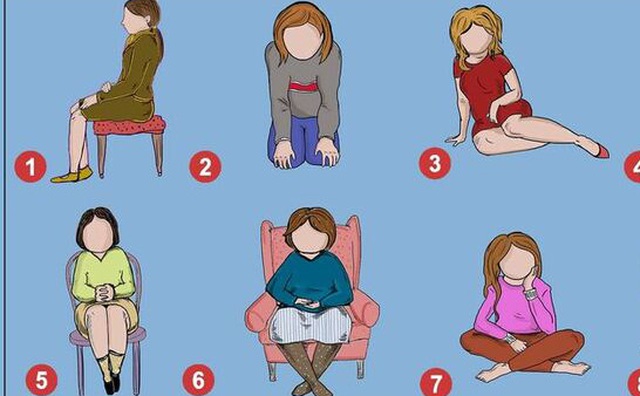
What Your Favorite Seat Might Say About You
Interestingly, people often develop strong preferences for where they sit.
Some always choose the corner of a sofa.
Others want the middle.
Some prefer sitting near a window.
Others like positions that allow them to see the entire room.
This can also reflect personal preferences.
A person who chooses a corner might enjoy privacy.
Someone who prefers the center might enjoy being socially connected.
Someone who always chooses a seat with a clear view of the room may simply like knowing what is happening around them.
Again, these are possibilities—not diagnoses.
Our environments and personalities interact in complicated ways.
Are You Sitting for Comfort or Communication?
One way to understand your sitting behavior is to ask what purpose the posture serves.
Are you trying to relax?
Are you paying attention?