
When buying pork, you need to observe the color of the meat to assess its quality.
Pork is a common cooking ingredient in family meals. It provides a lot of protein, essential amino acids, vitamins, and minerals. From this ingredient, you can make many delicious dishes such as braised pork, grilled pork, boiled pork, and stir-fried pork, suitable for the taste of family members.
When buying pork, one of the criteria to evaluate its quality is the color of the meat.
Freshly slaughtered pork usually has a bright red color because the blood has not yet drained completely. The red color makes the meat look fresh and tasty. However, you need to distinguish between good-quality meat with a bright red color and meat with a dark red color.
Pork with a dark red color mixed with black or purple is not good meat and might come from a sick pig. If a pig is unhealthy, the blood drainage process is delayed, causing the blood to darken over time, and the meat to take on a darker color. This meat often has a bad smell and can be harmful to the body.
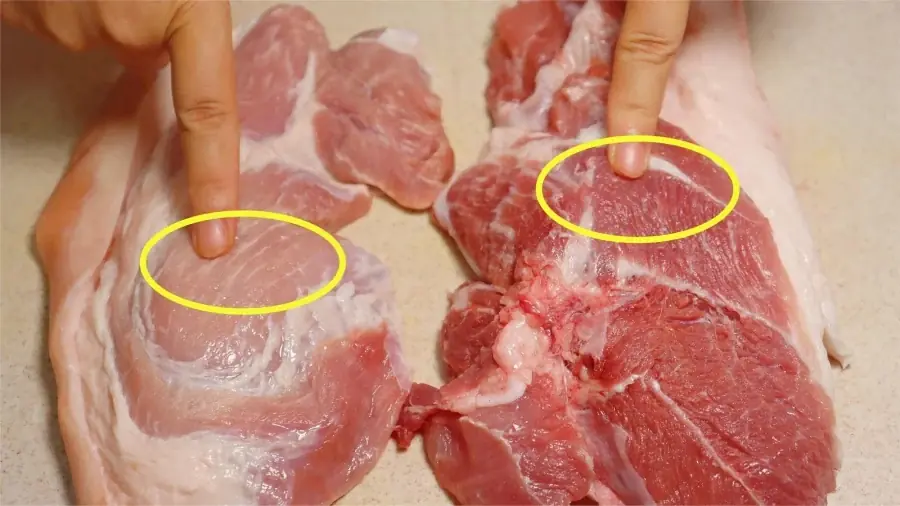
Additionally, be cautious when buying meat with a pale color. There are two main reasons for pale-colored meat. One is that the meat has been frozen and well-preserved. The color of frozen meat is lighter than fresh meat, mostly appearing light red or pink. If this meat is properly preserved, its quality is not inferior to fresh meat.
The second type is meat that has turned white. This is a sign that the meat might have been injected with water to increase its weight. Because it retains water, this meat is more prone to bacterial contamination, degradation, and loss of important nutrients.
In addition to color, pay attention to other criteria when choosing pork:
- Good pork is usually dry, not sticky, and not wet.
- The skin of sick pigs often has many small spots, with dark purple color at the hair follicles, and the fat may turn red or yellow. Healthy pigs will have white skin, with most hair follicles having a bright red color, and the fat being white and fresh.
- Fresh pork usually has a characteristic meat smell, slightly fishy, without any strange odors like sourness or antibiotics. Pork with additives often has a stronger fishy smell than normal pork.
- When buying pork, you can press your finger into the meat. If the meat quickly fills back in, leaving no dent, it is fresh. If it leaves a dent, it indicates less fresh meat or sick pig meat, which is best avoided.