Think You're Buying Real Honey? Here's What the Upside-Down Bottle Test Can Really Tell You
Honey has been valued for thousands of years—not only for its natural sweetness but also for its unique flavor, versatility, and long history of use in traditional remedies. Today, however, growing consumer interest has also raised concerns about honey authenticity. With so many products available on the market, it isn't always easy to determine exactly what you're buying.
Some honey products may contain added sweeteners or sugar-based ingredients that closely resemble genuine honey in both appearance and consistency. This has led many consumers to search for simple methods that may help evaluate honey before purchasing it.
While no home test can guarantee purity with complete certainty, there are several observations that may help you better understand what you're looking at.
Honey is naturally produced by bees from flower nectar and contains a complex mixture of natural sugars, enzymes, antioxidants, amino acids, and trace nutrients. Its characteristics can vary depending on numerous factors, including climate, floral source, harvesting methods, and storage conditions.
One of the most popular methods shared online is the upside-down bottle test. The procedure is remarkably simple and requires nothing more than a bottle of honey.
To perform the test:
- Hold the honey bottle upright.
- Gently shake it several times.
- Turn the bottle upside down.
- Observe how the air bubbles move through the liquid.
Many people believe that thicker honey causes air bubbles to rise more slowly because of its higher viscosity. Conversely, thinner honey may allow bubbles to move more quickly through the bottle.
This observation has become widely associated with identifying high-quality honey. However, the reality is more complicated than many viral posts suggest.
The upside-down bottle method primarily measures viscosity—how thick or thin the liquid happens to be. It does not directly determine whether honey is pure or adulterated.
Several factors can affect how honey behaves inside the bottle, including:
- Moisture content
- Storage temperature
- Floral source
- Processing methods
- Natural sugar composition
- The age of the honey
Because of these natural variations, two authentic honey products may behave differently during exactly the same experiment.
Another commonly shared kitchen experiment involves placing honey in a glass of water and observing how it behaves before stirring. According to popular belief, pure honey tends to sink to the bottom and dissolve more slowly than diluted products.
Although this test may provide interesting observations regarding consistency, it should not be considered scientific proof of authenticity. Natural honey varies considerably depending on its origin, making it difficult for any single home experiment to provide definitive answers.
Consumers should also remember that genuine honey may naturally crystallize over time. Contrary to popular misconceptions, crystallization is often a normal characteristic of many honey varieties and does not necessarily indicate spoilage or poor quality.
When purchasing honey, several practical considerations may prove more valuable than relying on viral internet tricks alone:
- Purchase honey from reputable producers whenever possible.
- Carefully read ingredient labels.
- Look for information regarding floral sources and harvesting methods.
- Pay attention to storage recommendations.
- Understand that authentic honey naturally differs in texture, color, and aroma.
Professional laboratory testing remains the most reliable method for determining whether honey has been adulterated when complete certainty is required.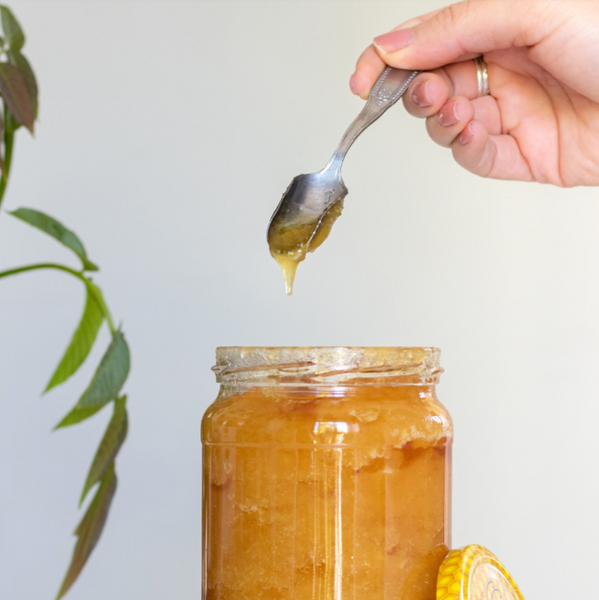
The Bottom Line
The upside-down bottle test remains one of the most fascinating and widely shared honey experiments online. Watching air bubbles slowly move through honey can certainly provide useful information about its viscosity, but thickness alone cannot determine whether honey is genuine.
Authentic honey comes in many forms, and natural variations are part of what makes this remarkable food so unique. Understanding these differences—and purchasing from trusted sources—remains one of the best ways to make informed decisions when buying honey.
The next time you flip a bottle of honey upside down, remember that you're learning more about its consistency than its authenticity.