Washing dishes feels like one of the most routine chores in the home. You add soap, scrub the plates, rinse them, and put everything away. But one small habit—especially using the same damp dish sponge or cloth for too long—can create an environment where microorganisms multiply. The good news is that a few simple changes can make your kitchen-cleaning routine much safer.
Most people think of dishwashing as a way to remove germs.
And it is.
But the tools used for washing dishes can sometimes become contaminated themselves.
A sponge may pick up food particles, grease, and microorganisms from plates and cookware. If it stays warm and wet between uses, it can become an ideal environment for microbial growth.
That doesn't mean every kitchen sponge is dangerous or that you need to throw one away after every meal.
It does mean that how you use, clean, dry, and replace dishwashing tools matters.
Let's take a closer look at the habits that can turn an ordinary kitchen sponge or cloth into a hidden source of contamination and what you can do differently.

1. The Problem Starts With a Damp Sponge
A dish sponge seems harmless.
It sits beside the sink, ready whenever you need to clean a plate or wipe a counter.
But think about what happens to it during a typical day.
It touches:
-
Food scraps
-
Grease
-
Raw meat residue
-
Sauces
-
Milk
-
Vegetables
-
Dirty plates
-
Countertops
-
Sinks
Then you rinse it quickly and leave it next to the sink.
The sponge may remain damp for hours.
That combination of moisture, food residue, and warmth can allow microorganisms to multiply.
The issue isn't that sponges automatically become dangerous.
The issue is that a sponge can become a surprisingly effective place for microbes to survive and spread if it isn't managed properly.
2. Using the Same Sponge to Wash Everything Can Spread Contamination
Another common mistake is using one sponge for every task in the kitchen.
One minute you're washing plates.
The next, you're wiping the countertop.
Then you clean around the sink.
Perhaps you use the same sponge to wipe up spilled juice or food residue.
This can move microorganisms from one surface to another.
The risk becomes more important when raw animal products are involved.
Raw meat, poultry, and seafood can carry disease-causing microorganisms. If residue from these foods gets onto a sponge and the sponge is then used on other surfaces, contamination can potentially spread.
This is one reason food-safety experts emphasize separating cleaning tasks and handling raw foods carefully.
3. Raw Chicken Deserves Extra Caution
Raw poultry is particularly important because it can carry bacteria such as Salmonella and Campylobacter.
When preparing raw chicken, some people instinctively reach for a sponge or cloth to clean every surface afterward.
But using the same sponge that later touches dishes or food-preparation surfaces can create an opportunity for cross-contamination.
There's an important distinction here:
Cleaning the surface is necessary, but the cleaning tool itself also needs to be managed.
Hands should be washed thoroughly after handling raw poultry.
Cutting boards, countertops, utensils, and other potentially contaminated surfaces should be cleaned and, when appropriate, sanitized.
And cloths or sponges used on those areas should not simply be returned to normal kitchen duties without appropriate cleaning or replacement.
4. Washing a Sponge With Water Alone Isn't Enough
A quick rinse can remove visible food particles.
But it doesn't necessarily eliminate microorganisms living deeper inside the sponge.
Many sponges contain a network of tiny spaces that trap food and moisture.
Even when the surface looks clean, material can remain inside.
That is why simply squeezing a sponge under running water and leaving it wet isn't a complete hygiene strategy.
The goal is to reduce both food residue and moisture and to replace the sponge regularly rather than using the same one indefinitely.
5. Don't Leave the Sponge Sitting in Standing Water
Another easily overlooked problem is how the sponge is stored.
If it sits inside a puddle of water in the sink or inside a container that remains wet, it may take much longer to dry.
A damp environment encourages microbial survival and growth.
After use, squeeze out excess water and place the sponge somewhere where air can circulate around it.
A draining rack is generally better than a sealed container that traps moisture.
The same principle applies to reusable dishcloths.
A cloth that is repeatedly damp without being properly laundered can develop unpleasant odors and accumulate microorganisms.
6. A Bad-Smelling Sponge Is a Warning Sign
Many people recognize the smell immediately.
You pick up the sponge and notice a sour, musty, or unpleasant odor.
That smell is often a sign that organic material and microorganisms have accumulated.
At that point, repeatedly rinsing the sponge may not be enough.
Replacing it is usually the simplest option.
You don't need to wait until a sponge looks disgusting before replacing it.
Regular replacement is part of sensible kitchen hygiene.
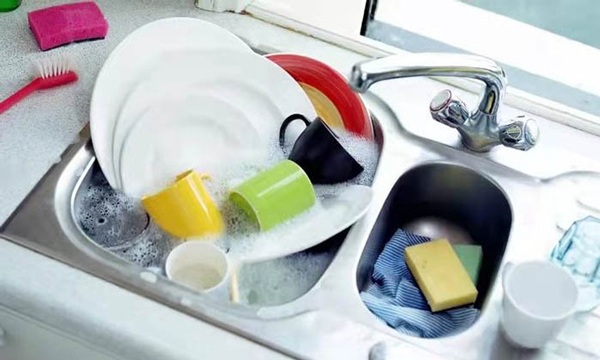
7. Your Dishcloth Can Have the Same Problem
Sponges get most of the attention, but reusable dishcloths can also become contaminated.
A cloth may look clean because it dries on the outside while remaining damp within its folds.
If it is repeatedly used to wipe food spills, hands, dishes, counters, and appliances without laundering, it can become a vehicle for cross-contamination.
Wash reusable kitchen cloths regularly using appropriate laundering methods and allow them to dry completely.
Having several cloths in rotation is often easier than trying to keep one cloth in use all day.
8. Don't Use a Dirty Sponge to “Clean” the Countertop
This is one of the most common kitchen habits.
You spill something on the counter.
You grab the dish sponge.
You wipe the surface.
Then you put the sponge back beside the sink.
The problem is that the sponge may already contain microorganisms from dishes or raw food.
Instead of truly cleaning the counter, you may simply be moving whatever is on the sponge around the surface.
For food-preparation areas, appropriate cleaning and sanitizing practices are more reliable than repeatedly wiping with the same sponge.
9. The Sink Itself Can Be Surprisingly Dirty
The kitchen sink is often treated as though it were automatically clean because water runs through it all day.
But food particles, grease, dirty dishwater, and residue can accumulate around the basin, drain, faucet handles, and edges.
That makes the sink another area that requires routine cleaning.
Pay particular attention to:
The drain area
The faucet handle
The edges of the sink
The area around the drain opening
The counter immediately surrounding the sink
And remember that the sponge resting in the sink may come into contact with all of these surfaces.
10. “Rinse and Reuse” Isn't Always the Best Approach
People often want to avoid wasting cleaning supplies.
That's understandable.
But a sponge is relatively inexpensive compared with the potential inconvenience of dealing with foodborne illness.
Using a single sponge for weeks or months simply because it still looks intact isn't necessarily a good trade-off.
The exact replacement schedule depends on the type of sponge, how frequently it is used, what it cleans, and how well it is maintained.
However, once a sponge becomes worn, develops an odor, remains persistently damp, or has been heavily used for cleaning potentially contaminated surfaces, replacement is sensible.
11. What About Microwave or Dishwasher Sanitizing?
People sometimes use methods such as microwaving a sponge or putting certain cleaning items in the dishwasher.
Some methods can reduce microorganisms under the right conditions.
But there are important safety limitations.
Not every sponge is microwave-safe.
Metal-containing scrubbers should never be microwaved.
A wet sponge can become extremely hot.
And “sanitizing” a sponge does not necessarily mean it will remain hygienic indefinitely.
Any appliance-based method should follow the manufacturer's instructions for the specific product.
If you're uncertain, replacing a heavily used sponge is often the simpler and safer choice.
12. Don't Mix Cleaning Chemicals
Another kitchen mistake can be more dangerous than the sponge itself: mixing cleaning products.
For example, bleach should not be mixed with ammonia or acidic cleaners.
Dangerous gases can be produced.
Use one cleaning product at a time according to its label.
Ventilate the room appropriately.
Never experiment with homemade combinations simply because an online video claims they are more powerful.
More chemicals do not necessarily mean a cleaner or safer kitchen.
13. Hot Water Alone Doesn't Make a Sponge Safe
Many people assume that rinsing a sponge with very hot tap water is enough.
Hot water can help remove grease and residue, but ordinary household hot-water temperatures should not be treated as a reliable sterilization method.
What matters more is combining effective cleaning practices with drying and regular replacement.
The same principle applies to dishes.
Water temperature alone is not the whole story.
Dish detergent, mechanical scrubbing, thorough rinsing, and proper drying all contribute to effective dishwashing.
14. Dishwashers Can Provide More Consistent Cleaning
For dishwasher-safe dishes, utensils, and cookware, a dishwasher can be an effective way to clean and sanitize many items.
The combination of detergent, water action, and heat can provide a consistent cleaning process.
However, the dishwasher itself still needs attention.
Food residue can accumulate in filters or other areas.
Door seals can collect grime.
A poorly maintained machine may not perform as well as expected.
Clean and maintain the dishwasher according to the manufacturer's recommendations.
15. Drying Dishes Matters Too
A common mistake is stacking dishes while they are still wet.
Moisture can encourage microbial survival, particularly when items are placed together with little airflow.
Allow dishes to dry thoroughly before storing them.
Air-drying on a clean rack is often preferable to repeatedly wiping dishes with a cloth that may itself be contaminated.
If you do use a towel, make sure it is clean and changed regularly.
16. Don't Use the Same Towel for Hands and Dishes
A kitchen towel may seem convenient for everything.
But consider how many things it touches.
You dry your hands.
You wipe a counter.
You dry dishes.
You grab the refrigerator handle.
Then you touch another surface.
This can create opportunities for microorganisms to move around the kitchen.
Using separate towels for different purposes and changing them regularly can help reduce cross-contamination.
17. Be Especially Careful With Cutting Boards
Cutting boards can develop grooves and scratches where food particles and microorganisms may remain.
This is particularly important when a board is used for raw meat and then used for foods that will not be cooked.
A practical approach is to use separate boards for raw animal products and ready-to-eat foods, particularly if you're cooking frequently.
Wash cutting boards thoroughly after use and replace them when they become excessively worn.
18. Clean More Carefully After Preparing Raw Foods
Raw meat, poultry, seafood, and eggs require extra attention because they can carry harmful microorganisms.
After preparing them:
Wash your hands thoroughly.
Clean cutting boards and utensils.
Clean and, where appropriate, sanitize food-contact surfaces.
Wash reusable cloths appropriately.
Avoid touching ready-to-eat foods with contaminated hands or utensils.
These simple steps can significantly reduce the opportunity for cross-contamination.
19. Who Should Be Extra Careful?
Foodborne illness can affect anyone.
But some people are more vulnerable to serious complications, including:
-
Older adults
-
Young children
-
Pregnant people
-
People with weakened immune systems
-
People with certain chronic illnesses
If someone in your household falls into one of these groups, careful kitchen hygiene becomes even more important.
20. A Simple Safer Dishwashing Routine
You do not need a complicated cleaning system.
A practical routine can look like this:
Step 1: Remove food residue
Scrape plates into the trash or appropriate waste container before washing.
Step 2: Separate raw-food equipment
Keep cutting boards and utensils used for raw meat away from ready-to-eat foods.
Step 3: Wash thoroughly
Use dishwashing detergent and adequate mechanical scrubbing.
Step 4: Rinse
Remove remaining detergent and food residue.
Step 5: Dry
Allow dishes to air-dry on a clean rack whenever practical.
Step 6: Manage your sponge or cloth
Rinse it well, squeeze it out, allow it to dry, launder reusable cloths regularly, and replace worn or foul-smelling sponges.
Step 7: Clean the sink
Don't forget the area where your cleaning tools spend most of their time.
Does This Mean Sponges Are Dangerous?
No.
That's an important distinction.
A dish sponge is not inherently dangerous.
Millions of people use them without developing illness.
The issue is that a sponge can accumulate microorganisms and organic material, particularly when it remains damp and is used for multiple tasks.
Good kitchen hygiene is not about eliminating every microorganism.
That would be unrealistic.
It's about reducing opportunities for harmful contamination to spread to food and surfaces.
The Bigger Lesson: Cross-Contamination Matters
The most important concept isn't really the sponge.
It is cross-contamination.
A microorganism doesn't need to remain on raw chicken to cause a problem.
If it moves from raw chicken to a cutting board, then to a sponge, then to a countertop, then to ready-to-eat food, the chain of contamination becomes much larger.
Good kitchen hygiene aims to break that chain.
That's why separate tools, proper handwashing, appropriate cleaning, and sensible storage all matter.
The Bottom Line
A dishwashing routine can look perfectly clean while still creating opportunities for cross-contamination.
The biggest concerns are not simply whether you wash your dishes, but what you use to wash them, how you handle raw foods, how you store damp sponges and cloths, and how often you replace or launder them.
A damp, old sponge used across dishes, counters, raw-food surfaces, and the sink can accumulate microorganisms and potentially spread them around the kitchen.
You don't need to become obsessive about cleanliness.
Instead, focus on a few practical habits:
Use clean, well-maintained sponges or cloths.
Let them dry thoroughly between uses.
Replace worn or foul-smelling sponges.
Wash reusable cloths regularly.
Keep raw-food preparation separate from ready-to-eat foods.
Clean and sanitize food-contact surfaces appropriately.
Avoid mixing cleaning chemicals.
The goal isn't to make your kitchen sterile.
It's to prevent a simple cleaning tool from becoming an unexpected link in the chain of contamination.